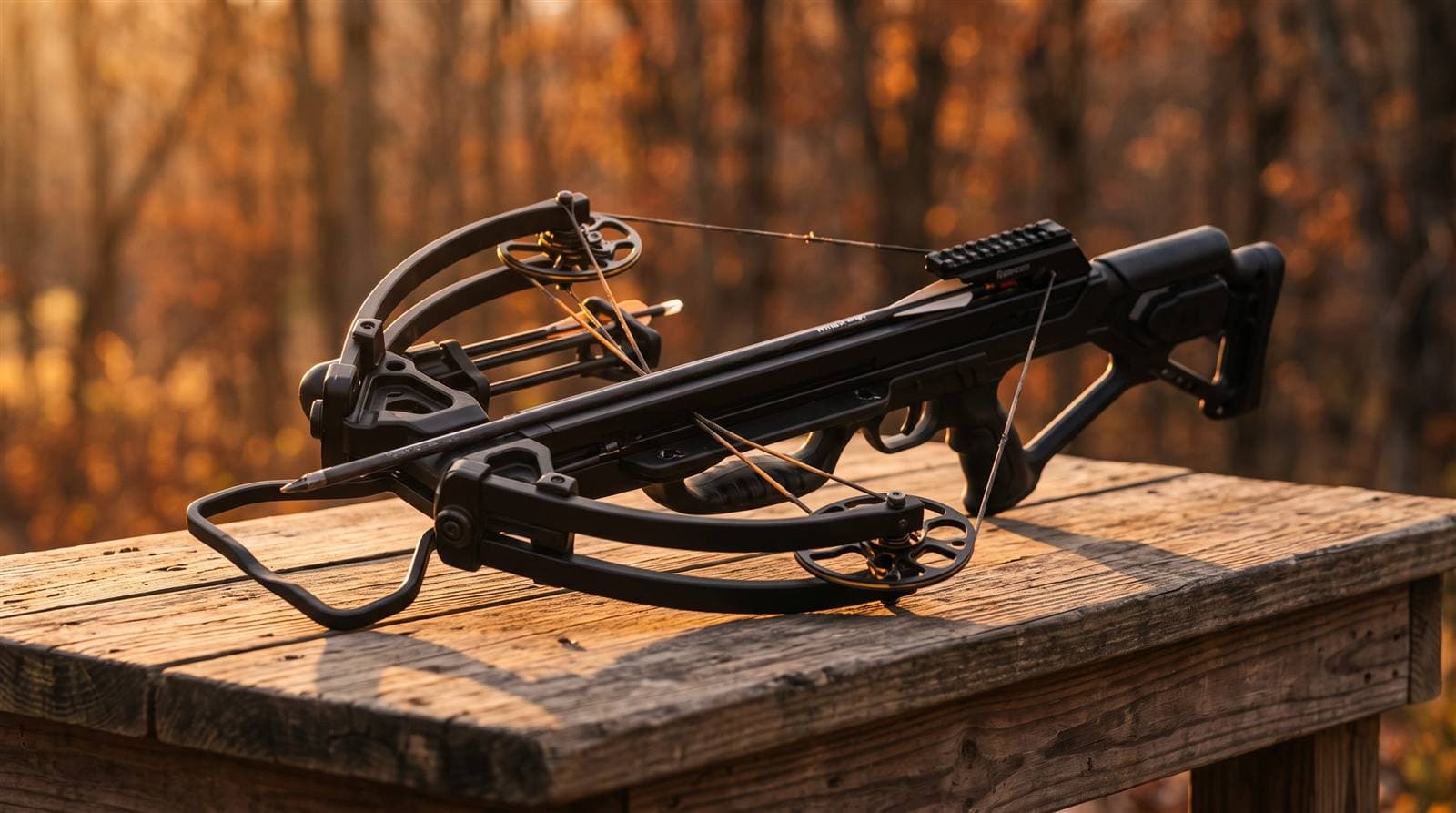
What Is Foot Stirrup?
The metal or composite loop at the front of a crossbow where you place your foot to hold the crossbow steady while cocking it.
Foot Stirrup: definition
Also called: stirrup, foot rest, foot loop, crossbow stirrup
The foot stirrup is a loop or bracket at the front of the crossbow, near the riser, that you place your foot into while cocking. Your foot holds the crossbow against the ground so both hands can draw the string back with a rope, crank or other cocking aid.
Stirrups are usually aluminium or steel, sometimes with a composite or rubber coating. Their size matters: a stirrup that is too small to fit a boot, or too large to hold the foot securely, makes cocking awkward and less safe. They are often built into the riser or attached to it.
On crossbows with integrated cocking systems, the stirrup may be used differently or be less prominent, so check the manual. Pistol crossbows may use a different cocking method that does not require a stirrup.
Foot stirrup checkpoints
| Checkpoint | What to look for | Why |
|---|---|---|
| Size | Fits your boots with room to spare | Secure foot placement |
| Material | Solid metal or reinforced composite | Durability |
| Attachment | No wobble, tight fasteners | Safe load path |
| Foot clearance | Foot stays out of the string path | Prevents injury |
Why Foot Stirrup matters
Cocking takes force, and a stable stirrup helps you apply it evenly. A foot that slips, or a crossbow that tilts, can lead to uneven string loading, which affects accuracy and safety.
The stirrup is also where careless hand and foot positioning leads to injuries, so understanding its role helps you cock with controlled, repeatable technique.
How to read it on a spec sheet
- Look for the stirrup type in photos: open loop, closed loop or integrated.
- Check dimensions if given, then compare with your boot size.
- Read the manual's cocking instructions, which usually show foot placement.
- Note whether the stirrup is part of the warranty-covered frame.
- Check compatibility with your chosen cocking aid.
Common mistakes
- Placing the foot partly in the stirrup so it slips during cocking.
- Letting a foot or toe get close to the string path.
- Cocking on a slippery surface.
- Using a bent or loose stirrup.
- Cocking unevenly, which is also dealt with in canting.
How to use the stirrup properly
- Check the crossbow is unloaded, the safety is on and you are on a stable, non-slip surface.
- Place the crossbow upright, with the stirrup resting on the ground.
- Put your foot fully into the stirrup, with the toe clear of the string path.
- Cock using the method in your manual, drawing the string evenly.
- Keep your foot in place until the string is seated and the safety is confirmed.
- Step out only after the process is complete.
See it in our reviews
- Barnett Rope Cocking — rated 4.3/5
- Excalibur Mag Air — rated 3.4/5
Frequently Asked Questions
What is the foot stirrup for?
The foot stirrup gives you a stable place to put your foot while you draw the string back. It holds the crossbow steady against the ground so you can use both hands for cocking.
Do all crossbows have a foot stirrup?
Most full-size crossbows do. Pistol crossbows and some designs cock differently, so check your manual. Integrated cocking systems may also change how the stirrup is used.
Where should my foot go in the stirrup?
Place your foot fully into the stirrup, with the toe out of the string path, and keep it there until cocking is complete. Follow the foot position shown in your manual.
Can a foot stirrup break?
It can bend or loosen, especially with misuse or damage. Inspect it for movement, cracks or bent metal, and stop using the crossbow if you find any until it has been serviced.
What if the stirrup does not fit my boot?
Do not force it. Try a different boot or contact the manufacturer about options. A foot that does not seat fully can slip and cause an unsafe cocking attempt.
Is the stirrup used when de-cocking?
Procedures differ. Many de-cocking methods fire the bolt into a target or use a manufacturer-specific system, so follow the manual for your model and our de-cocking guide for general principles.
Does the stirrup affect accuracy?
Not directly. It affects how safely and evenly you cock, and uneven cocking can influence the string position. Good technique at the stirrup supports consistent shooting.
Keep learning
Guides that use this term
- GuideHow to Cock a Crossbow: Rope vs CrankHow to cock a crossbow step by step with a rope or crank, why hand cocking rarely works, and the mistakes that cause uneven strings and injuries.Read the guide
- GuideCrossbow Safety Rules for BeginnersCrossbow safety rules for beginners: finger placement, never dry-firing, safe cocking and de-cocking, range etiquette and storage habits that prevent injury.Read the guide
- GuideHow to De-Cock a Crossbow SafelyHow to de-cock a crossbow safely: integrated De-Cock systems, manual-approved discharge into a rated target, and the mistakes that cause injury.Read the guide
Related terms
- Cocking AidA rope or crank device that reduces the effort needed to draw the string and helps it seat evenly in the latch.
- RiserThe rigid central block at the front of a crossbow where the limbs mount and the barrel or stock connects, forming the structural core of the front end.
- Cocking RopeA rope-and-handle accessory that uses pulleys to cut the pull needed to draw a crossbow string by roughly half.
- Crank Cocking DeviceA geared, hand-turned mechanism that winds the string back to the latch with low, steady effort, built in or detachable.
- CantingTilting the crossbow to one side at the shot, which shifts the point of impact and is a common cause of left or right misses.
- StockThe rear part of a crossbow that you shoulder and grip, housing the trigger and shaping weight, balance, comfort and consistent cheek and shoulder position.
Browse the gear
Definitions are general information. Manufacturer figures vary, so follow your crossbow's manual and verify local laws with the relevant authority.