What Is Stock?
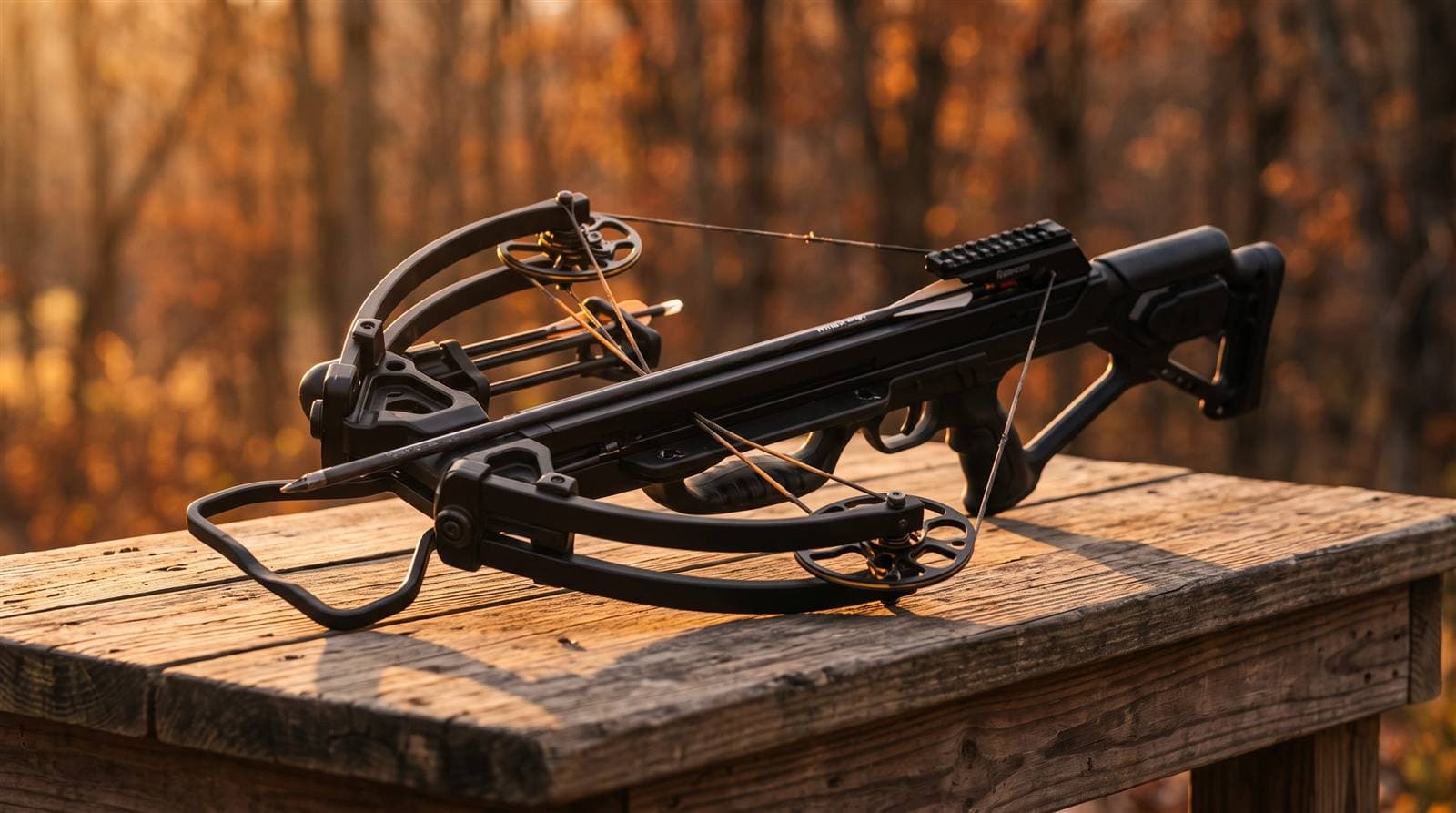
The rear part of a crossbow that you shoulder and grip, housing the trigger and shaping weight, balance, comfort and consistent cheek and shoulder position.
Stock: definition
Also called: crossbow stock, buttstock, grip, adjustable stock, length of pull
The stock is the rear portion of the crossbow that you hold, rest against your shoulder and align your eye along. It contains or surrounds the trigger system, forms the grip and supports the rail. Stocks are made from polymer, composite, aluminium or wood, and many modern ones are designed to be thin, light and ergonomic.
Fit matters more than most buyers expect. Length of pull, the distance from the trigger to the butt pad, decides how your arm and eye line up with the scope. Some stocks have adjustable butt pads or cheek risers to help match different body sizes. The eye relief of your scope depends partly on a consistent stock position.
Weight is the other major factor. Heavier stocks can steady the aim but tire you on long walks, while lighter ones carry easily but can feel less stable. The Excalibur Mag Air, for example, lists a bare weight of 4.9 lbs, and the SAS Prophecy 80 pistol crossbow lists 2.8 lbs.
Stock features and their effects
| Feature | Effect | Consider |
|---|---|---|
| Length of pull | Arm and eye alignment | Fit to your build |
| Adjustable butt pad or cheek riser | Fine-tunes fit | Helpful if you share the crossbow |
| Weight | Stability vs carry comfort | Your hunting or range style |
| Grip shape | Hand comfort, trigger reach | Hand size and gloves |
| Material | Weather and handling | Climate and noise |
Why Stock matters
A stock that fits you lets you repeat the same cheek, shoulder and grip position every time, which helps your zeroing hold and your groups tighten. A poor fit encourages straining, canting and inconsistent eye relief.
Comfort also encourages practice. A crossbow that feels awkward gets used less, and practice is where accuracy comes from.
How to read it on a spec sheet
- Look for length of pull or overall stock dimensions in the specs.
- Check for adjustability: butt pad, cheek riser or collapsible stock.
- Read overall weight, noting whether it includes scope and accessories.
- Look at the grip and trigger reach in photos.
- Check material and finish notes for weather use.
Common mistakes
- Buying without shouldering it first.
- Mounting the scope before you know your natural stock position.
- Gripping so tightly that you disturb aim.
- Putting fingers near the rail or string path while gripping.
- Ignoring left-hand or right-hand options.
How to check stock fit
- With the crossbow unloaded, uncocked and the safety on, shoulder it in your normal stance.
- Check that your cheek rests naturally on the stock when you look through the scope.
- Confirm you can reach the trigger and safety without stretching.
- Keep your fingers and thumb clear of the rail and string path.
- Close your eyes, shoulder it, then open them. Your sight picture should be close to centred.
- Adjust the butt pad or cheek riser if available, or ask a dealer for options.
See it in our reviews
- Excalibur Mag Air — rated 3.4/5
- SAS Prophecy 80 Crossbow — rated 3.8/5
Frequently Asked Questions
What is a crossbow stock?
The stock is the rear part of the crossbow that you shoulder and grip. It supports the trigger system and rail, and its shape and weight strongly affect comfort and shooting consistency.
What is length of pull on a crossbow?
Length of pull is the distance from the trigger to the butt of the stock. It decides how your arm and eye line up with the scope, and a good fit supports consistent technique.
Are adjustable stocks worth it?
They help if several people share a crossbow or if you wear different layers. Adjustment lets you tune fit, though a well-matched fixed stock can work just as well for one shooter.
Does stock weight matter?
Yes. Heavier setups can feel steadier but are tiring to carry, and lighter ones are easier to carry but can feel less stable. Pick based on how you will use it.
Can I change a crossbow stock?
Some brands offer replacement or adjustable components, but many stocks are integrated. Check the manual and the manufacturer before modifying, as changes can affect warranty and safety.
How should I hold a crossbow stock?
Hold the grip firmly but not tightly, with fingers and thumb clear of the rail and string path. Follow the hand position shown in your manual and range rules.
Do pistol crossbows have a stock?
Pistol crossbows have a grip rather than a shouldered stock. That makes them compact, but it also changes stability and accuracy, which is one reason they suit plinking and small targets.
Keep learning
Guides that use this term
- GuideBest Crossbows for Beginners 2026Best crossbows for beginners in 2026: four tested picks for first-time buyers, judged on ease of cocking, forgiving accuracy and what is in the box.Read the guide
- GuideCrossbow Draw Weight by Body SizeHow much crossbow draw weight suits your frame and strength: true vs felt draw weight, cocking aids, power stroke and reviewed examples.Read the guide
- GuideCrossbow Safety Rules for BeginnersCrossbow safety rules for beginners: finger placement, never dry-firing, safe cocking and de-cocking, range etiquette and storage habits that prevent injury.Read the guide
Related terms
- RailThe flight deck on top of a crossbow that guides the bolt from the string to the muzzle and often carries a scope mount for accessories.
- Trigger SystemThe mechanism that holds the cocked string, releases it when you press the trigger, and includes safeties that help prevent accidental release.
- Foot StirrupThe metal or composite loop at the front of a crossbow where you place your foot to hold the crossbow steady while cocking it.
- Eye ReliefEye relief is the distance from the scope’s rear lens to your eye at which you see the full, unclipped picture, and it affects comfort and safety.
- Pistol CrossbowA small, one-handed crossbow for recreational target shooting at short range, with much lower speed and energy than a full-size crossbow.
- CantingTilting the crossbow to one side at the shot, which shifts the point of impact and is a common cause of left or right misses.
Browse the gear
Definitions are general information. Manufacturer figures vary, so follow your crossbow's manual and verify local laws with the relevant authority.