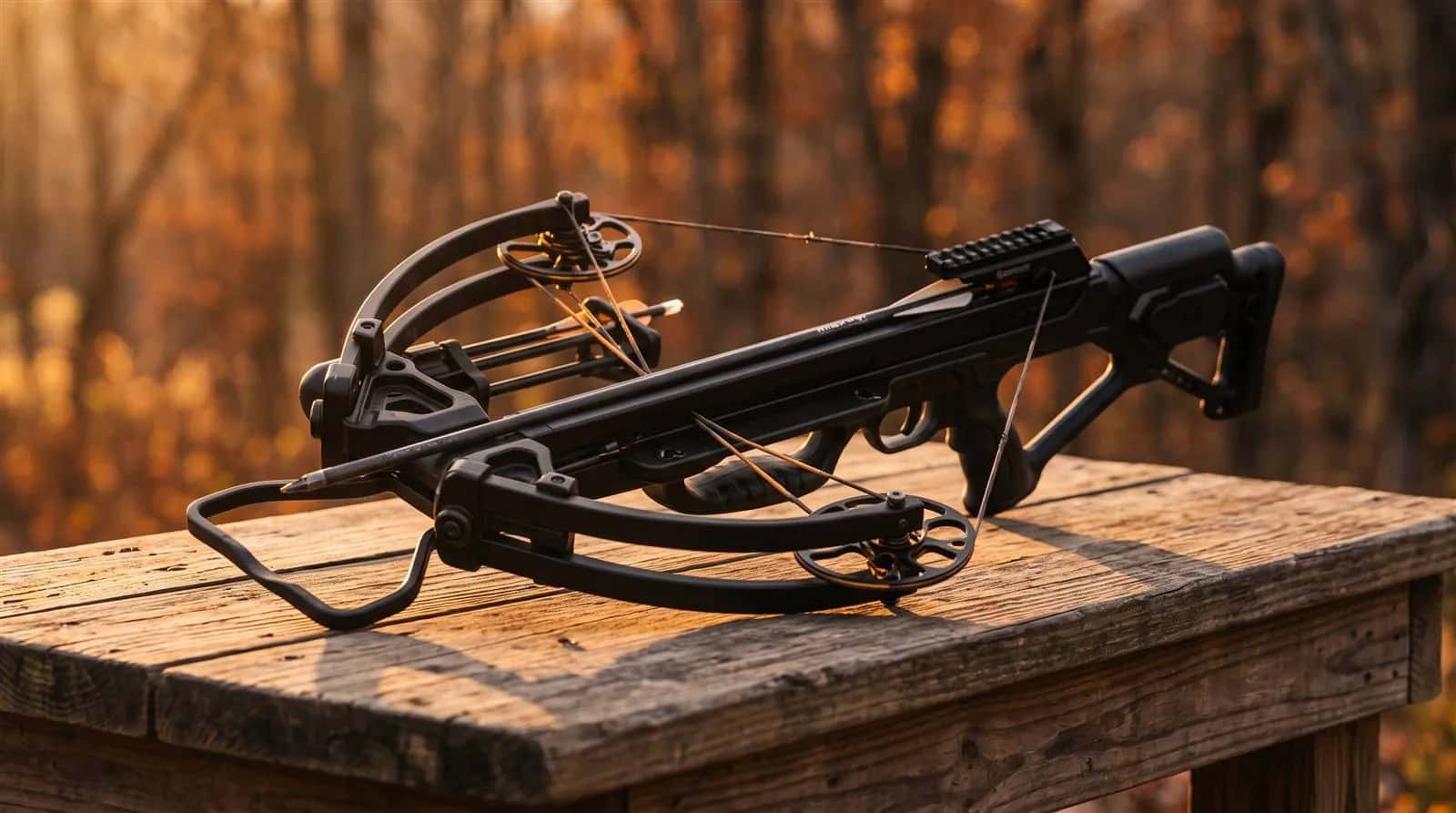
What a rangefinder is in plain terms
What a rangefinder is meaning: A rangefinder is a laser device that measures the distance to a target, so a crossbow hunter can pick the right aim point for that range.
Also called: handheld rangefinder, laser rangefinder, range finder, rangefinders
A rangefinder measures the distance to whatever you point it at, usually by timing a laser pulse to the target and back. Handheld units are the common type; some crossbow scopes now build one in (see rangefinding scope).
Distance matters because a bolt drops fast once it passes your zero. Picking the wrong reticle line on a BDC reticle by even five yards can move the hit several inches at longer range. Bowhunter-education courses list rangefinders among methods for judging distance, alongside markers and practice estimating.
Many hunting rangefinders offer angle compensation, showing the horizontal distance that matters for bolt drop on uphill or downhill shots, such as from a tree stand. Our crossbow deer shot placement guide explains how ranging fits shot choice.
Why it matters
Range error is one of the most common causes of high or low hits with a crossbow, because trajectory is curved.
Ranging landmarks before a deer arrives means you do not have to move when it does.
It also helps you decline shots past your effective range rather than guessing.
How to read it on a spec sheet
- Angle compensation: shows the horizontal distance for aiming, useful from stands and on slopes.
- Minimum range: some units do not read below a few yards, which matters at close crossbow distances.
- Target priority modes (first or last target) help through brush.
- Use manufacturer specs as stated; real range on a deer is shorter than the maximum on a reflective target.
Common mistakes
- Ranging the deer as it walks in instead of ranging landmarks first.
- Using line-of-sight distance on steep angles without compensation.
- Ranging past the deer onto the background.
- Assuming the rangefinder replaces practice at known distances.
See it in our reviews
- Garmin Xero X1i — rated 4.3/5
- Burris Oracle X — rated 4.4/5
Frequently Asked Questions
Do I need a rangefinder for crossbow hunting?
It is strongly recommended. A crossbow bolt drops quickly past its zero, so knowing the exact distance decides which aim point to use. Ranging landmarks from your stand before the hunt is the simplest use.
What is angle compensation?
It is a mode that shows the horizontal distance rather than the straight-line distance on uphill or downhill shots. Bolt drop depends on horizontal distance, so it gives a better aiming figure from a stand.
Is a rangefinder legal for hunting?
Handheld rangefinders are legal in most states, but some states restrict electronics attached to a crossbow or bow. Check our crossbow hunting laws by state page and your wildlife agency before the season.
What is the difference between a rangefinder and a rangefinding scope?
A handheld rangefinder is a separate device you put down before shooting. A rangefinding scope builds the laser into the sight so you range and aim with one unit.
How should I use a rangefinder from a tree stand?
Range a few landmarks such as trees, rocks or trail crossings at known distances as soon as you settle in. When a deer arrives you can judge range from the landmarks without moving.
Can I judge distance without a rangefinder?
Yes. Hunter-education courses teach markers, pacing and practice estimating. These are useful backups, but a laser reading removes most of the guesswork.
Related guides
Guides where rangefinder shapes a real choice.
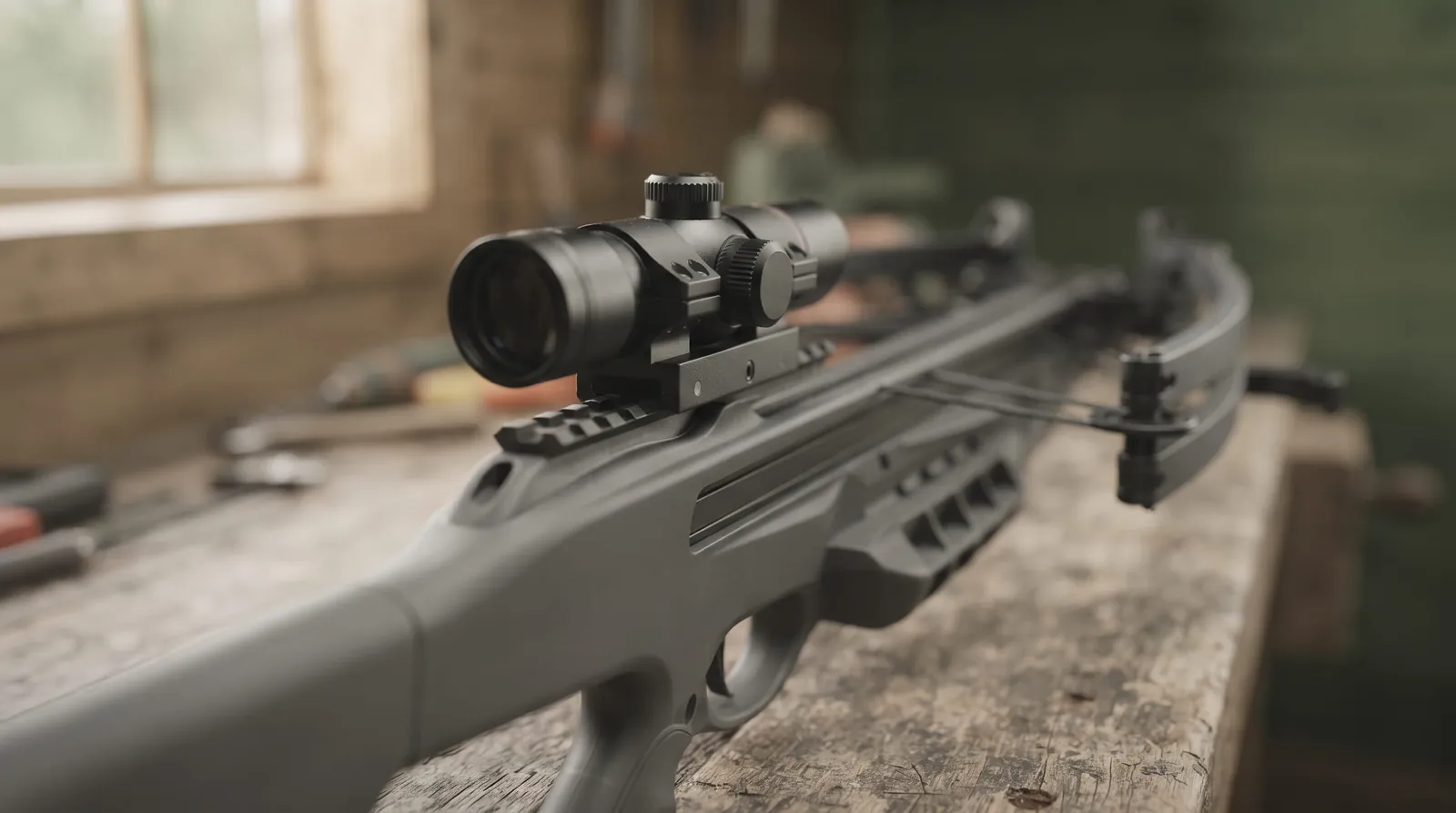 GuideHow to Choose a Crossbow ScopeChoose a crossbow scope in eight steps, from intended use, reticle and magnification to eye relief, illumination, glass and mounting matched to your bolt speed.Read the guide
 GuideCrossbow Hunting Guide: Game, Setup, Shot and RecoveryThe crossbow hunting hub: game and energy guidance, legality, pre-season setup, stand or blind, shot placement, tracking, gear and safety.Read the guide
 GuideCrossbow Hunting Laws by State (2026)Crossbow hunting rules by state for the current season: who may use a crossbow and when, licensing, equipment limits, and the official sources to verify.Read the guide
Definitions are general information. Manufacturer figures vary, so follow your crossbow's manual and verify local laws with the relevant authority.