What a full-body harness is in plain terms
What a full-body harness is meaning: A full-body harness is a fall-arrest system worn in a tree stand that spreads a fall's force across the body and keeps the hunter upright.
Also called: fall-arrest system, fall arrest system, safety harness, treestand harness
A full-body harness is a set of straps around the shoulders, chest and legs, joined to a tether that connects to the tree. If you slip, it stops the fall and holds you upright. Hunter-education courses often call it a fall-arrest system (FAS).
Wisconsin DNR advises wearing one every time you hunt above the ground, on ladder, hang-on and climbing stands alike, and keeping the tether short so it holds you in the seat rather than catching you below the platform. Agencies also advise using harnesses that meet Treestand Manufacturers Association (TMA) standards; older single-strap or chest-only belts are no longer recommended.
A harness only protects you while it is connected. Pair it with a lifeline so you are attached from the moment you leave the ground. Our crossbow safety rules cover the full climbing routine.
Why it matters
Falls are among the most serious hunting accidents, and many happen while climbing in or out of a tree stand.
Hanging in a harness is dangerous too. Wisconsin DNR warns that suspension trauma can happen quickly and can be fatal, and suggests a suspension relief strap so you can stand in it and take pressure off your legs.
Practising in the harness at ground level, as agencies advise, means you know how to recover before you need to.
How to read it on a spec sheet
- Look for TMA certification and a manufacturer date; follow the replacement interval in the instructions.
- Check the weight rating against you plus clothing.
- Look for an included suspension relief strap and tether.
- Inspect straps and stitching for wear before each season and each hunt.
Common mistakes
- Wearing the harness but clipping in only once at the top of the stand.
- Leaving slack in the tether so you would fall below the platform.
- Using a harness past its replacement date or after a fall.
- Never practising how to get back onto the stand while suspended.
Frequently Asked Questions
Do I need a full-body harness in a tree stand?
State agencies such as Wisconsin DNR advise wearing one every time you hunt above the ground, whatever type of stand you use. It is the core piece of tree stand safety equipment.
What is a fall-arrest system?
It is the harness, tether and any lifeline that together stop a fall and hold you. Hunter-education courses use the term for the full set of equipment rather than the harness alone.
How short should the tether be?
Short enough that the tether holds you in your seat rather than letting you drop below the platform. Adjust it with no slack when seated, following the harness instructions.
What is suspension trauma?
It is the danger of hanging in a harness, where leg straps restrict blood flow. Wisconsin DNR warns it can be fatal quickly, so carry a relief strap and a way to call for help.
Are old chest belts safe?
Agencies no longer recommend single-strap waist or chest belts because they do not hold a falling hunter upright. Use a full-body harness that meets TMA standards.
When should I replace my harness?
Follow the manufacturer replacement date and replace it immediately after it has arrested a fall. Inspect it for wear before each season and before every hunt.
Related guides
Guides where full-body harness shapes a real choice.
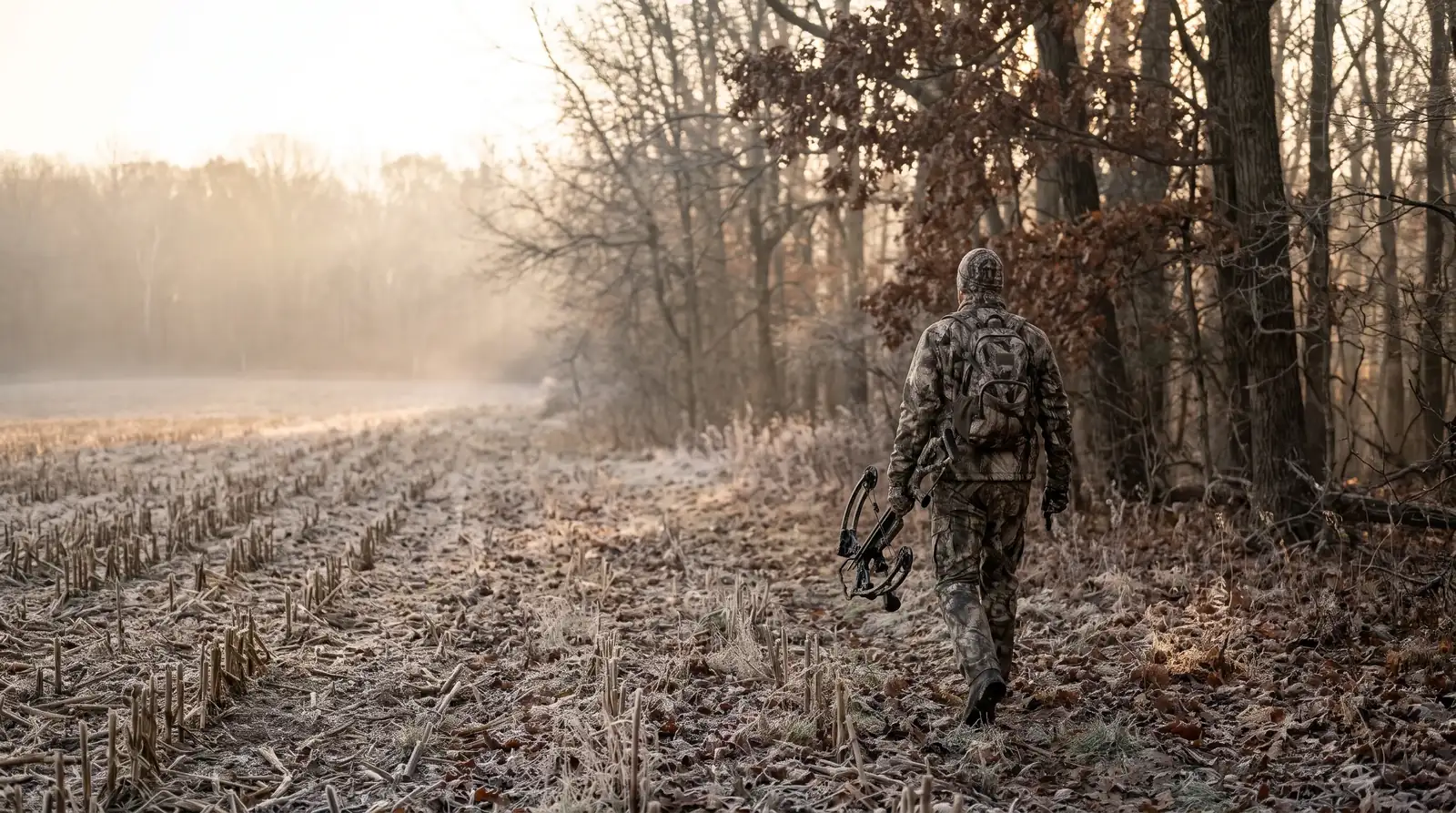 GuideCrossbow Hunting Guide: Game, Setup, Shot and RecoveryThe crossbow hunting hub: game and energy guidance, legality, pre-season setup, stand or blind, shot placement, tracking, gear and safety.Read the guide
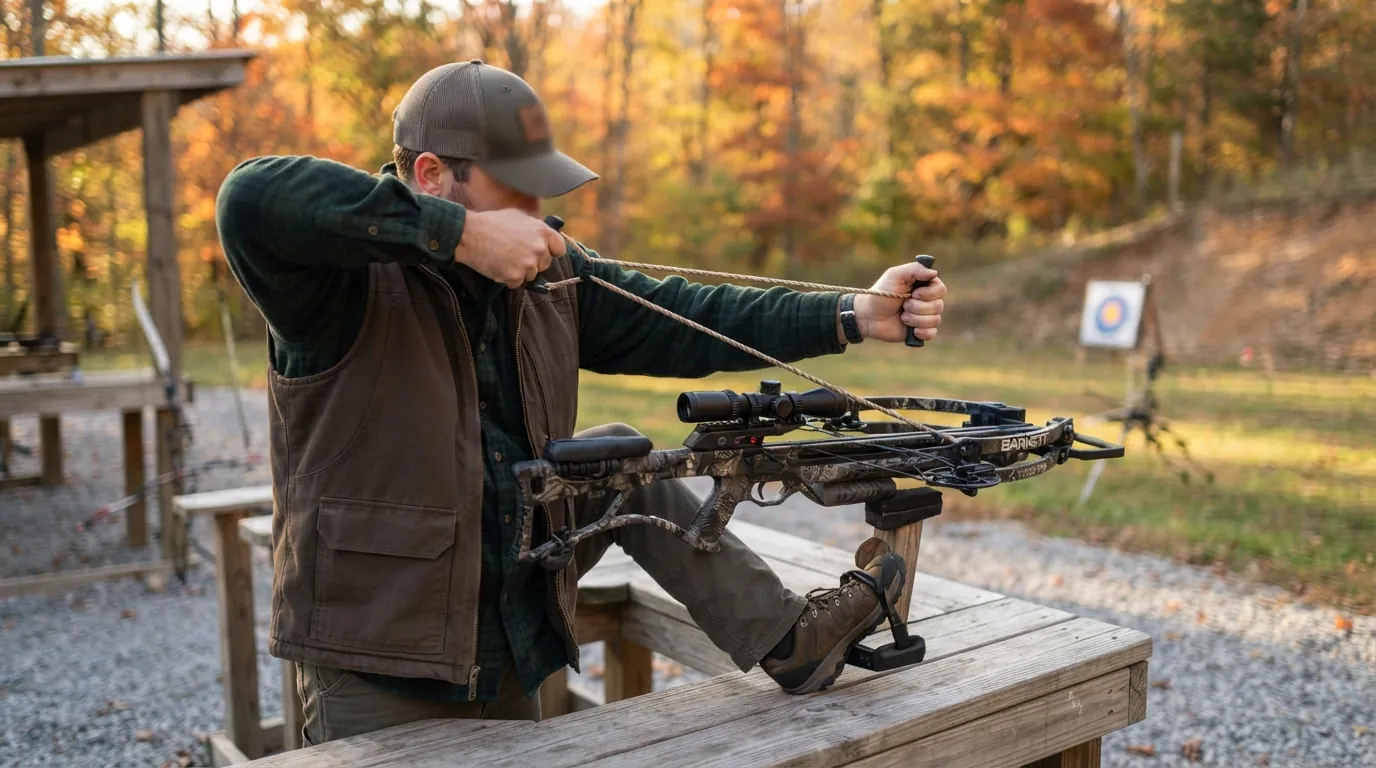 GuideHow to Cock a Crossbow: By Hand, Rope or CrankHand cocking, rope cocking, crank devices and integrated systems compared, with the steps that keep the string centered and your fingers clear.Read the guide
Definitions are general information. Manufacturer figures vary, so follow your crossbow's manual and verify local laws with the relevant authority.