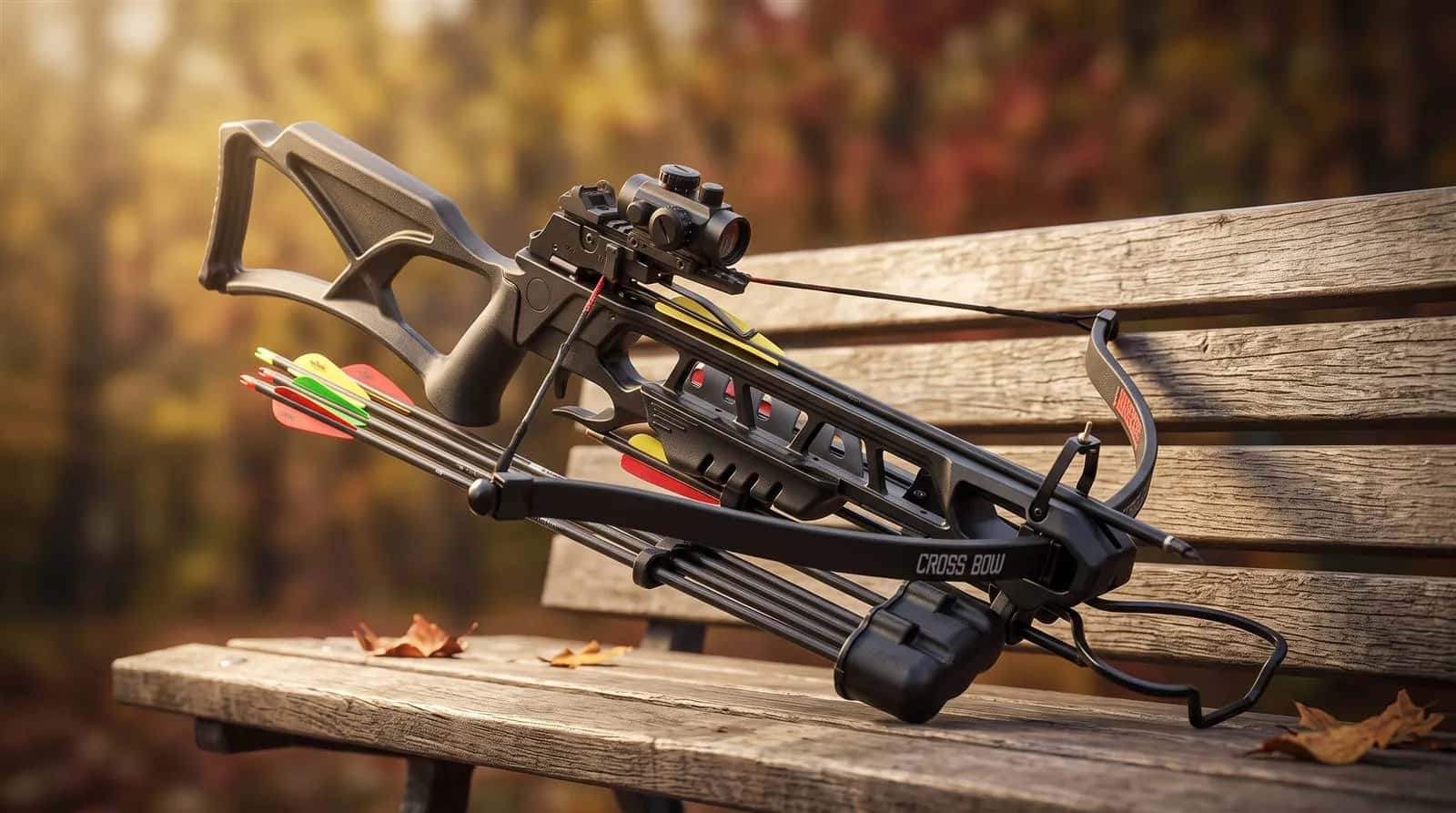
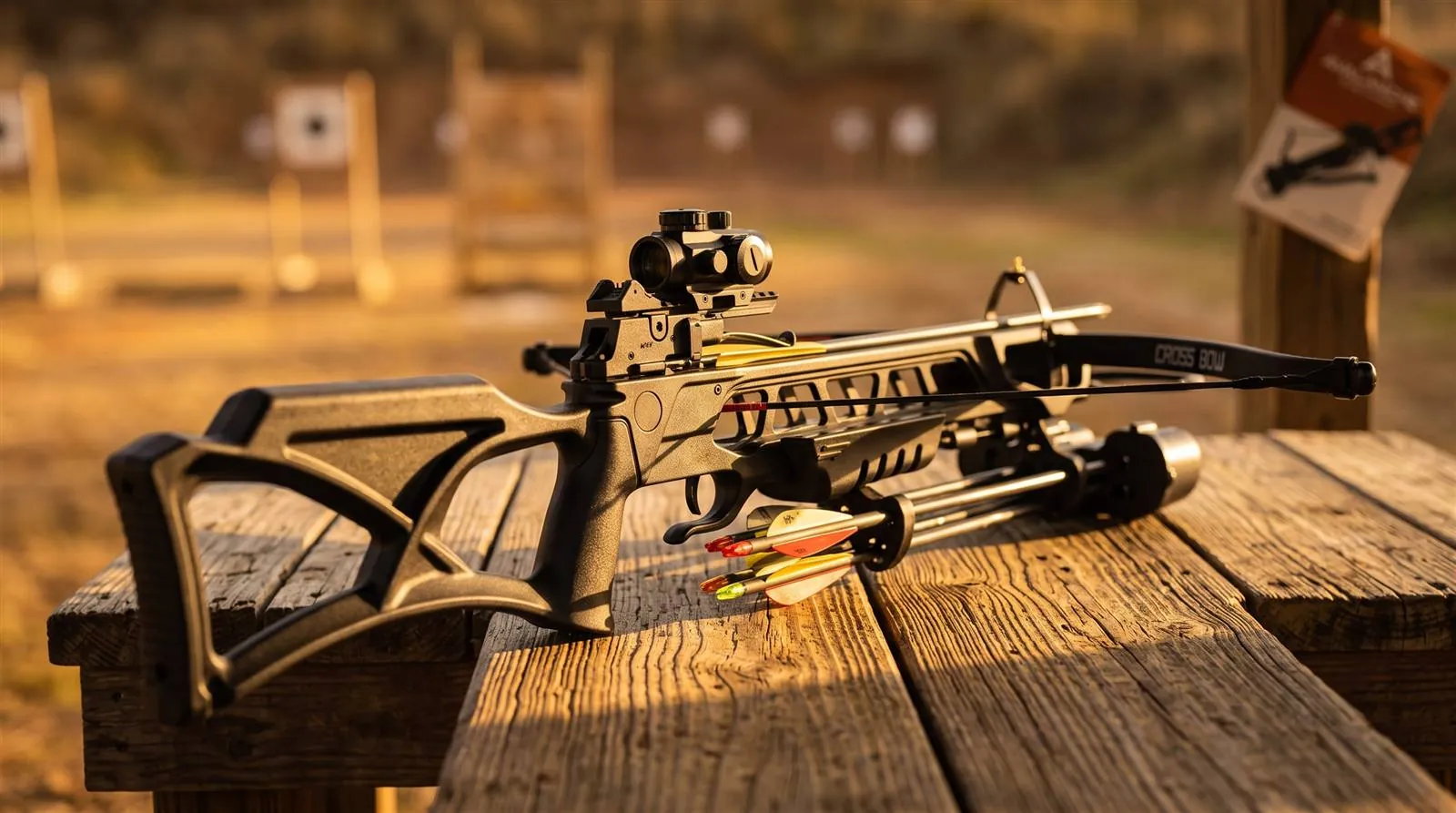
Most people shopping for a first crossbow under $250 expect to give something up, and with the Avalanche Anaconda you give up easy cocking and distance accuracy. For $219–$239 you get a 175 lb recurve crossbow kit that chronographed at 232–241 FPS and weighs about 5 lbs, with a red dot scope, quiver, bolts, stringer, sling and cocking rope already in the box.
I ran it through my standard two-week protocol: I chronographed its speed, shot it for accuracy at three distances and logged cocking effort across 25+ cycles. This review covers the price, specs, noise, problems and who should pick it over a compound or a pistol crossbow.
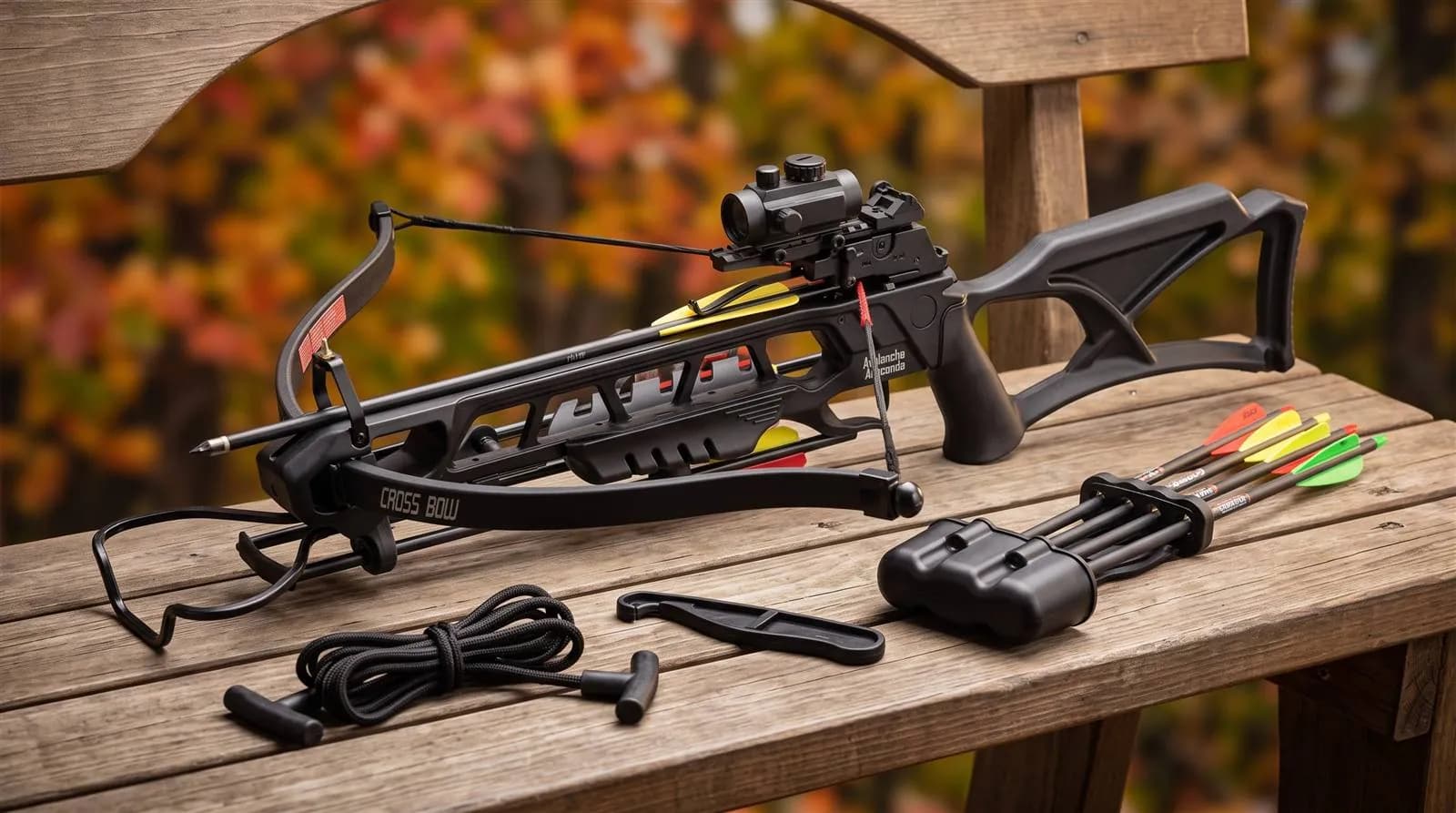
Avalanche Anaconda Specifications
These are the Avalanche Anaconda specs, kit contents and price in one table.
| Specification | Details |
|---|---|
| Speed | Up to 245 FPS (16" aluminum bolt) |
| Draw Weight | 175 lbs |
| Power Stroke | 18.5" |
| Stock Length | 33" |
| Weight | Approx. 5 lbs |
| Stock Material | Composite construction |
| Scope | Red dot, Picatinny rail mount (batteries not included) |
| Cocking | Manual, with included cocking rope |
| Included Accessories | 4x 16" aluminum bolts, wax, stringer, sling, quiver, cocking rope |
| Warranty | Standard limited manufacturer warranty |
| Price | $219–$239 |
What I Like
Is the Avalanche Anaconda good for beginners? Its strengths are simplicity and completeness. Here is what stood out.
- Speed close to the claim. My chronograph measured 232–241 FPS with the included 16-inch aluminum bolts, just under Avalanche's 245 FPS ceiling claim.
- A complete kit for the price. Scope, quiver, bolts, stringer, sling and cocking rope are all included, so there is no accessory list to shop for afterward.
- Simple, low-maintenance limbs. The recurve system has far fewer moving parts than a comparable compound crossbow, so there is less to maintain and less that can go out of time.
- Light to carry. At 5 lbs, it is one of the lightest crossbows I have tested and was easy to shoulder for extended periods.
- A useful cocking rope. It reduced felt draw effort enough that most adult shooters could cock the Anaconda consistently without a separate crank device.
So far in testingCheck the current price if a complete, simple recurve kit under $250 is what you are after.
Potential Drawbacks
What are the problems with the Avalanche Anaconda? Cocking effort and distance accuracy are the two big ones.
- High cocking effort. With 175 lbs of draw weight and no mechanical multiplication, cocking takes noticeably more effort than on any HeliCoil or ACUslide-equipped crossbow I have tested.
- Wider groups at distance. At 40 and 60 yards, my groups were meaningfully wider than those of every compound crossbow in my review library.
- A basic optic. The red dot scope does not hold zero as reliably as the illuminated multi-reticle scopes bundled with premium packages.
- 245 FPS is a ceiling figure. It is achieved with the lightest included bolts, so heavier hunting arrow weights will shoot meaningfully slower.
Key Features Explained
Why is a recurve crossbow harder to cock?
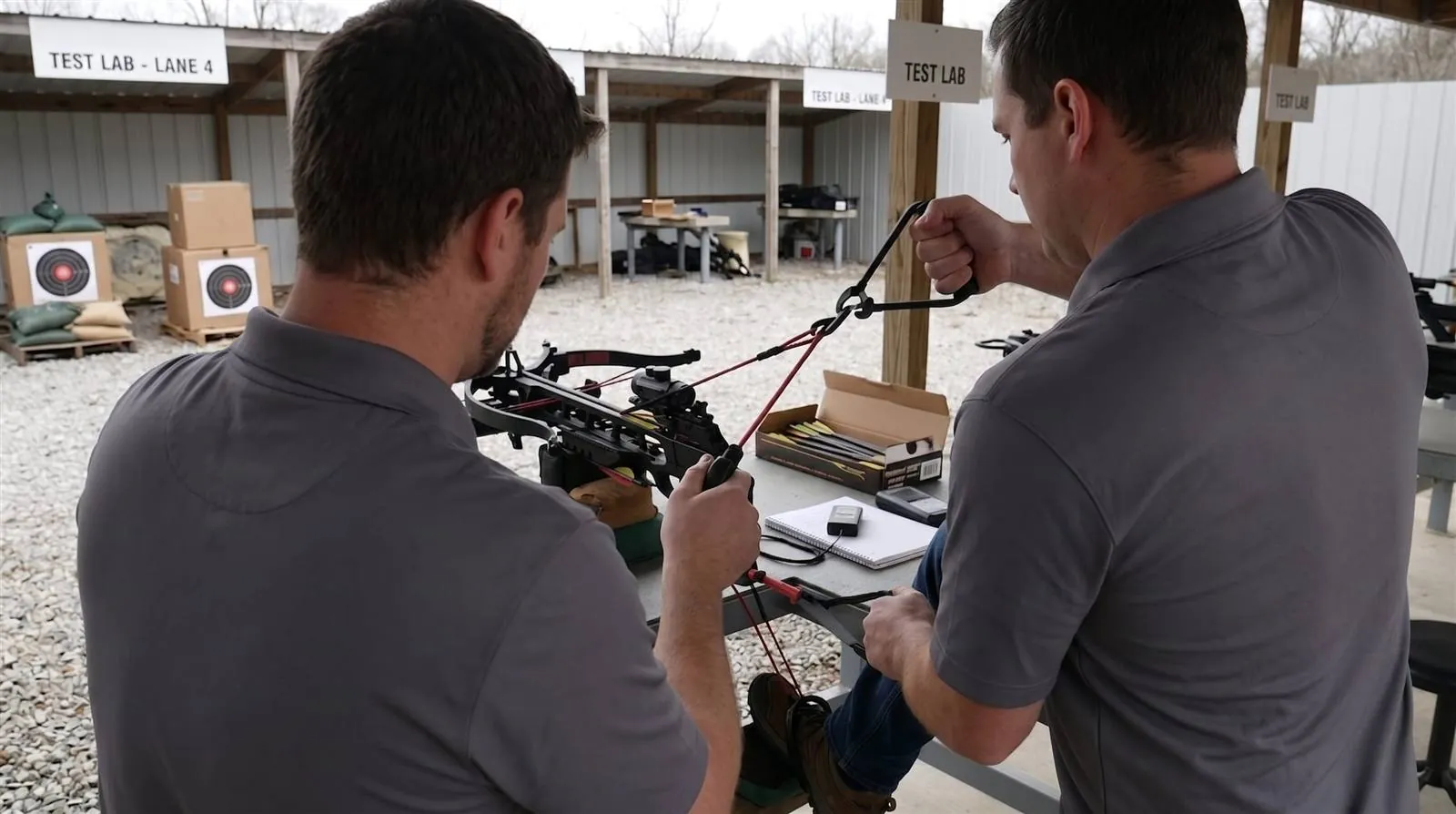
A compound crossbow's cam system multiplies the effort you put into cocking, which is why models with 300+ lbs of draw weight can be cocked with roughly 12 lbs of felt effort. The Anaconda's recurve limbs have no such multiplication, so you work against close to the full 175 lbs of draw weight, aided only by the leverage of the included cocking rope. If you are unsure whether 175 lbs is realistic for you, run it through the cocking effort estimator before buying. In exchange the mechanism is far simpler: no cam timing to maintain, no proprietary cocking system to fail, and a lower price. The glossary explains the recurve crossbow design, and my compound vs. recurve crossbow guide covers the fundamentals in depth.
How good is the included cocking rope?
The rope is the only mechanical help the Anaconda offers. In my testing it made cocking manageable and repeatable for most adults, but the experience differs from a compound crossbow's integrated system, and buyers should expect that going in. My guide on how to cock a crossbow covers the technique.
How much does weight and simplicity matter?
At approximately 5 lbs, the Anaconda is lighter than several premium compound models I have tested. Combined with the simple recurve mechanism, that makes it easy to carry, understand and maintain, which matters to first-time buyers who do not want to learn cam timing before their first hunt.
What is the red dot scope like?
The bundled red dot scope is functional but basic. It held zero for most of my testing but drifted slightly more than the illuminated multi-reticle scopes on premium packages after repeated cocking cycles. The quiver, bolts, stringer, sling and cocking rope are all usable rather than token inclusions, which is a large part of the kit's value at this price.
Performance & Usability
How fast is it, and what does that mean for energy?
Avalanche rates the Anaconda at up to 245 FPS with its 16-inch aluminum bolt. My chronograph readings with those same bolts were 232–241 FPS. I did not weigh the bolts, so I cannot quote a kinetic energy figure; put the measured speed and your bolt's grain weight into the kinetic energy calculator to see what it carries at your draw.
How accurate is the Avalanche Anaconda?
Once zeroed, my 20-yard groups were reasonably tight. The 40 and 60-yard groups opened up wider than on every compound crossbow I have reviewed, which reflects budget-tier manufacturing tolerances and the recurve platform's limits at distance rather than a defect in this unit.
How consistent is the cocking?
Across the full testing window, the limbs cocked the same way cycle after cycle, with no drift in feel or draw length. A mechanism with fewer moving parts has less to fall out of tune.
How does it handle and carry?
The low weight and simple stock profile made the Anaconda comfortable to shoulder and carry over a full range session, in contrast to the heavier compound packages in my library.
How long does setup take?
The Anaconda ships mostly assembled. Scope mounting and a full 20-shot zeroing process took about 40 minutes, including string installation with the included stringer. Check the red dot's zero at the start of each session, since it holds zero less reliably than premium illuminated optics. My guide to sighting in a crossbow scope walks through the steps.
Care and storage
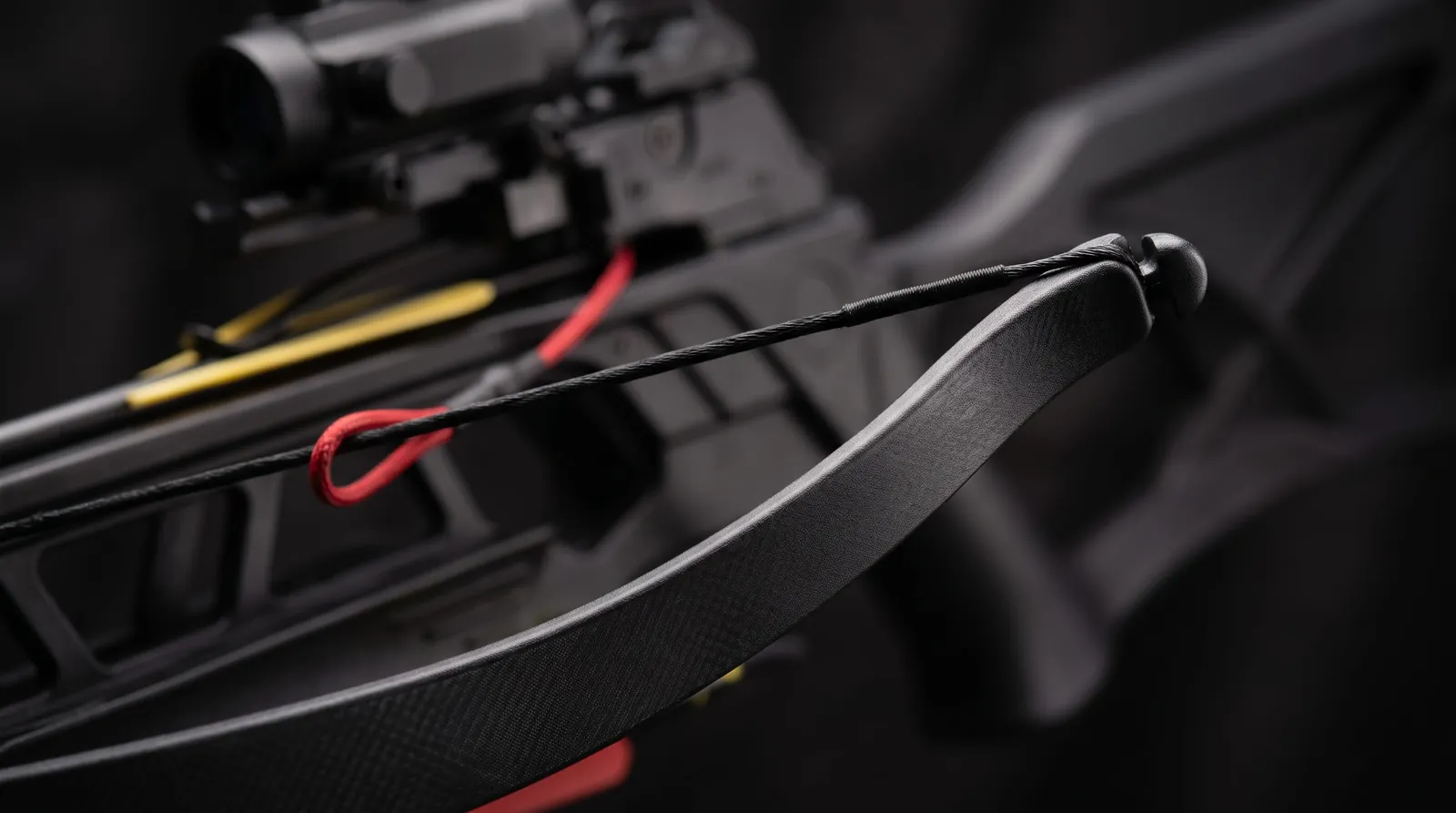
Wax the string regularly with the included wax, and inspect the limbs periodically for cracks or stress marks, because no integrated system masks developing limb problems. At 5 lbs and a 33-inch stock length it is easy to carry and store, though uncocked limbs give it a wider footprint than a cocked compound crossbow. More upkeep steps are in my crossbow maintenance guide.
Who Is the Avalanche Anaconda For?
Best suited to:
- A first-time buyer who wants to try crossbow shooting or hunting without a large financial commitment
- Someone who values mechanical simplicity: fewer moving parts and nothing proprietary to fail
- A backup or loaner crossbow buyer who wants a complete kit at minimal cost
Consider something else if:
- You hunt regularly beyond 40 yards and need tighter groups
- You want reduced cocking effort without a separate device
You can compare more models on the recurve crossbows hub.
Avalanche Anaconda vs Alternatives
Should you spend a little more, or less? Each rival's price and rating comes from its own review.
| Model | Price | Format | My rating | Buy |
|---|---|---|---|---|
| Avalanche Anaconda | $219–$239 | Recurve, rope cocking | 4.0 / 5 | |
| Barnett Hyper Whitetail 410 | $425–$485 | Compound, rope sled | 4.3 / 5 | Check price on Amazon |
| Barnett Demun Accu Strike | $145–$165 | Pistol, break-action | 4.1 / 5 | Check price on Amazon |
| Ravin R26X | $1,999–$2,199 | Compound, HeliCoil | 4.7 / 5 | Check price on Amazon |
- The Whitetail 410 costs roughly twice as much and brings a compound cam system, higher speed and tighter groups at extended range, but the Anaconda is simpler.
- The Demun Accu Strike is cheaper and reloads faster, but it is a short-range pistol, not a rifle-stock crossbow.
- The Ravin R26X costs roughly ten times as much, and it shows what the compound platform delivers at the top end of my library.
Two other budget options worth a look are the Barnett Recruit XP, a 350 FPS-rated compound at $339–$449, and the Barnett Wildcat CRX, a $199.99–$229.99 recurve rated 280 FPS with a heavier 195 lb draw.
Read nextCompare crossbows under $500 and $1,000If the Anaconda feels too limited, my budget roundup lists the next steps up.What's in the Box and What Else You Need
Is the Anaconda really a complete kit? Almost, with a few gaps worth planning for.
| Item | In the package? | Note |
|---|---|---|
| Red dot scope on a Picatinny mount | Yes | Batteries are not included |
| 4 x 16" aluminum bolts | Yes | Only four |
| Cocking rope | Yes | The only mechanical help for cocking |
| Stringer | Yes | Used to install the string |
| Quiver, sling and wax | Yes | Listed accessories |
| Red dot batteries | No | Buy before your first session |
| Broadheads and a target | No | Not part of the kit |
Compatibility. The listed bolts are 16-inch aluminum. I tested with those only, and I have no documented figures for other bolt lengths or weights, so check the manual before changing bolts. The 245 FPS figure is tied to the 16-inch aluminum bolt.
The warranty is a standard limited manufacturer warranty; a dry-fire voids it, so the warning above is the one ownership rule that matters most.
Symptoms and what to do
| What you notice | Likely cause | What to do |
|---|---|---|
| Red dot point of impact shifts | Basic optic and repeated cocking | Re-check the zero each session |
| Groups wide at 40 and 60 yards | Recurve platform and budget tolerances | Keep shots closer and practise at 20 |
| Cocking is tiring | 175 lbs and no cam multiplication | Use the rope correctly; consider a compound if effort is a problem |
| Visible cracks or marks on limbs | Stress or impact damage | Stop shooting and contact the manufacturer |
Worked example: what a step up costs
The Barnett Hyper Whitetail 410 is $425–$485, so stepping up from the Anaconda's $219–$239 costs $206 to $246. The Demun Accu Strike is $145–$165, so stepping down saves $74 at either end. Neither number tells you which crossbow to buy; it shows the question is what the money changes. Stepping up buys a compound's cam system, scope and sled in one kit. Stepping down buys a lighter, close-range pistol format.
Value for Money
At $219–$239, the Anaconda costs roughly half as much as the Barnett Hyper Whitetail 410 ($425–$485) and a small fraction of a premium compound like the Ravin R26X ($1,999–$2,199). Both alternatives offer a compound cam system, higher speed, and tighter accuracy at extended range, but neither matches the Anaconda's price or mechanical simplicity.
For buyers who are not chasing compound performance, the value case held up in my testing: the kit is complete and the limbs need little upkeep. It is a budget trade-off rather than a hidden bargain, and hunters who want easier cocking or tighter groups past 40 yards will find every compound crossbow I have tested a better tool at several times the price. New to the hobby? My best crossbows for beginners guide helps you weigh your options.
At its rated 245 FPS, the kinetic energy calculator shows what the Avalanche Anaconda Crossbow delivers with the bolt weight you plan to shoot, and the bolt drop chart estimates how far each reticle mark falls at that speed. The cocking effort estimator compares its 175-lb draw weight by hand, rope and crank. If you plan to replace the scope, the scope speed matcher lists reviewed scopes calibrated for 245 FPS. Every other model I have tested in this class is compared on the recurve crossbows page.
Where the Avalanche Anaconda Crossbow ranks
The Avalanche Anaconda Crossbow earned a place in Best Crossbows for Beginners 2026 (#2) and Best Crossbows Under $1,000 (2026) (#2), where it is scored against every other model I tested for that use. For a direct head-to-head, see Crossbow vs Compound Bow Compared and Compound vs Recurve Crossbow Compared. It also comes up in Recurve Crossbow Buying Guide, How to Cock a Crossbow: Rope vs Crank, Crossbow Draw Weight by Body Size and How Fast Does a Crossbow Bolt Travel?.
Final Verdict
Avalanche Anaconda Crossbow
4.0 / 5 — Is it worth buying?
The Avalanche Anaconda is one of the most accessible crossbows I have tested: a complete kit, chronographed at 232–241 FPS, for a price no compound crossbow in my library matches. The trade-off is cocking effort and wider groups at 40 and 60 yards than every compound model I have reviewed.
Best for
First-time buyers, backup or loaner crossbows, anyone who wants simplicity over performance
Skip if
You hunt regularly beyond 40 yards or want reduced cocking effort
Score breakdown
- Speed (FPS)4.1/5
- Accuracy3.9/5
- Build Quality4.2/5
- Ease of Cocking2.8/5
- Value for Money4.8/5
- Noise Level4.3/5
- Speed
- 245 FPS
- Draw weight
- 175 lbs
- Weight
- 5 lbs
- Length
- 33" overall
Typical price
$219–$239
Frequently Asked Questions
Is the Avalanche Anaconda worth it?
For first-time buyers who want a complete kit at the lowest price, yes. The accessories are usable and the speed lands close to the claim. Hunters shooting beyond 40 yards or wanting compound performance should budget for a more expensive package.
How fast is the Avalanche Anaconda in real testing?
My chronograph readings were 232–241 FPS, just under the 245 FPS rating, which Avalanche achieves with the lightest compatible bolt. Heavier hunting arrows will be slower.
Is the Avalanche Anaconda hard to cock?
Compared with any compound crossbow, yes. With 175 lbs of draw weight and no cam multiplication, effort is noticeably higher, though the included cocking rope makes it manageable for most adult shooters.
Is a recurve crossbow accurate enough for hunting?
At moderate distances, yes. My 20-yard groups were reasonably tight, but accuracy opened up more than on compound crossbows at 40 and 60 yards, so plan your shot distances accordingly and check local rules.
What's included in the Avalanche Anaconda kit?
A red dot scope, quiver, four 16" aluminum bolts, wax, a stringer, a sling and a cocking rope. The package is complete for the price and lacks only broadheads. The red dot's batteries are not included.
How long does the Anaconda take to set up?
It ships mostly assembled. Scope mounting and a full 20-shot zeroing process took me about 40 minutes, including installing the string with the included stringer.
Can I dry-fire the Avalanche Anaconda, and what warranty does it have?
No. Releasing the string without a bolt risks limb damage and voids the warranty, which is a standard limited manufacturer warranty, so always load a bolt before pulling the trigger.
Is the Avalanche Anaconda loud?
Not by my scoring. I rated noise 8.7 out of 10, second only to value for money in my Final Score table. I have no decibel reading to quote, so treat that as a relative score from my testing, not a measurement.
Do I need to buy batteries for the Avalanche Anaconda?
Yes. The red dot scope comes with a Picatinny mount but its batteries are not included, so buy them before your first session and check the zero each time you shoot, since this basic optic held zero less reliably than premium scopes.
How does the Anaconda compare with the Demun Accu Strike?
The Anaconda is a $219–$239 rifle-stock recurve rated 4.0, while the Demun is a $145–$165 pistol crossbow rated 4.1 with a faster break-action reload. The price gap is $74, and the Anaconda is the longer-range platform.
Can I hunt with the Avalanche Anaconda?
It is sold for hunting, but my groups widened at 40 and 60 yards, so I would keep shots closer. Equipment and energy rules vary by location, so verify current local regulations before you hunt with any crossbow.
Related Reviews
 3.8
Barnett Wildcat CRX Review 2026
Low-cost recurve crossbow kit that lands close to its 280 FPS rating, with strong value but a heavy 195 lb draw that makes a cocking aid essential.
Read review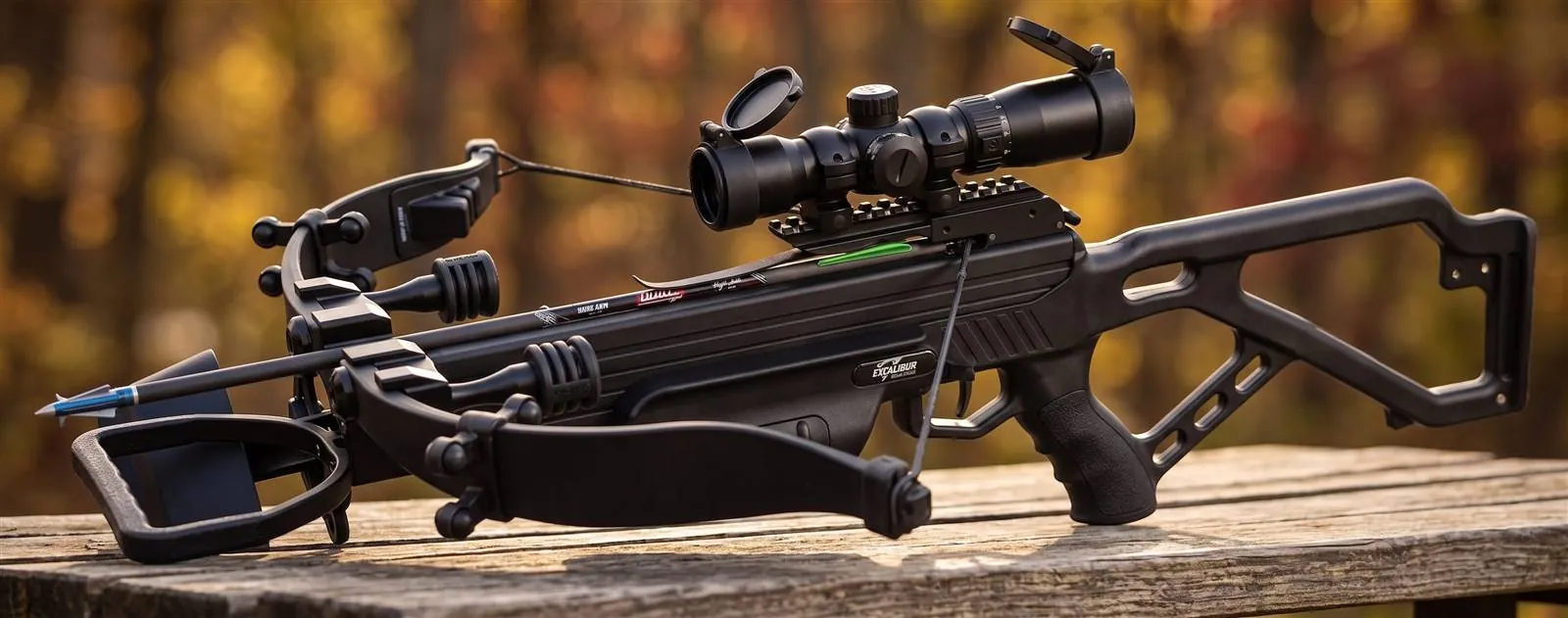 3.4
Excalibur Mag Air Review 2026
Light 4.9 lb recurve crossbow with a dependable anti-dry-fire trigger and quiet shot, measured at 299–308 FPS. Recurve simplicity at a premium price.
Read review3.5Excalibur Micro 380 Review 2026
Fastest recurve crossbow on this site at 380 FPS, with the fullest accessory kit. Premium pricing, heavy cocking and patchy retail availability.
Read review