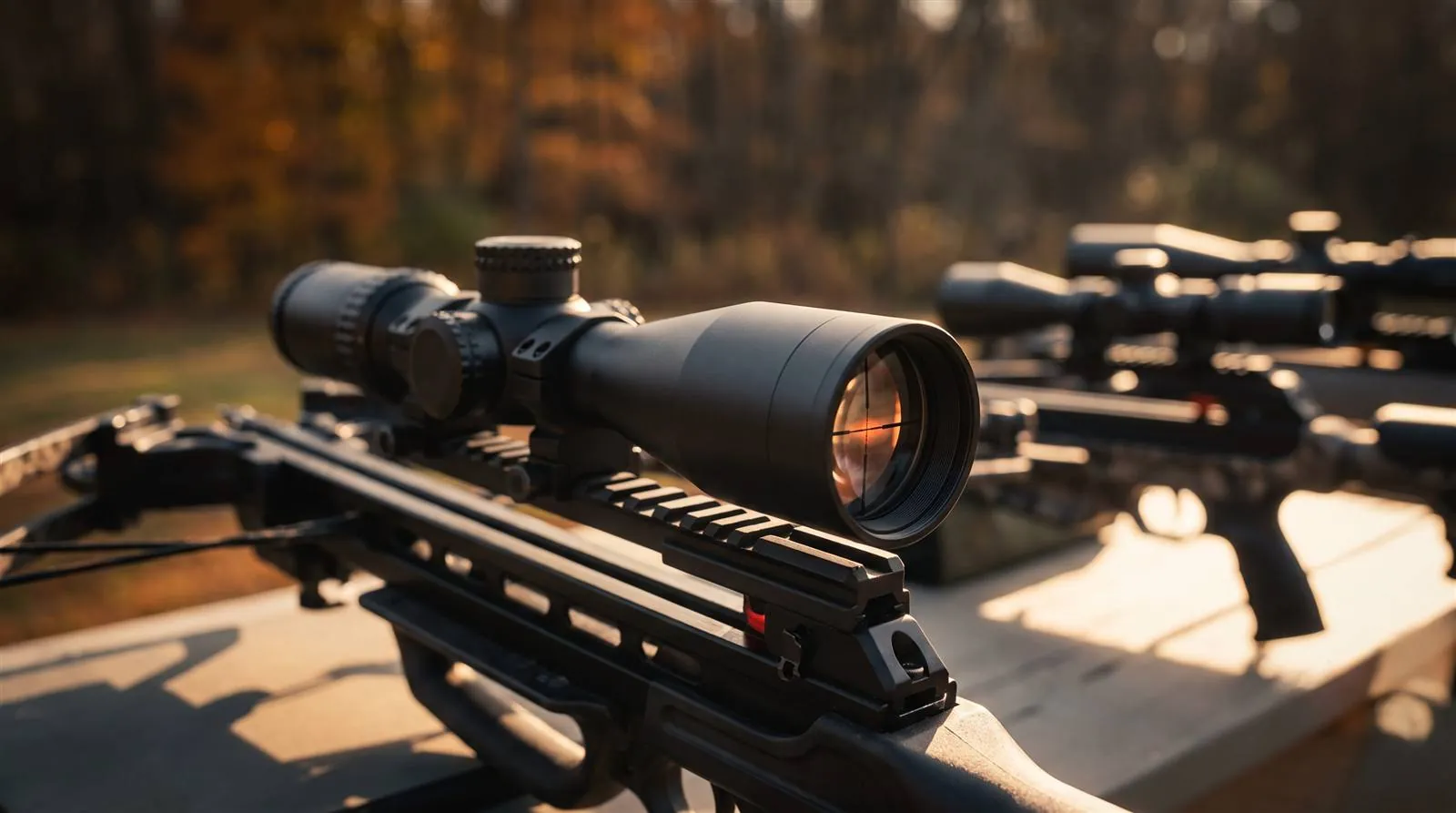
Crossbow Red Dot Sight in plain terms
Crossbow Red Dot Sight meaning: A red dot sight is an unmagnified optic that projects a lit dot as the aiming point, common on budget crossbow kits and pistol crossbows.
Also called: red dot scope, red dot, reflex sight, dot sight
A red dot sight is a non-magnifying optic that shows a single illuminated dot, usually red or green, as your aiming point. You look through a window or short tube with both eyes open, put the dot on the target and shoot. There is no magnification to set and, on most models, only one aiming point.
On crossbows, red dots appear mainly on budget kits, compact and pistol crossbows, and youth or target setups. Some models offer three dots stacked vertically for different distances, which works like a very simple BDC reticle. The sight mounts on the same rail as a scope and is zeroed with the same windage and elevation adjustments.
The appeal is speed and simplicity. The weakness is precision at distance: a dot covers more of the target as range grows, and with no magnification it is harder to place a shot exactly on a deer at 40 yards than with a magnified multi-reticle scope.
Red dot sight vs magnified crossbow scope
| Feature | Red dot sight | Magnified multi-reticle scope |
|---|---|---|
| Magnification | None (1x) | Usually fixed 3x-4x or variable 2-7x |
| Aiming points | One dot, sometimes three | Several crosshairs or dots for set distances |
| Target acquisition | Very fast, both eyes open | Slower; needs correct eye relief |
| Precision at 40 yards and beyond | Limited | Better |
| Typical use | Budget kits, pistol crossbows, close-range practice | Hunting setups and longer shots |
Why it matters
If your crossbow arrived with a red dot, it decides how far you can aim confidently. A single dot zeroed at 20 yards means every other distance is a holdover guess, so the sight sets a practical range limit before the crossbow does.
It also affects how much your zero can be trusted. In my review of the Avalanche Anaconda kit, the included red dot did not hold zero as reliably as the illuminated multi-reticle scopes bundled with premium packages, which is a common reason owners upgrade the optic before the crossbow.
For new shooters, the dot can be a good teacher: it is easy to see, quick to pick up and forgiving of head position. Once you start hunting, compare it with a proper crossbow scope before your first season.
How to read it on a spec sheet
- Dot size is given in MOA. A smaller dot covers less of the target and suits precise shots; a larger dot is faster to see but hides more of a distant target.
- Check the number of dots. One dot means one zeroed distance; three dots give rough aiming points for three distances if the spacing suits your bolt speed.
- Look for brightness settings that go low enough for dawn and dusk without blooming into a blur.
- Confirm the mount type matches your crossbow rail, usually Picatinny or Weaver style.
- Look for a recoil or crossbow rating. A sight built only for airsoft or rimfire may not hold up to the jolt of a crossbow.
Common mistakes
- Hunting at 40 yards or more with a single-dot sight zeroed at 20 and guessing the holdover.
- Turning the brightness up so far in low light that the dot flares and hides the target.
- Skipping a proper sight-in because the sight came pre-mounted on the kit.
- Assuming a three-dot sight is calibrated for your crossbow without checking each dot at its distance.
- Ignoring a sight that keeps losing zero; it will not improve with more clicks.
Getting a red dot ready to shoot
- Check that the mount screws are tight and the sight sits square on the rail.
- Set the brightness for the light you will shoot in, as low as still shows a crisp dot.
- Zero the top dot at 20 yards using the steps in our sight-in guide.
- Shoot three-bolt groups at 30 and 40 yards to learn where the bolt lands, or check the lower dots if you have them.
- Write down the hold at each distance and stay within the range where your groups are tight.
- Recheck zero after the first few sessions and after transport.
In my testing
I note whether a bundled red dot holds zero across a test session. On the Avalanche Anaconda kit it was the weakest part of an otherwise usable package, and that is recorded in the review. How I test.
Frequently Asked Questions
Is a red dot sight good enough for deer hunting with a crossbow?
It can be at close range if you have zeroed it carefully and practised. For shots past about 30 yards, a magnified multi-reticle crossbow scope gives more precise aiming points and makes shot placement easier.
What is the difference between a red dot sight and a crossbow scope?
A red dot has no magnification and usually one aiming point. A crossbow scope magnifies the target and has several aiming points spaced for set distances, which suits hunting at varied ranges.
Can I put a red dot on any crossbow?
Most crossbows use a standard rail that accepts red dot mounts, but check that the mount matches your rail and that the sight is built to handle crossbow shock. Some makers also specify which optics keep the warranty valid.
What distance should I zero a crossbow red dot at?
Twenty yards is the usual starting point because it is close enough to see small changes clearly. After that, shoot at 30 and 40 yards to learn your holdover or check the lower dots.
Why does my red dot keep losing zero?
Loose mount screws, a sight not built for crossbow shock, or a damaged internal adjustment are the usual causes. Tighten and mark the screws first; if zero still wanders, replace the sight.
Is a green dot better than a red dot?
Many shooters find green easier to see in daylight and red better in low light, but the difference is personal. Choose the colour you can see clearly without turning the brightness up too far.
Related guides
Guides where red dot sight shapes a real choice.
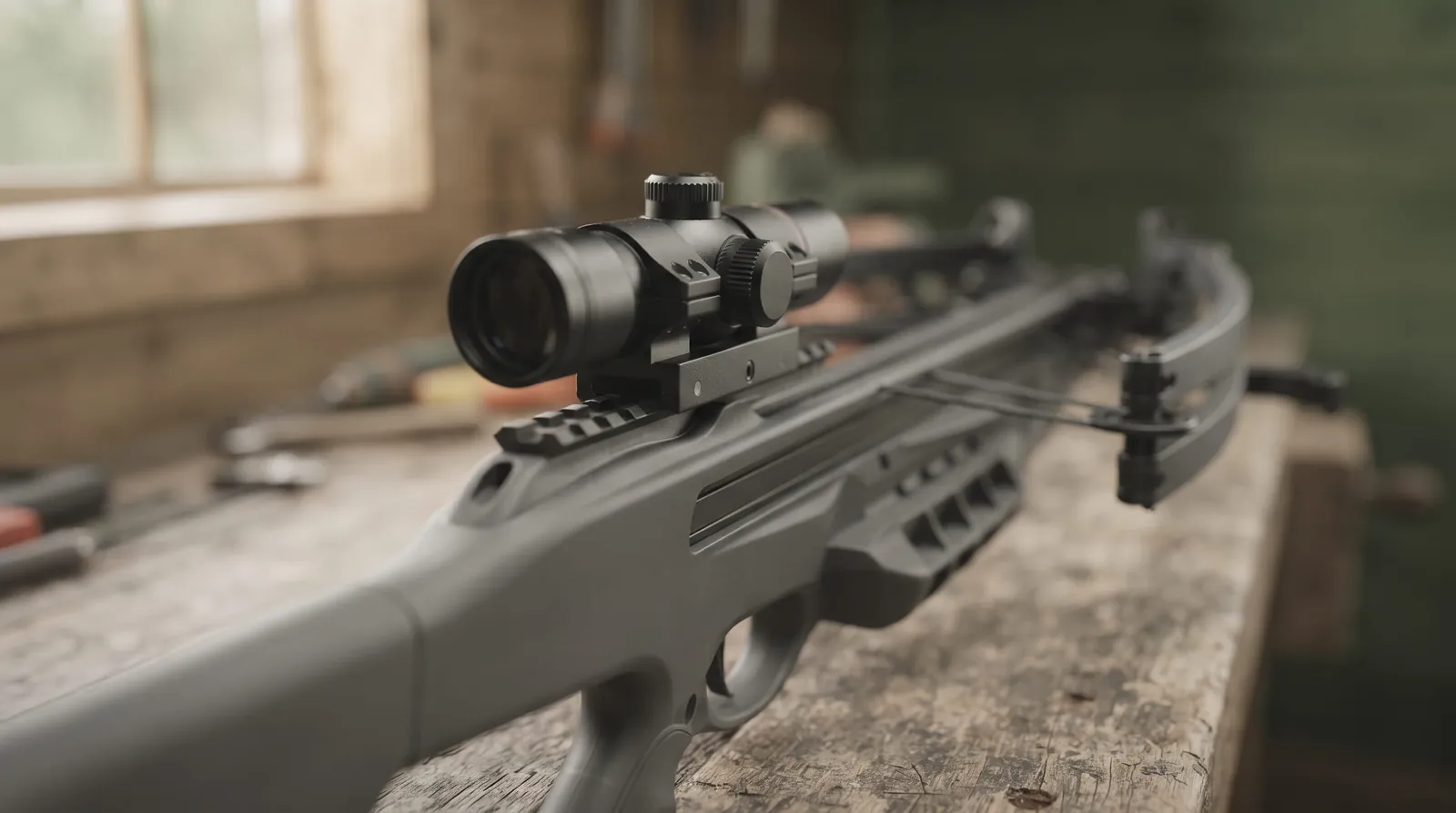 GuideHow to Choose a Crossbow ScopeSeven steps to choosing a crossbow scope: intended use, reticle type, magnification, eye relief, focal plane, parallax, and matching your bolt speed.Read the guide
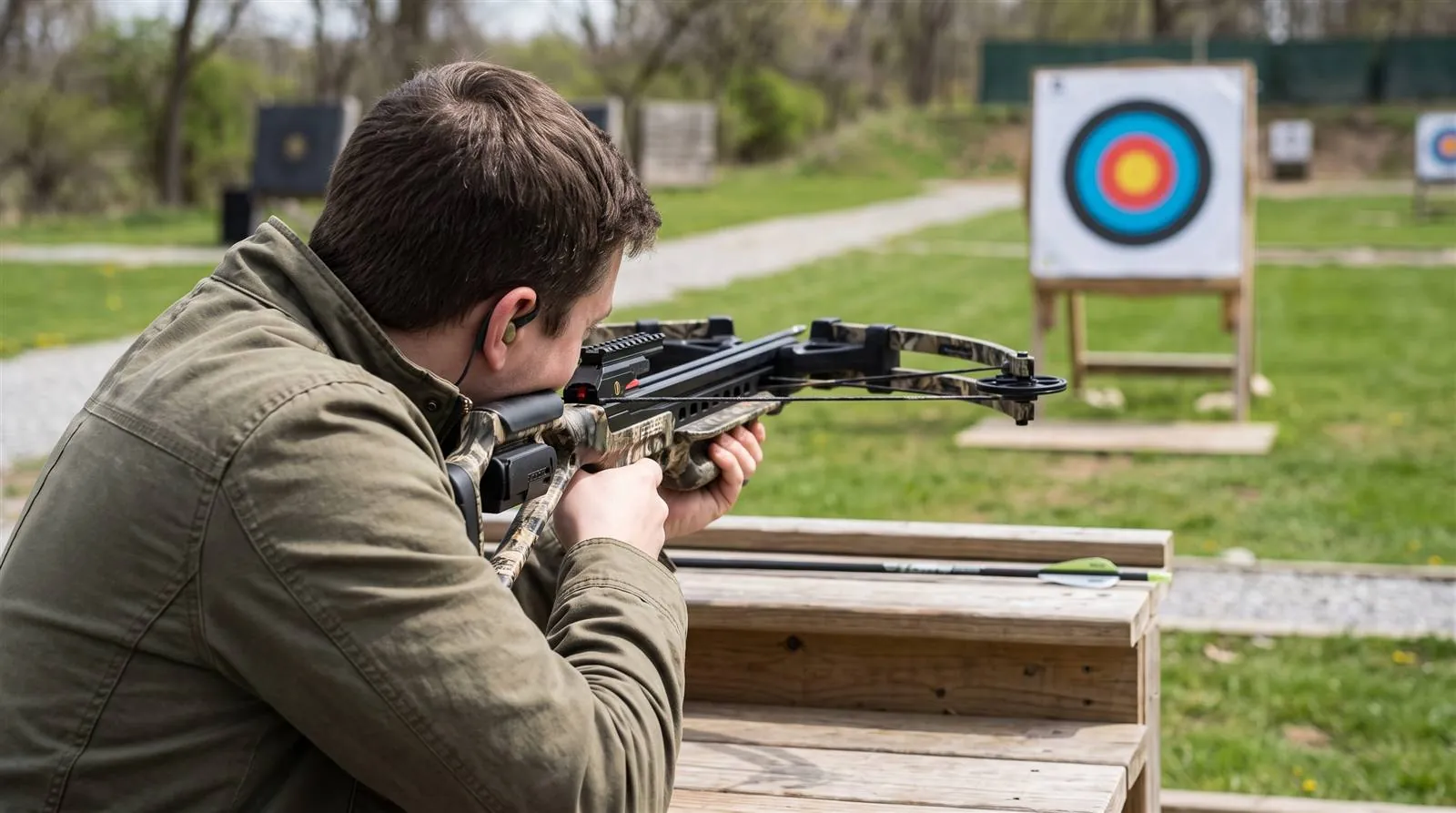 GuideHow to Sight In a Crossbow ScopeSighting in a crossbow scope step by step: safe lane setup, first zero, confirming each aiming point, and re-checking with your hunting tip.Read the guide
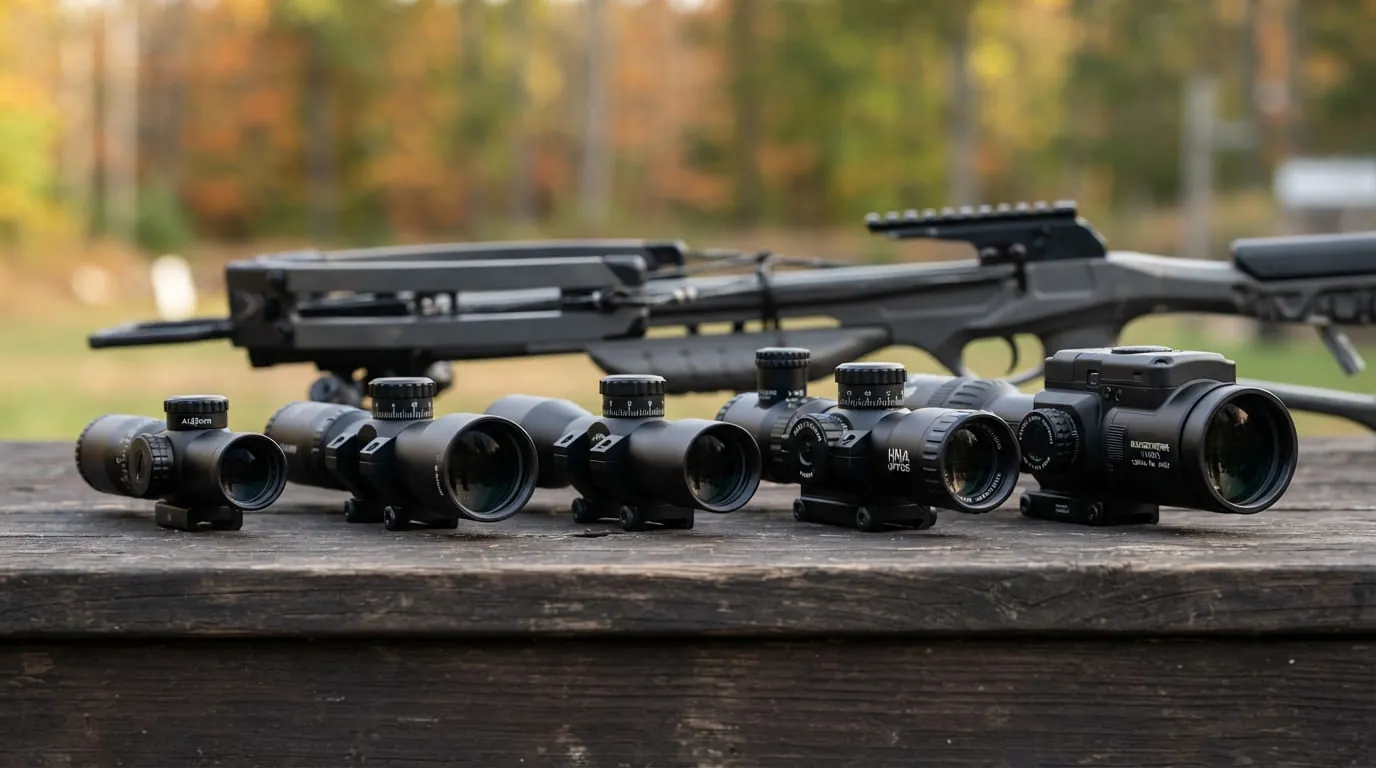 GuideBest Crossbow Scopes in 2026, TestedCrossbow scopes compared from a $45 variable-zoom scope to laser rangefinding and digital models, with reticle, magnification and speed range for each.Read the guide
Definitions are general information. Manufacturer figures vary, so follow your crossbow's manual and verify local laws with the relevant authority.