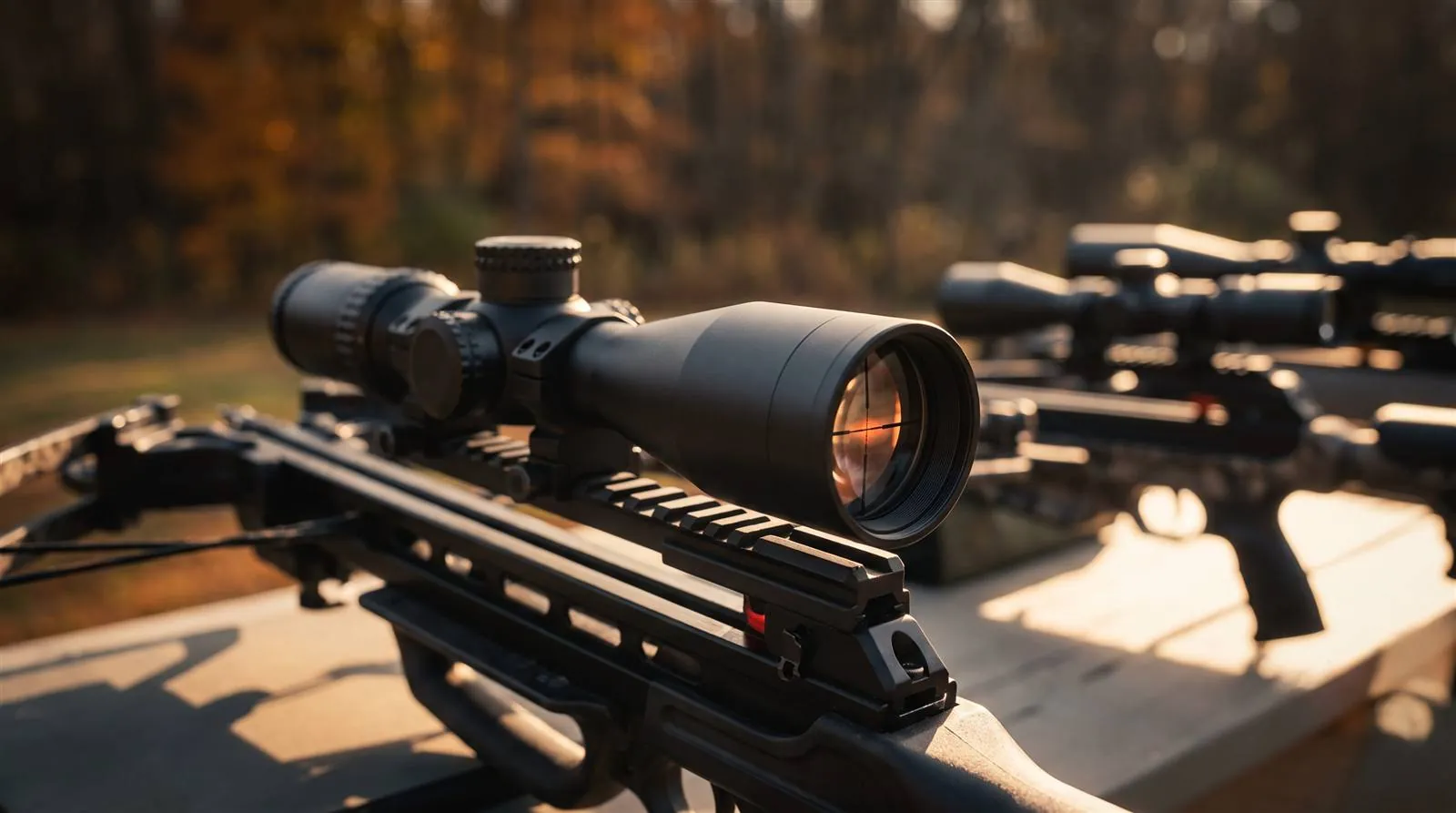
Crossbow Scope Rail (Picatinny and Weaver) in plain terms
Crossbow Scope Rail (Picatinny and Weaver) meaning: A scope rail is the slotted mount on top of a crossbow that holds the scope or sight. Most are Picatinny or Weaver style.
Also called: picatinny rail, weaver rail, scope mount, scope base, accessory rail
A scope rail is the flat, slotted strip on top of a crossbow, usually on the riser or the rear of the rail assembly, where you clamp a scope, red dot sight or other optic. Scope rings or a one-piece mount tighten onto it so the optic stays in the same place shot after shot.
Two standards dominate. A Picatinny rail has evenly spaced, uniform slots and is the more common military-derived standard. A Weaver rail looks similar, but its slots can be narrower and are not always evenly spaced. Weaver-style rings usually fit a Picatinny rail, but Picatinny rings do not always fit a Weaver rail, because the cross-bolt may be too wide for the slot.
Some crossbows, especially brand-matched packages, use a proprietary mount that only accepts that maker's scope. Short accessory rails on the side or underside of the stock carry lights, bipods or rangefinders rather than the main optic.
Picatinny vs Weaver scope rails
| Point | Picatinny | Weaver |
|---|---|---|
| Slot width | Uniform, standardised | Narrower on many rails |
| Slot spacing | Even along the rail | Can vary |
| Weaver rings on it | Usually fit | Fit |
| Picatinny rings on it | Fit | Sometimes do not fit |
| Mounting flexibility | More positions to set eye relief | Fewer positions on some rails |
Why it matters
The rail is where accuracy problems often start. A scope that is loose, cross-threaded or sitting on the wrong ring type will drift and look like a bad zero. Many cases of a crossbow shooting high, low, left or right turn out to be a mount issue rather than a scope or string problem.
It also decides what you can buy. Before ordering an upgrade scope, confirm your rail standard and the rings it needs. The TruGlo 4x32 review, for example, notes that it ships with Weaver-style rings, so you should check that your rail suits them before you order.
Rail length and slot position set how far forward or back the optic can sit, which controls eye relief. On compact crossbows with short rails, a long scope may not mount at a comfortable distance from your eye.
How to read it on a spec sheet
- Find the rail type in the manual or spec sheet: Picatinny, Weaver, dovetail or proprietary.
- Check whether the included rings or mount are Picatinny or Weaver style, and whether they fit your rail.
- Look at rail length and slot count if you need room to adjust eye relief.
- Note any extra accessory rails and what they are meant to carry.
- Read the scope warranty terms; some makers only cover their own mounts.
Common mistakes
- Fitting Picatinny rings to a narrow Weaver rail and tightening them on top of the slot rather than in it.
- Over-tightening ring screws and crushing the scope tube, or under-tightening so it creeps under shock.
- Mounting the scope too far back for the shooting position, then fighting eye relief.
- Forgetting to recheck the mount screws after the first sessions with a new optic.
- Blaming the scope for wandering zero without checking the rail and rings first.
Checking a scope mount at home
- Unload and de-cock the crossbow before working on the mount.
- Identify the rail type and make sure the ring cross-bolts sit fully in a slot.
- Set the scope position for comfortable eye relief from your normal shooting stance.
- Tighten the ring and base screws evenly to the torque in your manual, if one is given.
- Mark the screw heads with a paint pen so movement is easy to spot later.
- Sight in, then check the marks after the first few sessions.
Frequently Asked Questions
What is the difference between a Picatinny and a Weaver rail?
Both are slotted mounting rails, but Picatinny slots are uniform in width and spacing, while Weaver slots can be narrower and irregularly spaced. Weaver rings usually fit Picatinny rails, but not always the other way round.
Will a rifle scope mount on my crossbow rail?
It may physically fit, but a rifle scope is not calibrated for crossbow trajectories and may not handle the forward-and-back jolt of a crossbow. Use a scope built for crossbows and check that the rings fit your rail.
How tight should scope rings be on a crossbow?
Follow the torque figure in your scope or crossbow manual if one is given. Without one, tighten evenly and firmly enough that nothing moves, without crushing the tube. Marking the screws helps you spot loosening.
Why does my scope keep moving on the rail?
The ring cross-bolt may not be seated in a slot, the rings may be the wrong standard for the rail, or the screws may be loose. Reseat the rings fully in a slot and retighten evenly.
Can I add a rail to a crossbow that does not have one?
Only with a mount designed for that model. Drilling or modifying the crossbow can weaken it and void the warranty, so check with the manufacturer before adding any aftermarket rail.
Does scope position on the rail affect accuracy?
Indirectly. Position sets eye relief, and inconsistent head position behind the scope causes parallax and inconsistent aim. Mount it where you get a full, clear picture from your normal stance.
Related guides
Guides where scope rail shapes a real choice.
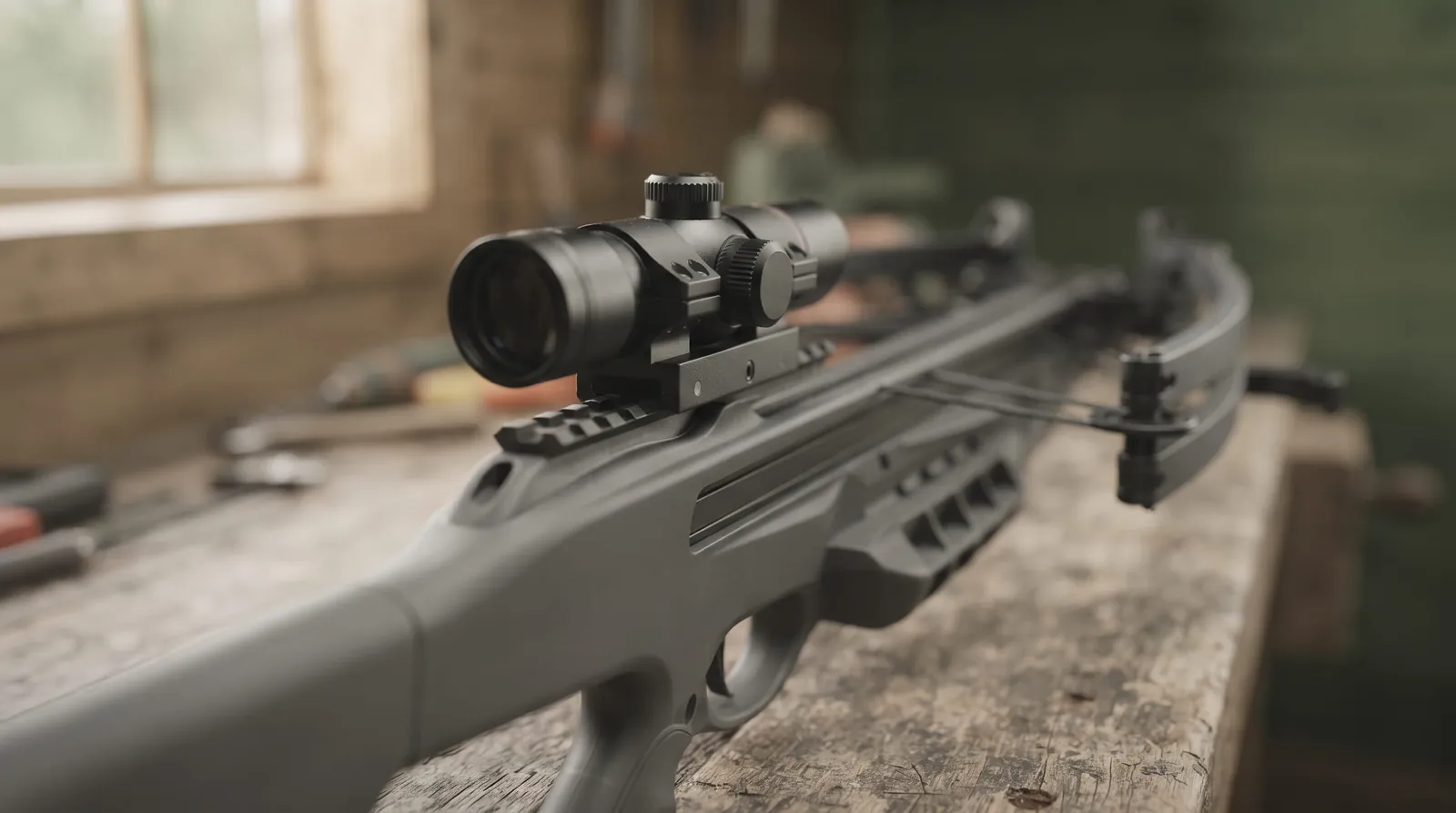 GuideHow to Choose a Crossbow ScopeSeven steps to choosing a crossbow scope: intended use, reticle type, magnification, eye relief, focal plane, parallax, and matching your bolt speed.Read the guide
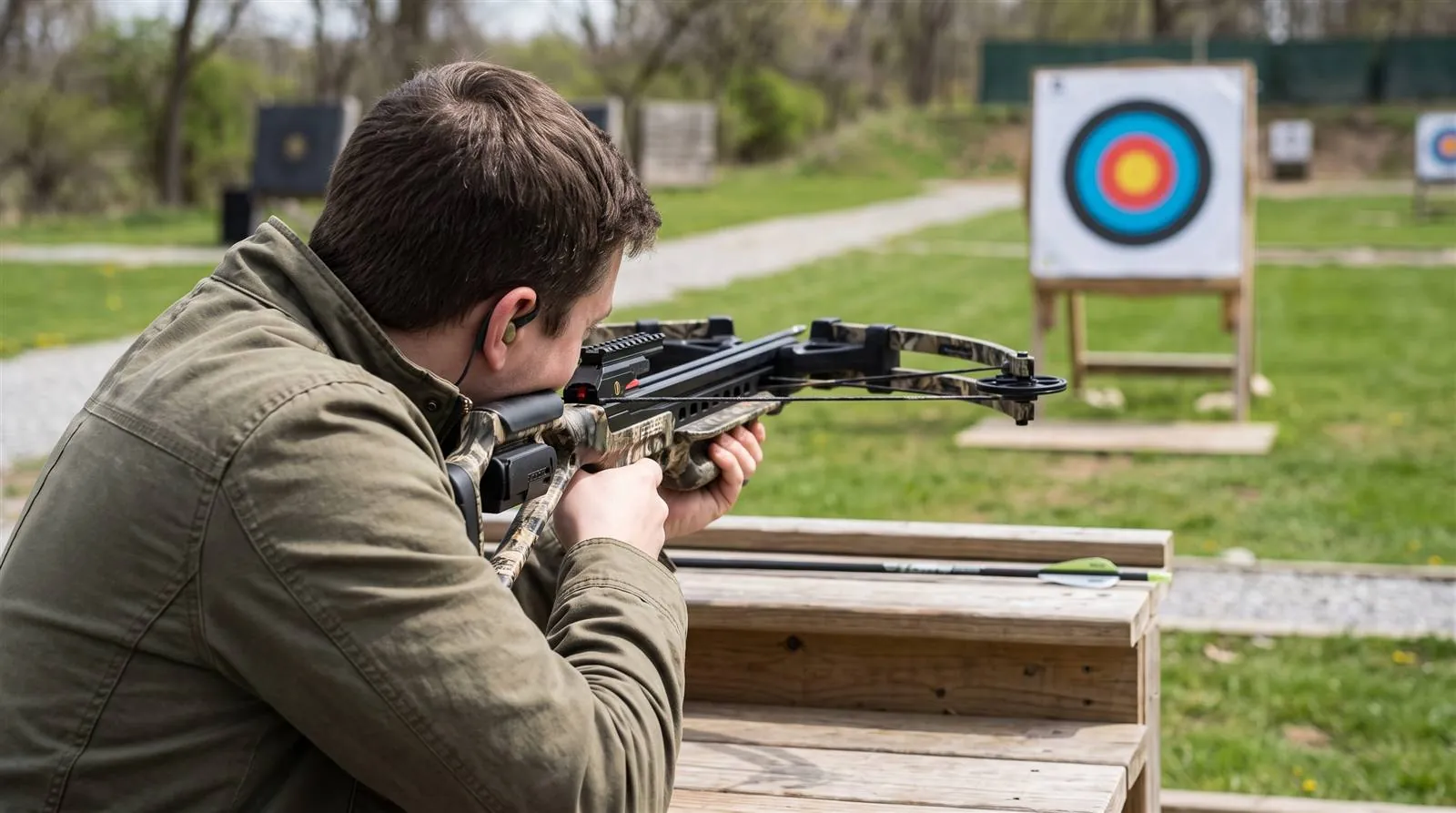 GuideHow to Sight In a Crossbow ScopeSighting in a crossbow scope step by step: safe lane setup, first zero, confirming each aiming point, and re-checking with your hunting tip.Read the guide
- GuideCrossbow Shooting High, Low, Left or Right?A direction-first diagnosis for crossbow misses: high, low, left, right and drifting groups, what each pattern means, and the fix for each.Read the guide
Definitions are general information. Manufacturer figures vary, so follow your crossbow's manual and verify local laws with the relevant authority.