String Stop: definition
Also called: string suppressor, string arrestor, integrated string stop, string dampener
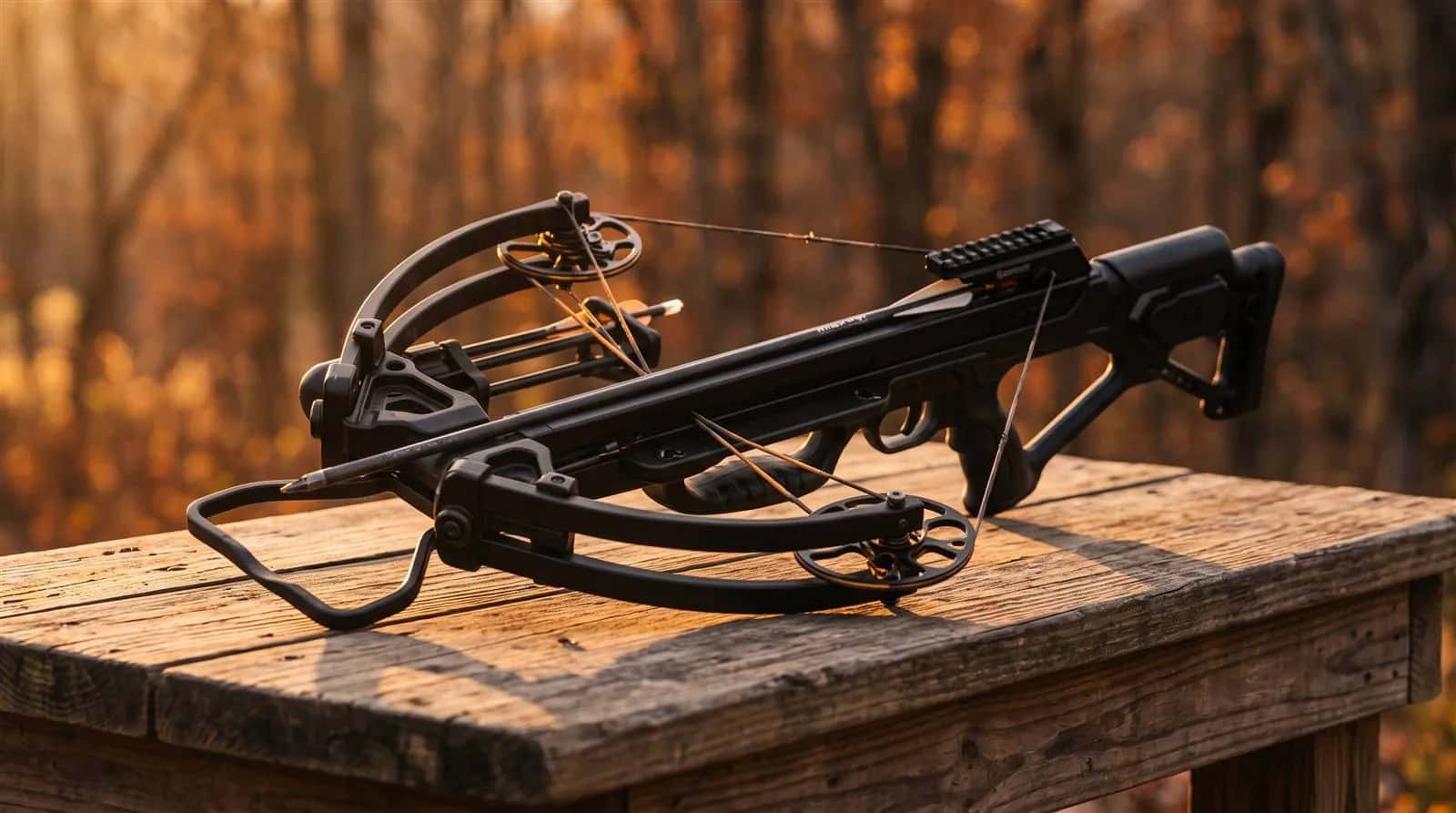
A string stop is a rubber or polymer bumper, usually on a short arm or bracket, set just ahead of where the string comes to rest after the shot. When the string reaches the end of the power stroke it hits the stop instead of oscillating back and forth between the limbs.
Some crossbows build the stop into the riser or limb pockets, and makers call this an integrated string stop. The TenPoint Flatline 460 is one example. Others accept add-on string suppressors that bolt onto the riser. Both do the same job, but an integrated stop is designed and positioned by the maker for that crossbow.
A string stop is different from limb dampeners, which sit on the limbs, and from the string itself or its serving. It only acts after the bolt has left the string, so it does not change speed in a meaningful way.
Why String Stop matters
Most of the sound and hand shock after a shot comes from the string and limbs still moving once the bolt has gone. Stopping the string quickly shortens that ringing, so the shot feels calmer and sounds sharper and shorter. See noise and vibration for the wider picture.
Less vibration also means less wear on strings, cables, screws and scope mounts over many shots, which helps a crossbow hold zero.
How to read it on a spec sheet
- Look for wording such as integrated string stop, string suppressor or string arrestor on the spec sheet.
- Check whether the stop is built in or an optional accessory, and whether add-ons are approved by the maker.
- Treat claims of a silent shot with caution. A fast crossbow is always audible, even with a good stop.
- Check that the stop does not touch the string at rest. It should only contact the string at the end of the shot.
- Read the warranty before adding any aftermarket suppressor.
Common mistakes
- Assuming a string stop makes a crossbow quiet. It reduces ringing, not the crack of the shot.
- Fitting an unapproved add-on that touches the string at rest or alters the string path.
- Ignoring a worn or cracked bumper, which lets vibration creep back in.
- Confusing a string stop with limb dampeners and expecting the same effect.
- Adjusting the stop's position without following the manual.
How to check a string stop
- Make sure the crossbow is uncocked and unloaded.
- Look at the bumper for cracks, tears or flattening.
- Check the mounting screws are tight, per the manual's torque guidance.
- Confirm there is a small gap between the stop and the string at rest.
- Listen for a change in shot sound after maintenance, and inspect again if it gets louder.
In my testing
In my TenPoint Flatline 460 review the integrated string stop left a sharp crack but very little lingering buzz or hand shock for a 460 FPS crossbow, and a louder-than-usual shot is one of the warning signs I list for checking the stop. How I test.
See it in our reviews
- TenPoint Flatline 460 — rated 4.6/5
Frequently Asked Questions
What does a string stop do on a crossbow?
It catches the string at the end of the power stroke so the string and limbs stop moving sooner. That cuts the vibration and ringing you feel and hear after the bolt has left.
Does a string stop make a crossbow quieter?
It reduces the ringing and buzz after the shot, so the shot sounds shorter. It does not remove the initial crack, so any fast crossbow will still be clearly audible.
Does a string stop reduce speed?
Not in any meaningful way. It only touches the string after the bolt has left, so a correctly fitted stop does not slow the bolt. A stop that touches the string at rest is fitted wrongly.
What is an integrated string stop?
It is a string stop built into the crossbow by the maker rather than added later. The TenPoint Flatline 460 is one model in our reviews that comes with one.
Can I add a string stop to my crossbow?
Many crossbows accept add-on string suppressors, but use only accessories the maker approves for your model. An unapproved add-on can affect the string path and your warranty.
How do I know if my string stop is worn?
Look for cracks, tears or a flattened bumper, and listen for a louder or longer shot sound than usual. Replace worn parts with the maker's parts and follow your manual.
Guides that use string stop
Where string stop decides a real choice: these guides put the term to work with measured numbers.
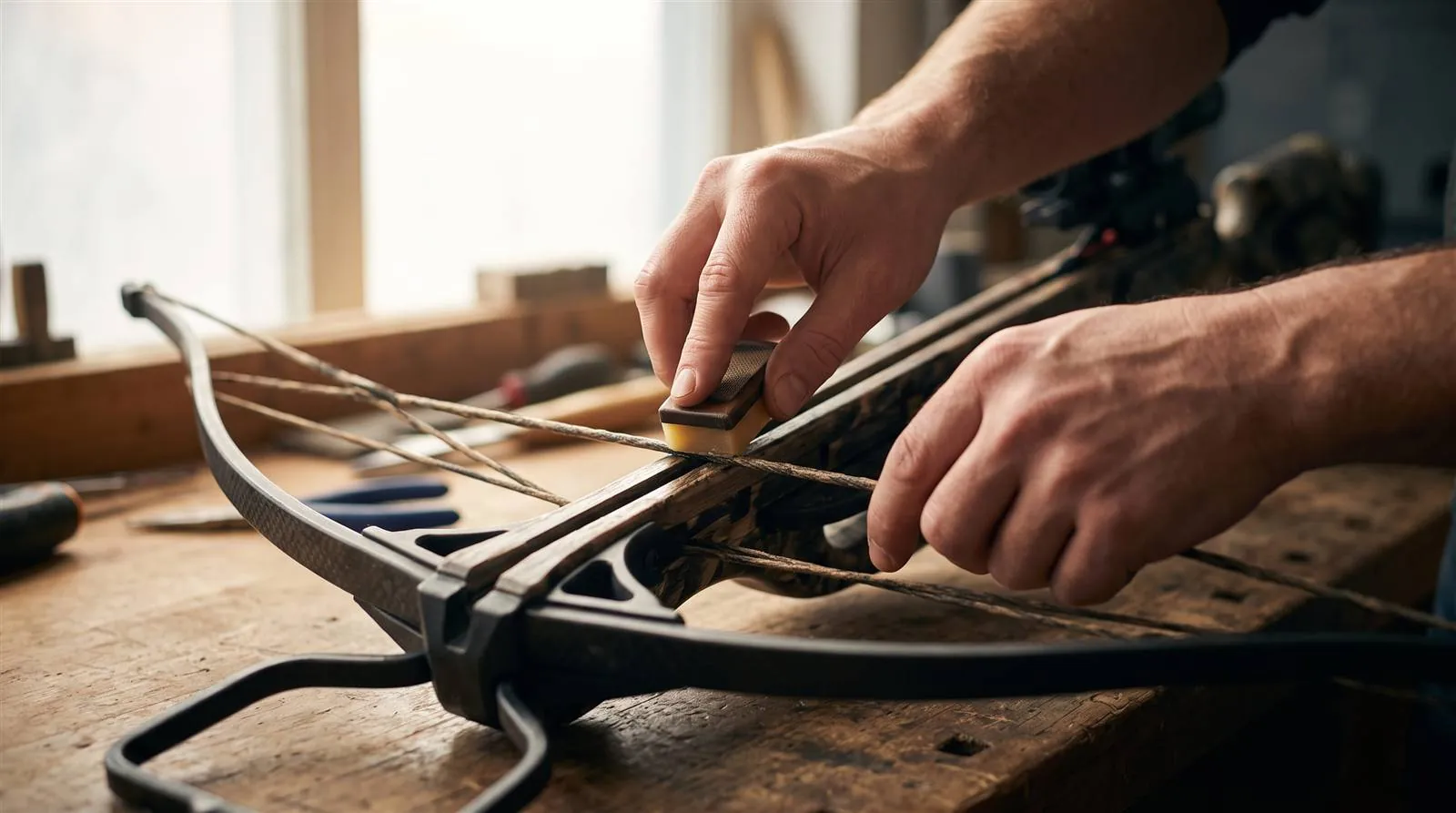 GuideHow to Maintain a CrossbowA crossbow maintenance schedule covering the five-minute pre-shoot check, string waxing, rail lubrication, limb and cam inspection, and storage.Read the guide
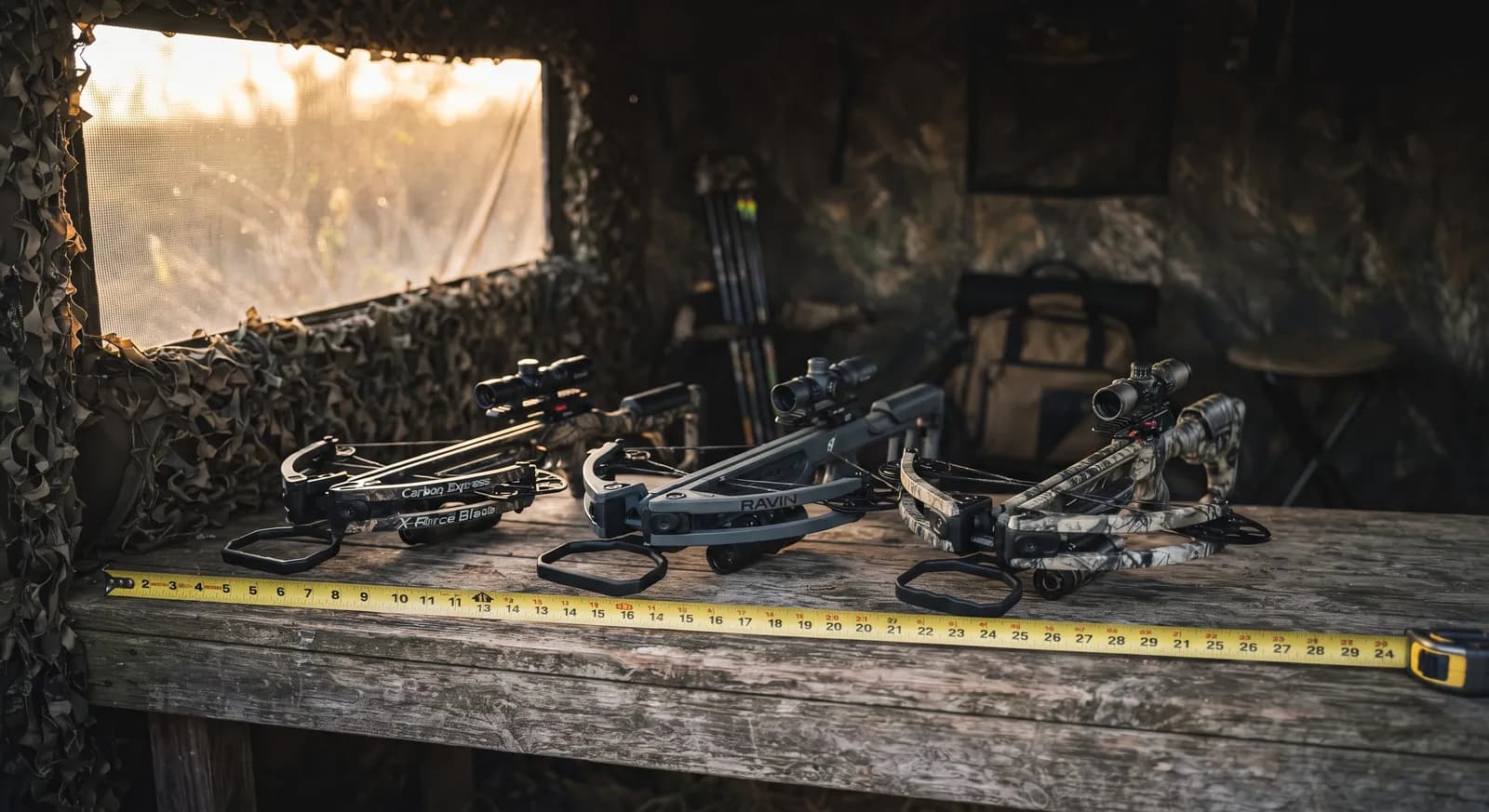 GuideBest Compact Crossbows 2026, TestedThe narrowest crossbows we have tested, ranked by cocked width, weight and speed, from the Ravin R26X to budget reverse-draw options for blinds and treestands.Read the guide
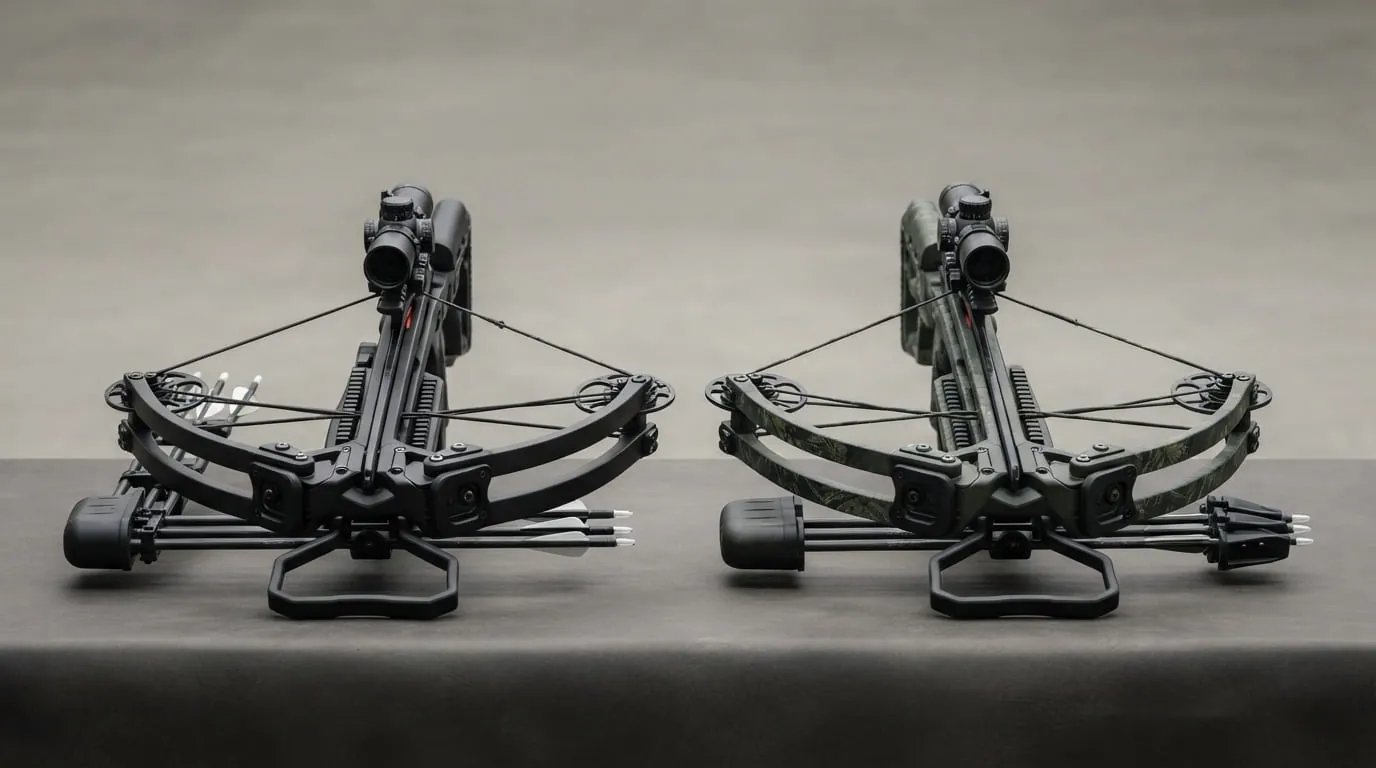 GuideRavin vs TenPoint Crossbows ComparedTenPoint or Wicked Ridge under $1,000; Ravin R26X for the narrowest frame near $2,000; Ravin R470 for speed per dollar near $2,500; TenPoint TRX Ultra for the fastest at any price.Read the guide
Definitions are general information. Manufacturer figures vary, so follow your crossbow's manual and verify local laws with the relevant authority.