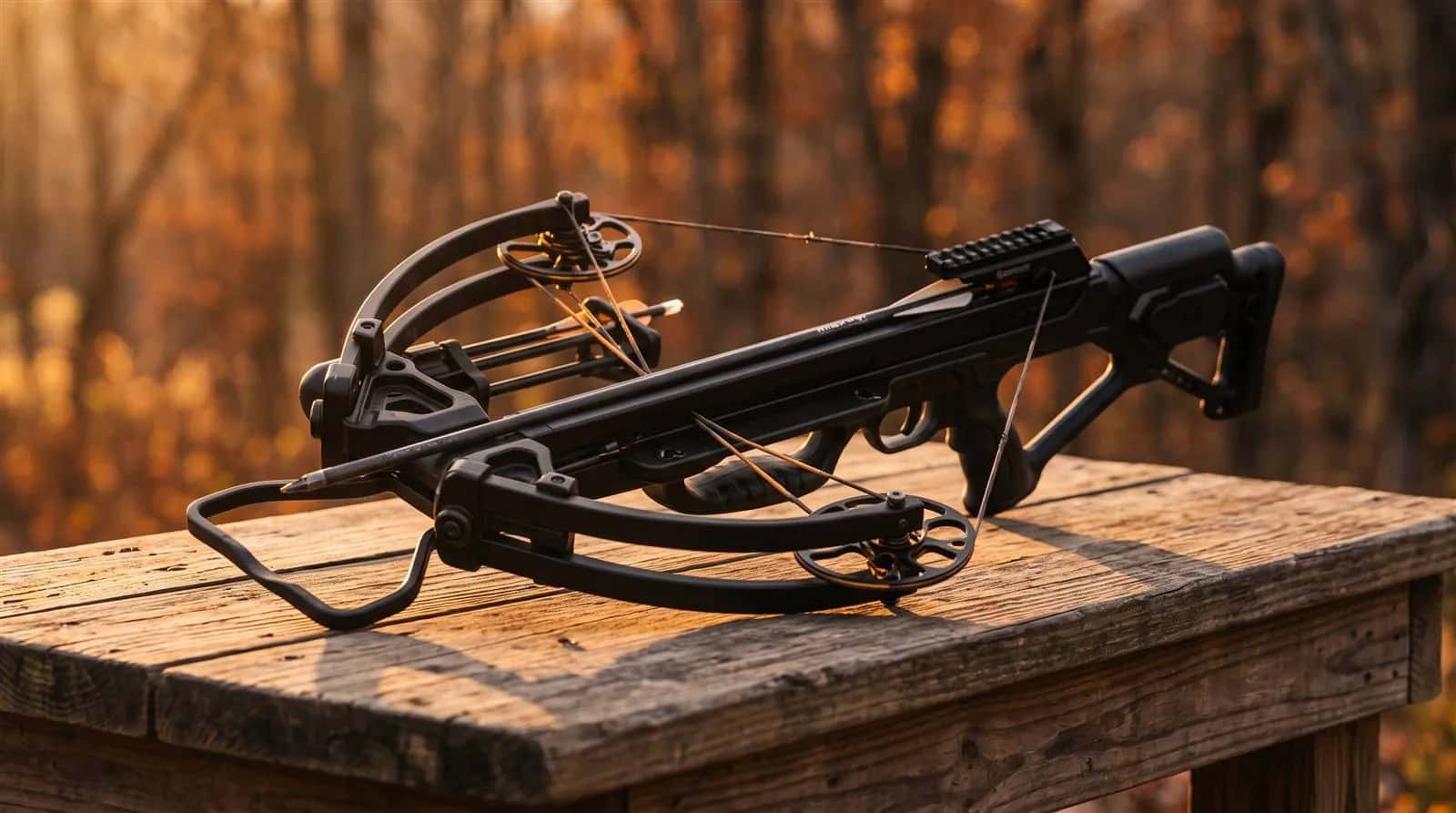
What a ground blind is in plain terms
What a ground blind is meaning: A ground blind is a hide, usually a pop-up hub tent or natural brush, that conceals a hunter at ground level with no climbing needed.
Also called: ground blinds, pop-up blind, hub blind, hunting blind
A ground blind hides a hunter at ground level. The common kind is a pop-up hub blind, a framed fabric tent with shooting windows; others are built from brush and logs, or are hard-sided boxes on the ground.
Blinds suit crossbow hunting well. The crossbow can rest on shooting sticks or a tripod, the hunter can move a little more without being seen, and there is no climbing, which removes the fall risk of a tree stand.
The constraint is space. A crossbow is wide at the limbs, and the limbs, string and bolt path must clear the window and walls. Our crossbow hunting guide compares stands, blinds and still-hunting.
Why it matters
A blind is often the practical choice for hunters who cannot or prefer not to climb, and for open country without good trees.
Shots are at eye level, so angles are flatter and the vital zone is easier to reach than from a high stand.
Limb clearance is a safety issue: a limb or cam striking the blind frame or window edge at the shot can damage the crossbow or deflect the bolt.
How to read it on a spec sheet
- Check the hub width and window height against your seated shooting position.
- Compare the crossbow's width (cam to cam when cocked) with the window opening.
- Look for silent window closures and dark interiors that hide movement.
- Note the weight and packed size if you will carry it in.
Common mistakes
- Shooting with the limbs or bolt path too close to the window edge.
- Setting up a blind the day of the hunt where deer will notice a new object.
- Opening too many windows, which backlights the hunter.
- Forgetting that ground-level scent reaches deer more easily.
Frequently Asked Questions
Is a ground blind good for crossbow hunting?
Yes. It removes the climb, gives a stable rest for the crossbow, and puts shots at eye level. The main caution is keeping the limbs and bolt path clear of the window and frame.
How wide should a ground blind be for a crossbow?
Wide enough that the cocked crossbow's limbs clear the walls and windows from your seated position. Compare the crossbow's listed width with the blind's hub width and window size before buying.
Do deer notice a new ground blind?
They can. Many hunters set blinds up days or weeks early, or brush them in with local vegetation, so deer get used to them.
Do I need blaze orange on a ground blind?
Some states require orange on blinds during firearm seasons. Rules vary, so check your state wildlife agency regulations for the season you hunt.
Can I shoot through blind netting?
Some makers say their mesh is shoot-through, but it can affect bolt flight and fletching. Check the blind and crossbow maker guidance and practise before relying on it.
Is a ground blind safer than a tree stand?
It removes the fall risk, which is the main danger of hunting from height. Normal crossbow safety rules, safe muzzle direction and a clear bolt path still apply.
Related guides
Guides where ground blind shapes a real choice.
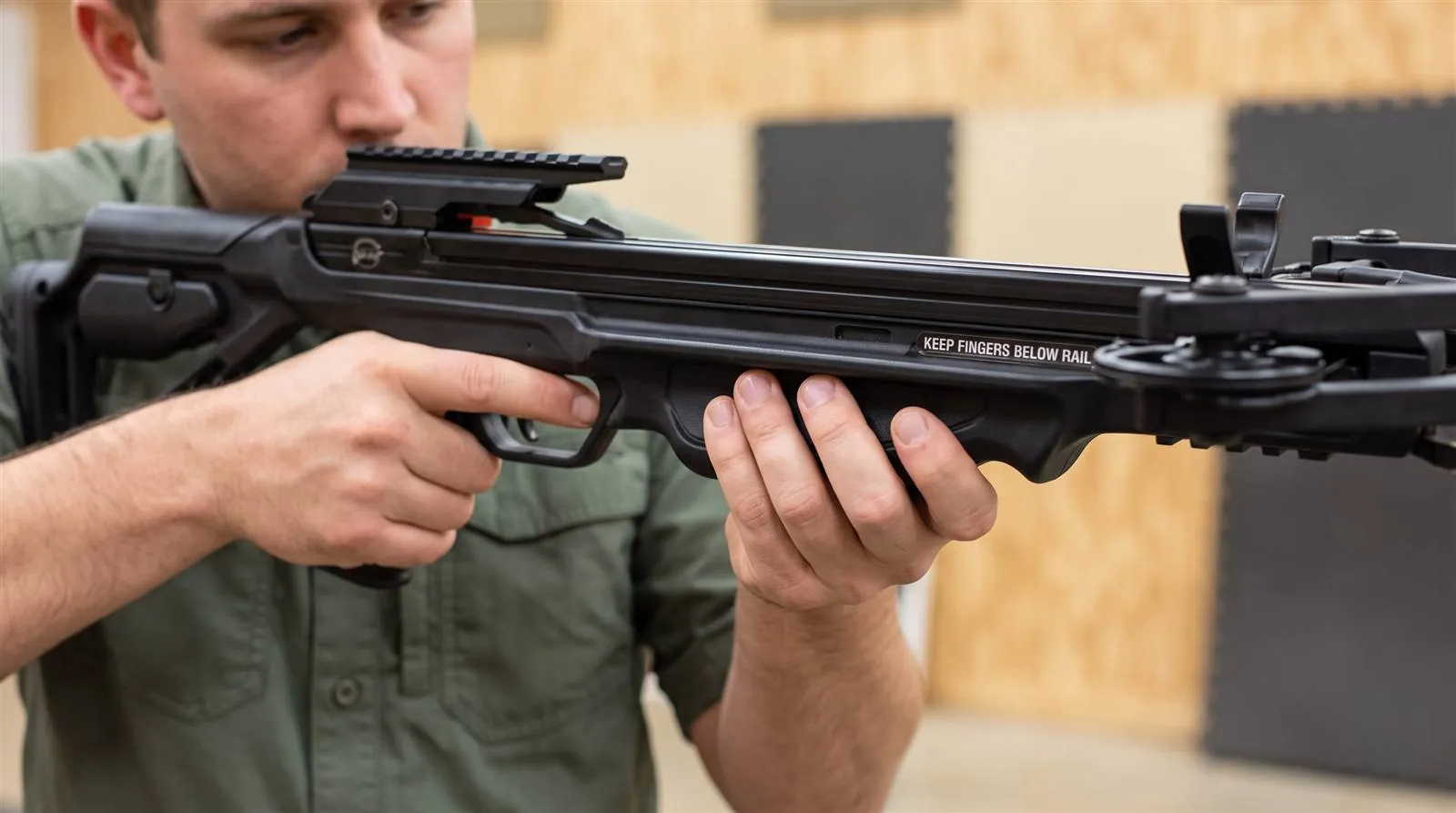 GuideCrossbow Safety Rules for BeginnersCore crossbow safety rules: finger placement below the rail, avoiding dry fire, treating a cocked crossbow as loaded, safe cocking and safe de-cocking.Read the guide
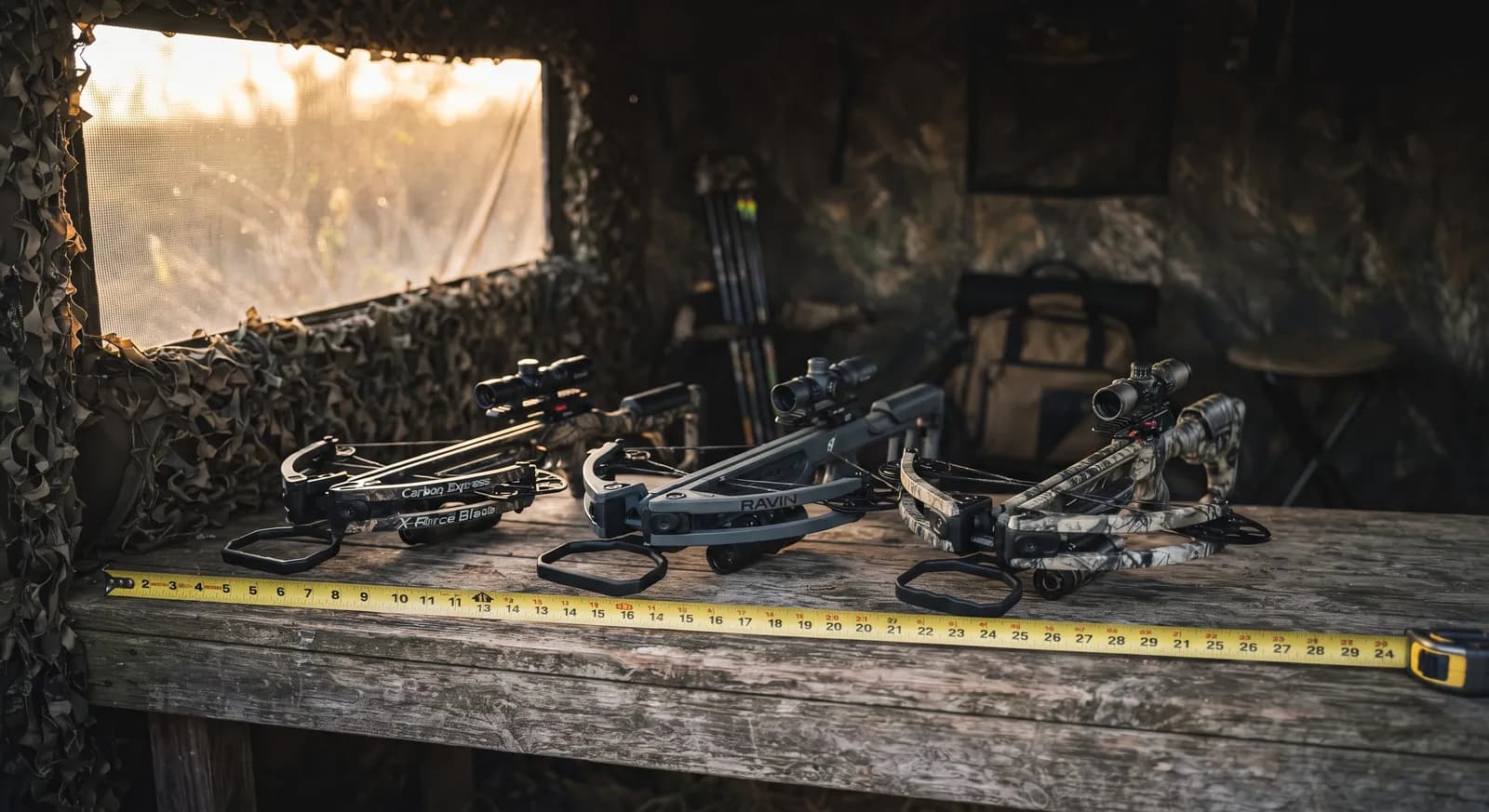 GuideBest Compact Crossbows in 2026: Short and Narrow PicksFive compact crossbows compared on overall length, cocked width, weight and rated speed, from the 26-inch Ravin R26X to a narrow budget option for blinds.Read the guide
Definitions are general information. Manufacturer figures vary, so follow your crossbow's manual and verify local laws with the relevant authority.