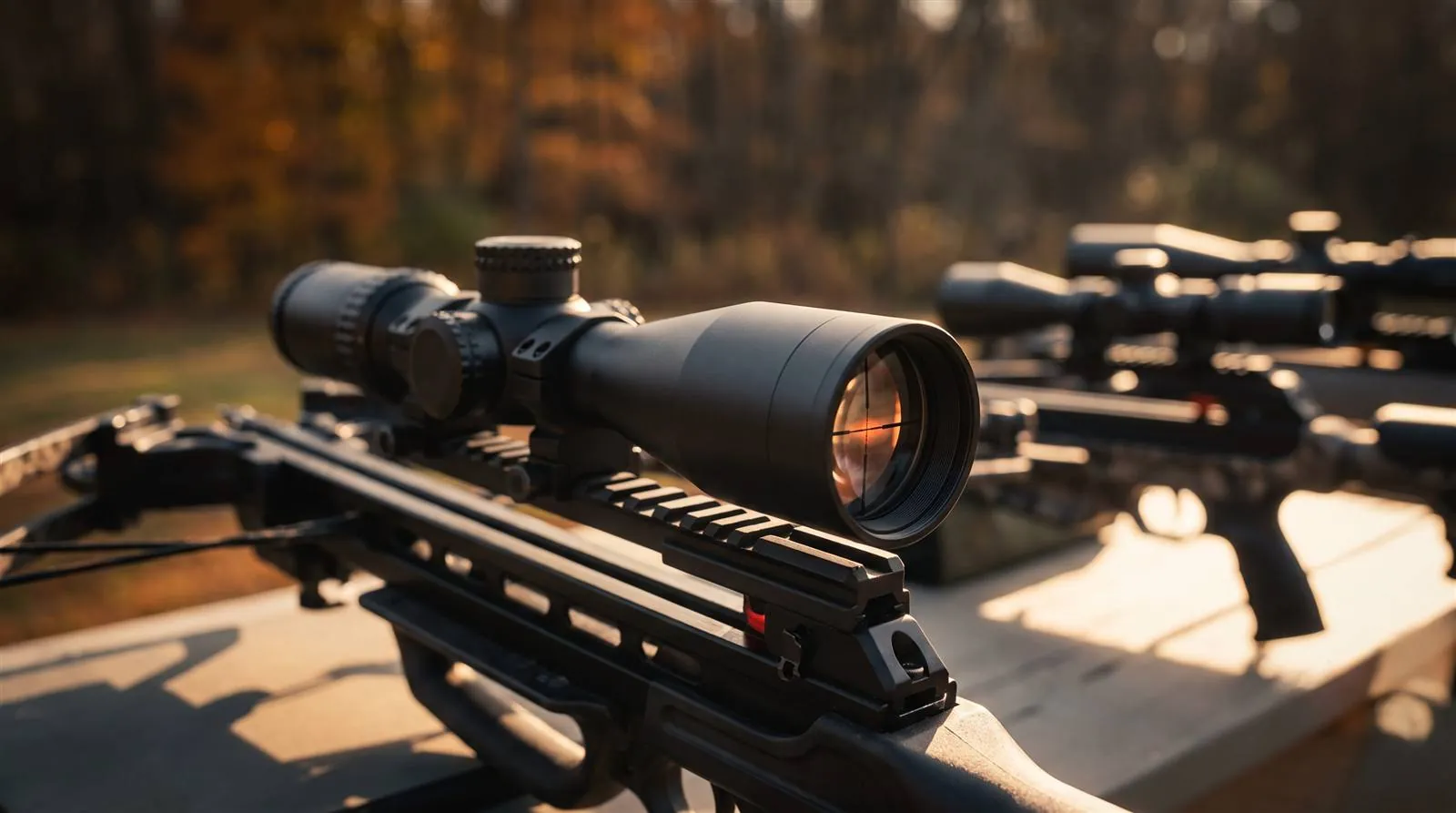
Crossbow Eye Dominance in plain terms
Crossbow Eye Dominance meaning: Eye dominance is the tendency of one eye to lead when you aim. Crossbow shooters usually shoulder on the side of their dominant eye.
Also called: dominant eye, cross-dominance, cross dominant, left eye dominant, right eye dominant
Eye dominance is the brain preferring the image from one eye over the other when both are open. When you aim, the dominant eye is the one that lines up the reticle with the target, so most shooters place the crossbow on the shoulder that sits under that eye.
Most people are dominant in the eye on the same side as their dominant hand. A shooter whose dominant eye is on the opposite side from the dominant hand is called cross-dominant: for example, left-handed but right-eye dominant.
Crossbow scopes are not left- or right-handed, so eye dominance decides which shoulder you shoot from, not which scope you buy.
Why it matters
Shooting from the side opposite your dominant eye tends to pull your aim, because the dominant eye keeps trying to take over the sight picture.
Cross-dominant shooters often find it easier to shoulder on the dominant-eye side, even if that feels awkward at first, or to close or cover the dominant eye when aiming.
It changes which crossbow features matter. A shooter on the left shoulder needs a safety, cocking aid and quiver mount that work from that side.
How to read it on a spec sheet
- Manufacturers do not list eye dominance on spec sheets; it is a fact about the shooter, not the crossbow.
- Look instead for features that work from either shoulder, such as an ambidextrous safety or stock.
- A symmetrical stock lets either eye line up behind the scope; an offset cheek comb favors one side.
- Scope mounting and eye relief should be set for the eye you actually aim with.
Common mistakes
- Assuming you are dominant in the eye on the same side as your writing hand without checking.
- Shooting from the non-dominant side and blaming the scope for drifting shots.
- Setting the scope position for one shoulder and then switching sides without rechecking it.
- Buying a crossbow before checking that its safety and cocking aid work from your shooting side.
Find your dominant eye in ten seconds
- Extend both arms and make a small triangle with your thumbs and forefingers.
- With both eyes open, center a distant object in the triangle.
- Close your left eye. If the object stays centered, your right eye is dominant.
- Open it and close your right eye. If the object stays centered now, your left eye is dominant.
Frequently Asked Questions
What is eye dominance?
It is the tendency of one eye to lead when you aim with both eyes open. The dominant eye is the one that lines up the sight with the target, which is why most shooters shoulder a crossbow on that side.
How do I check which eye is dominant?
Make a small triangle with your hands at arm's length and center a distant object in it with both eyes open. Close one eye at a time; the eye that keeps the object centered is your dominant eye.
What does cross-dominant mean?
Cross-dominant means your dominant eye is on the opposite side from your dominant hand, such as a left-handed shooter with a dominant right eye. Many cross-dominant shooters shoulder on the dominant-eye side.
Do I need a special scope if I am left eye dominant?
No. Crossbow scopes are not handed. What matters is mounting the scope so the eye relief suits the eye you aim with, and choosing a crossbow whose controls work from your shoulder.
Can eye dominance change?
It can shift slightly with age, fatigue or changes in vision, so it is worth rechecking every few seasons, especially if your shots start drifting for no clear reason.
Related guides
Guides where eye dominance shapes a real choice.
 GuideBest Crossbows for Left-Handed Shooters 2026Seven crossbows whose makers confirm ambidextrous safeties, stocks or cocking, plus a five-point fit check any left-handed hunter can run in a store.Read the guide
 GuideHow to Choose a Crossbow ScopeSeven steps to choosing a crossbow scope: intended use, reticle type, magnification, eye relief, focal plane, parallax, and matching your bolt speed.Read the guide
 GuideHow to Sight In a Crossbow ScopeSighting in a crossbow scope step by step: safe lane setup, first zero, confirming each aiming point, and re-checking with your hunting tip.Read the guide
Definitions are general information. Manufacturer figures vary, so follow your crossbow's manual and verify local laws with the relevant authority.