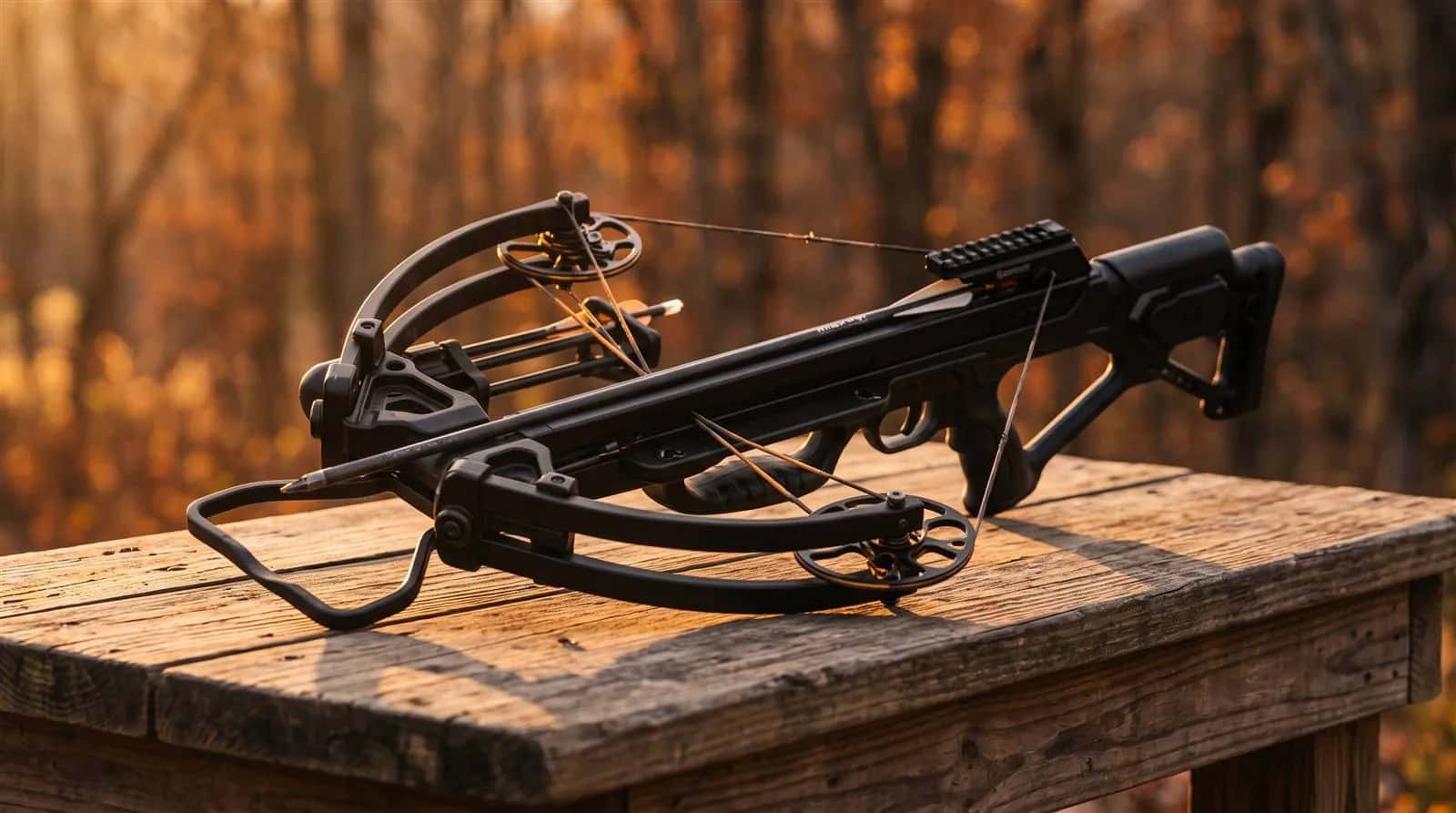
What a break-action crossbow is in plain terms
What a break-action crossbow is meaning: A break-action crossbow hinges open like a break-action shotgun, and opening the action draws the string, so no rope or crank is needed.
Also called: break-action crossbow, break action, break-action cocking, break-barrel crossbow, break-open crossbow
A break-action crossbow is cocked by hinging the front of the crossbow open, the way a break-action shotgun opens to load. As the action swings open, a linkage pulls the string back until the string latch catches it. You then seat a bolt and close the action. The cocking aid is built into the frame, so there is no separate rope or crank to carry.
The design is used mainly on small, low-powered pistol crossbows. Barnett describes its Demun Accu Strike as having a single-stage break action cocking mechanism and rates it at up to 190 FPS with its 7-inch Demun 3F Hyperbolts. The Demun Accu Strike Pro uses what Barnett calls a patented, two-stage break-action cocking mechanism for 50% reduced cocking effort, rated at up to 210 FPS. SAS describes the Prophecy 80 as a self-cocking, break-action design.
Some shooters call it a break-barrel crossbow, after break-barrel air rifles that cock the same way. Full-size hunting crossbows do not use it: their draw weights are far too high to cock through a hinge, so they rely on a cocking aid such as a rope or crank. Our pistol crossbows page compares the break-action and magazine designs.
Why it matters
Reloading is quick and simple. One motion opens the action and draws the string, which suits casual target shooting where you shoot many short strings.
The trade-off is power and wear. Break-action models are rated far below hunting crossbows, and the hinge does the work on every shot, so it needs regular inspection for play, cracks and loose pins.
How to read it on a spec sheet
- Look for "break-action" or "self-cocking" in the cocking line of the spec table; it means no separate cocking aid is needed.
- Check single-stage versus two-stage: a two-stage action spreads the pull over two movements to lower the effort.
- Read rated speed with the bolt the maker names; pistol crossbow bolts are short and light, so the figures do not compare directly with hunting crossbows.
- Check the legal section of the listing; some states restrict pistol crossbows whatever their cocking system. Our state crossbow laws page covers the rules.
Common mistakes
- Treating a break-action pistol crossbow as a hunting tool for deer-sized game.
- Letting the action snap shut with fingers in the hinge or near the string path.
- Skipping hinge inspection because the crossbow is small and simple.
- Closing the action on a bolt that is not fully seated against the string.
See it in our reviews
- Barnett Accu-Strike — rated 4.1/5
- SAS Prophecy 80 — rated 3.8/5
Frequently Asked Questions
What is a break-action crossbow?
It is a crossbow, usually a pistol model, that cocks when you hinge the front of it open. Opening the action pulls the string back to the latch, so you seat a bolt and close it without a rope or crank.
Are break-action crossbows powerful enough for hunting?
Generally not for deer-sized game. Break-action models are pistol crossbows rated well under 250 FPS with light bolts, so they suit target shooting and, where law allows, small pests at short range.
What is the difference between single-stage and two-stage break-action?
A single-stage action draws the string in one opening movement. Barnett says its two-stage mechanism on the Demun Accu Strike Pro reduces cocking effort by about 50% by splitting the work across two movements.
Is a break-action crossbow the same as a break-barrel air rifle?
The cocking idea is the same: hinging the barrel open stores the energy for the shot. An air rifle compresses a spring or gas, while a crossbow draws a string onto a latch, so the parts and maintenance differ.
How do I maintain a break-action hinge?
Inspect the hinge, pins and linkage before each session for play or damage, keep it clean and follow the manual for any lubrication. Stop using the crossbow if the action does not lock firmly closed.
Related guides
Guides where break-action shapes a real choice.
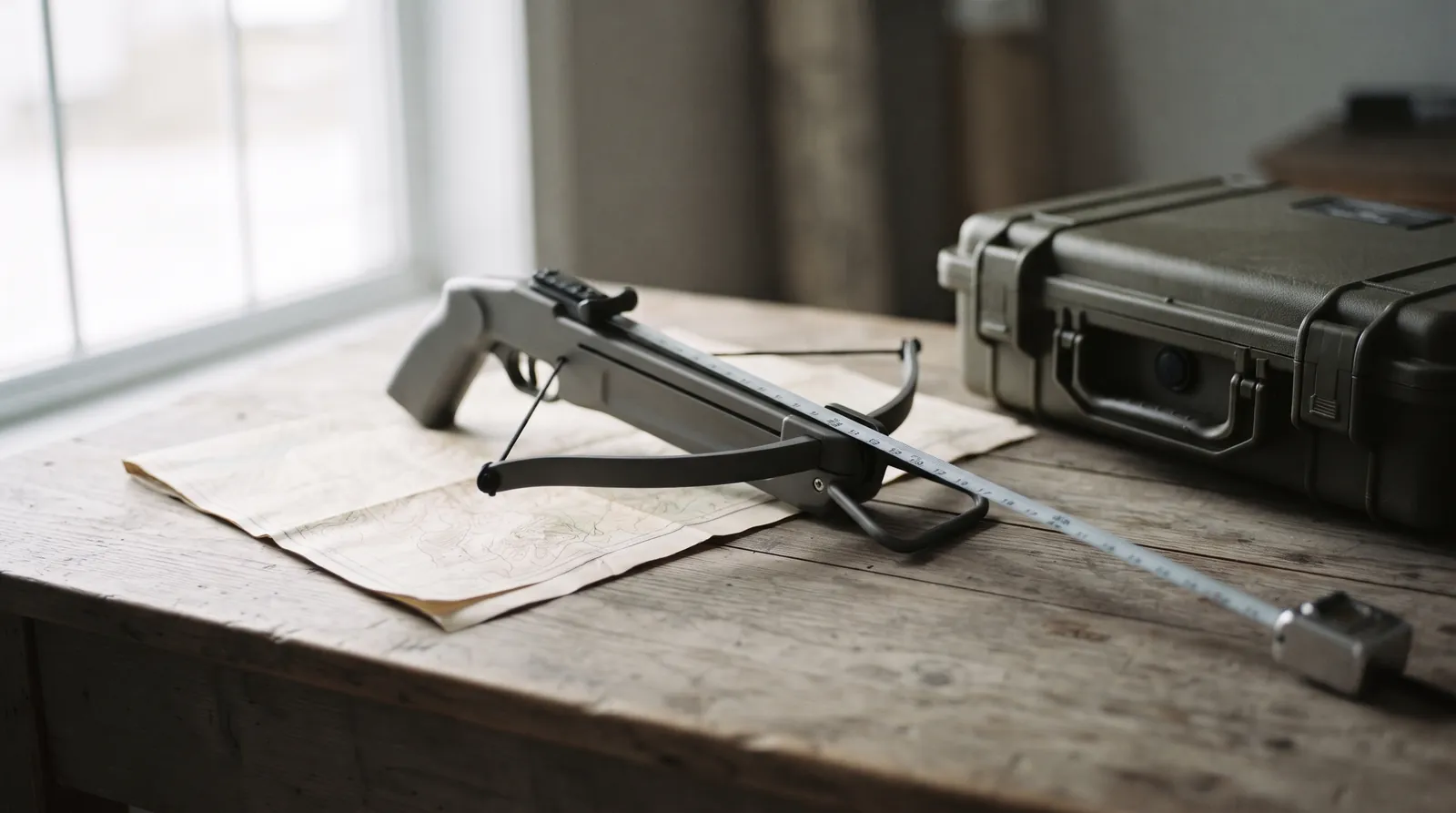 GuideAre Pistol Crossbows Legal? 2026 Rules by CountryPistol crossbow laws differ by country for ownership, age, carry, backyard shooting and hunting. This guide explains each and links the official sources.Read the guide
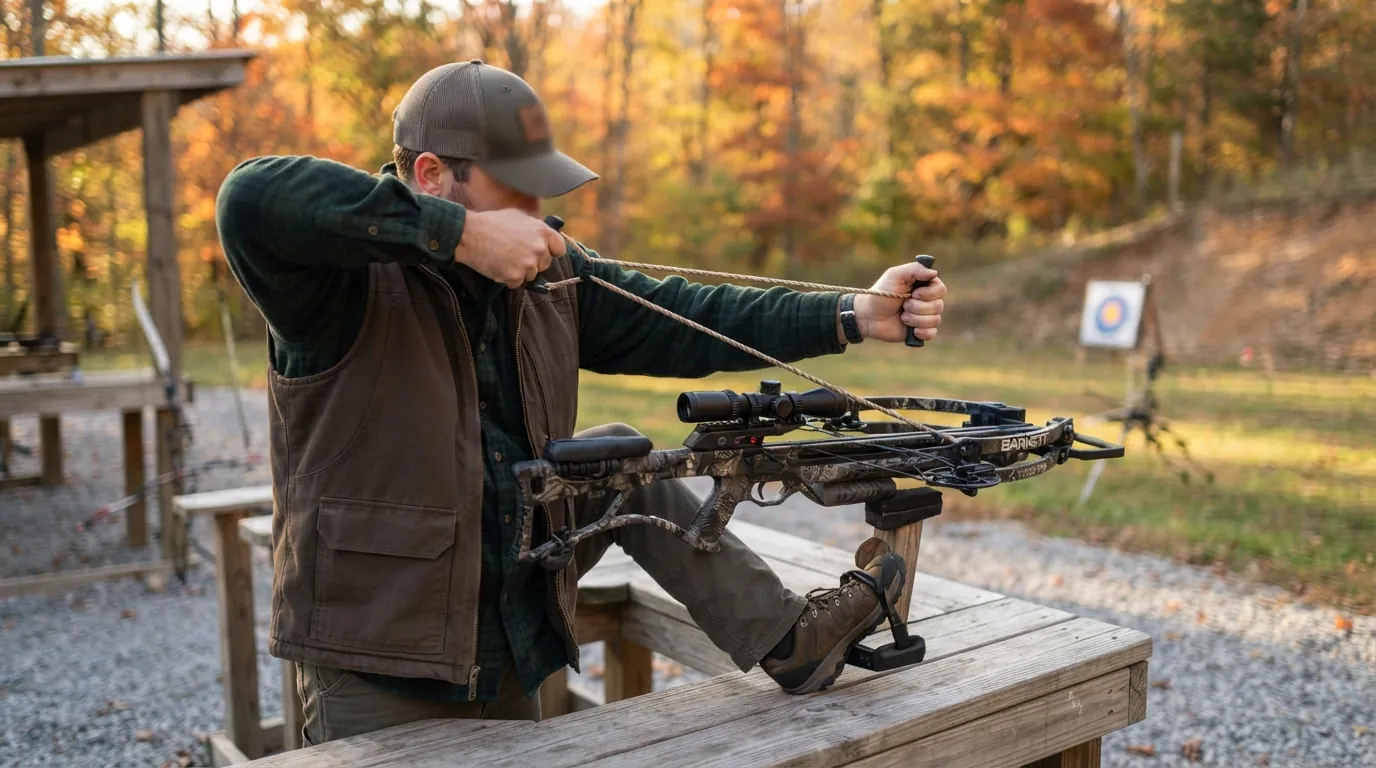 GuideHow to Cock a Crossbow: By Hand, Rope or CrankHand cocking, rope cocking, crank devices and integrated systems compared, with the steps that keep the string centered and your fingers clear.Read the guide
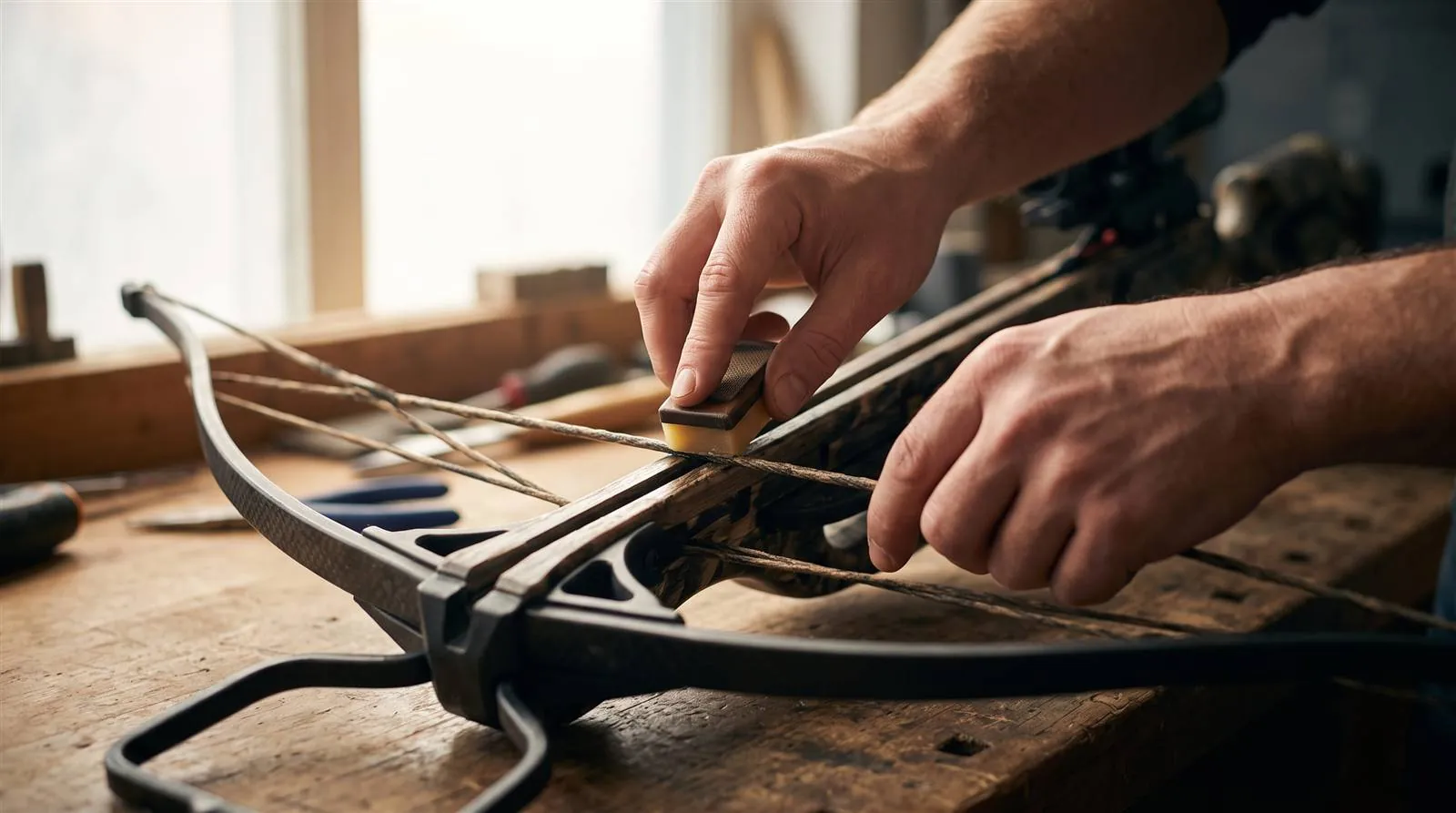 GuideCrossbow Maintenance: Wax, Lube, StoreA crossbow maintenance schedule covering the five-minute pre-shoot check, string waxing, rail lubrication, limb and cam inspection, and storage.Read the guide
Definitions are general information. Manufacturer figures vary, so follow your crossbow's manual and verify local laws with the relevant authority.