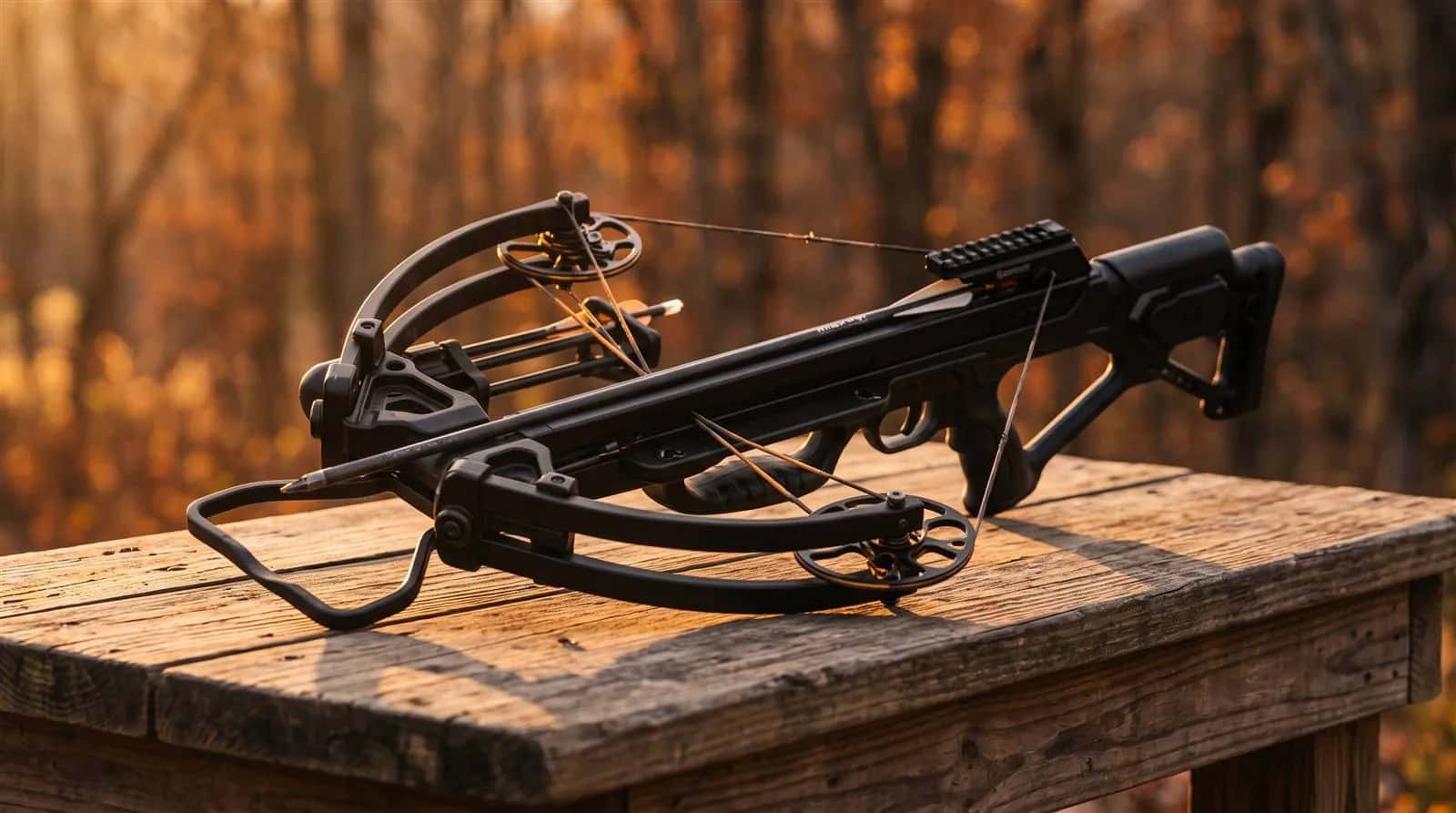
What jumping the string means in plain terms
What jumping the string means meaning: Jumping the string is a deer reacting to the sound of the shot and ducking or spinning before the bolt arrives, so the hit lands high or misses.
Also called: string jumping, ducking the string, jump the string
Jumping the string describes a deer reacting to the sound of a shot before the bolt reaches it. The name is old and a little misleading: bowhunter-education courses explain that slow-motion video showed deer usually drop their front end, crouching as they load their legs to run, so the arrow passes over the spot where the heart or lungs were a moment earlier. Most hunters now describe it as ducking.
It happens because sound is faster than any bolt. Sound covers roughly 1,125 feet per second, about three times the speed of a typical crossbow bolt, so the deer hears the shot well before the bolt arrives. The farther the deer is, the longer it has to react.
The result on the animal is a hit higher than the point of aim: a heart shot becomes a lung shot, and a lung shot can become a high hit above the vital zone or a clean miss. Our crossbow deer shot placement guide works through the timing and the aim points.
Why it matters
A crossbow is faster than most vertical bows, which helps, but it does not remove the problem at longer range. The Pennsylvania bowhunter-education course advises limiting shots to about 35 yards and shooting only at unalarmed deer, which applies whatever you shoot.
An alert deer is the main risk factor. A deer that is staring toward the sound, or one stopped with a grunt or bleat, is already tensed to move.
Shot noise matters too. A quieter crossbow gives the deer less to react to, which is one reason makers publish noise and vibration features, though no crossbow is silent.
How to read it on a spec sheet
- Read rated speed as a best case: FPS on the box is measured with a light bolt, and a hunting-weight bolt is slower, so it takes longer to reach the deer.
- Treat any claim that a crossbow is too fast to be ducked with care; bolt speed reduces the reaction window but distance and the deer's state matter just as much.
- Look for dampeners or string suppressors in a spec list as a sign the maker addressed shot noise, not as a guarantee.
- Use published drop or reaction figures as general guidance; individual deer react differently from shot to shot.
Common mistakes
- Taking long shots at alert deer because the crossbow is fast.
- Stopping a walking deer with a loud grunt, then shooting while it is tensed.
- Aiming below the deer to allow for a duck, which risks a leg hit or a miss under the chest.
- Blaming the scope or zero for a high hit without considering that the deer moved.
Frequently Asked Questions
What does jumping the string mean in hunting?
It means a deer reacts to the sound of the shot and moves before the arrow or bolt arrives. Most deer drop or duck rather than jump up, so the hit usually lands higher than where the hunter aimed, or misses over the back.
Do deer jump the string with a crossbow?
They can. A crossbow bolt is faster than most arrows, which shortens the reaction window, but sound still reaches the deer first. Close shots at relaxed deer reduce the chance of a reaction affecting the hit.
How far is too far to avoid string jumping?
There is no single distance, because speed, noise and the deer's alertness all change it. The Pennsylvania bowhunter-education course advises keeping shots within about 35 yards and shooting only at unalarmed deer, which is a sound starting point.
Should I aim low on a deer that might duck?
Holding toward the lower part of the chest vitals gives a ducking deer room to drop into the lungs. Never aim below the animal; if the deer does not move, a low hold below the chest is a miss or a leg hit.
Does a quieter crossbow help?
It can reduce how sharply a deer reacts, because the sound is what triggers the reaction. Dampeners and string suppressors lower noise, but no crossbow is silent, so distance and shot choice still matter more.
Is string jumping the same as a bad shot?
Not always. A hit above the point of aim on a deer that dropped at the shot is a reaction, not necessarily a poor release. Check your zero on a target before assuming the crossbow is off.
Related guides
Guides where jumping the string shapes a real choice.
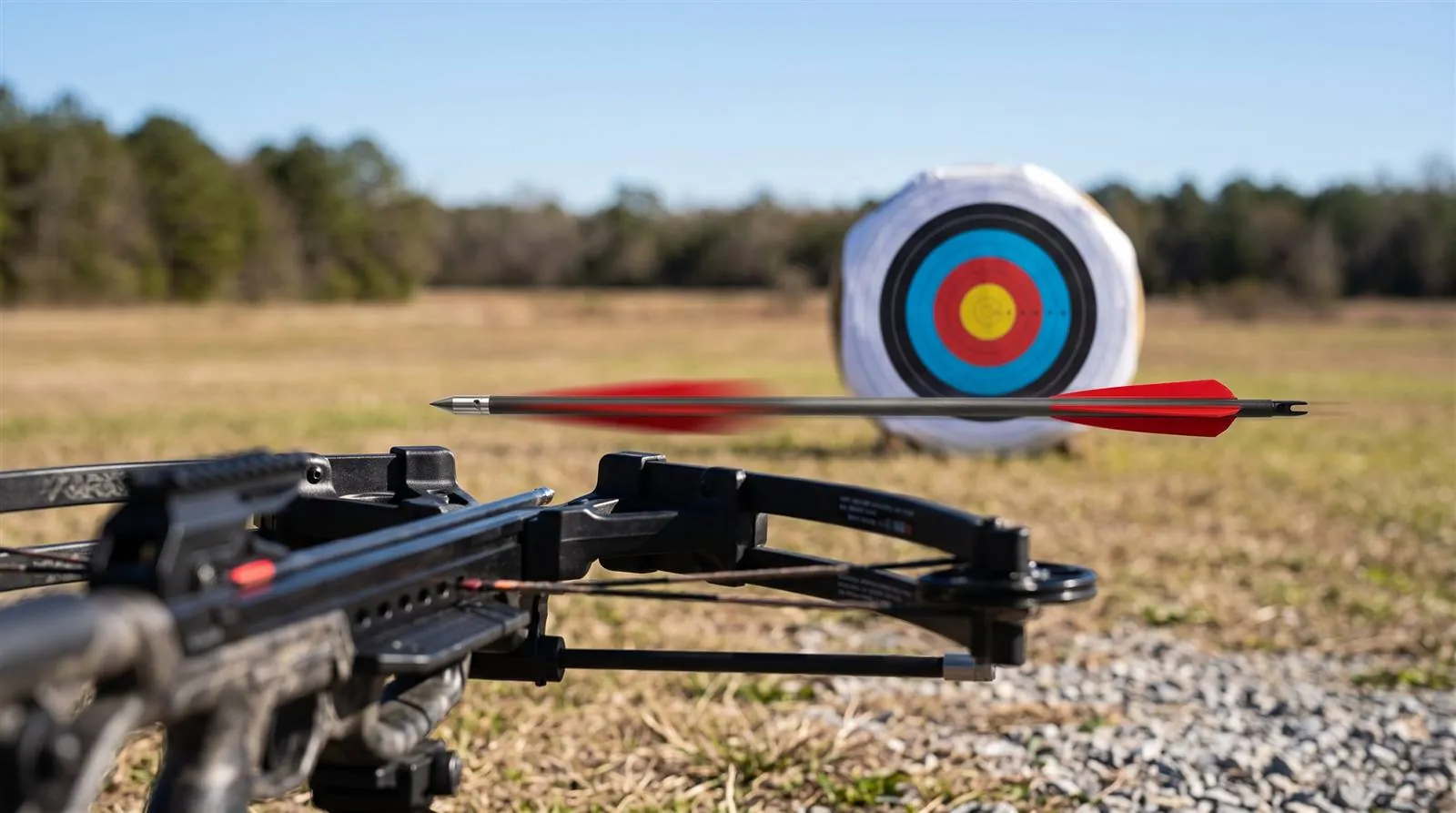 GuideHow Fast Does a Crossbow Shoot?Rated crossbow bolt speeds by crossbow type, with why advertised FPS can differ from your own and how speed relates to kinetic energy.Read the guide
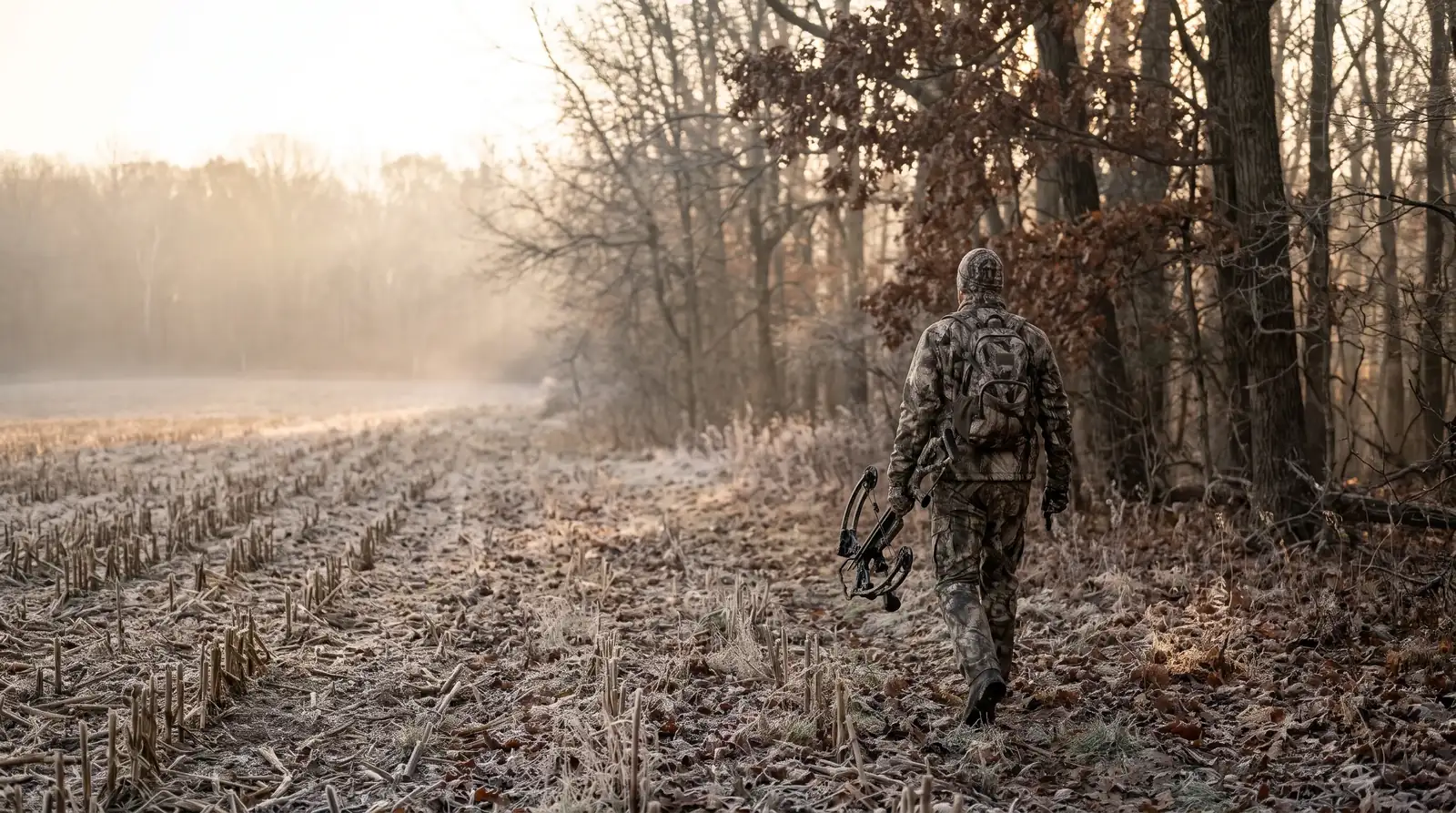 GuideCrossbow Hunting Guide: Game, Setup, Shot and RecoveryThe crossbow hunting hub: game and energy guidance, legality, pre-season setup, stand or blind, shot placement, tracking, gear and safety.Read the guide
Definitions are general information. Manufacturer figures vary, so follow your crossbow's manual and verify local laws with the relevant authority.