What an anchor point is in plain terms
What an anchor point is meaning: An anchor point is the spot an archer's drawing hand returns to on every shot; on a crossbow the latch and a steady cheek position play that role.
Also called: anchor points, consistent anchor, archery anchor point
In archery, the anchor point is where the drawing hand settles at full draw. Bowhunter-education courses define it as the position where your shooting hand consistently comes to a normal rest on or near your face, such as the corner of the mouth or the jaw. Hitting the same anchor every shot keeps the string, the arrow and the eye in the same relationship, which is why an inconsistent anchor is a classic cause of scattered groups.
A crossbow builds the string side of that in. The string latch holds the string at the same full-draw spot every time, so there is no hand to settle. What can still vary is whether the string is drawn evenly onto the latch: a string pulled off-centre can push shots sideways, which is why makers of crank and rope cocking aids talk about a consistent anchor point and string tension.
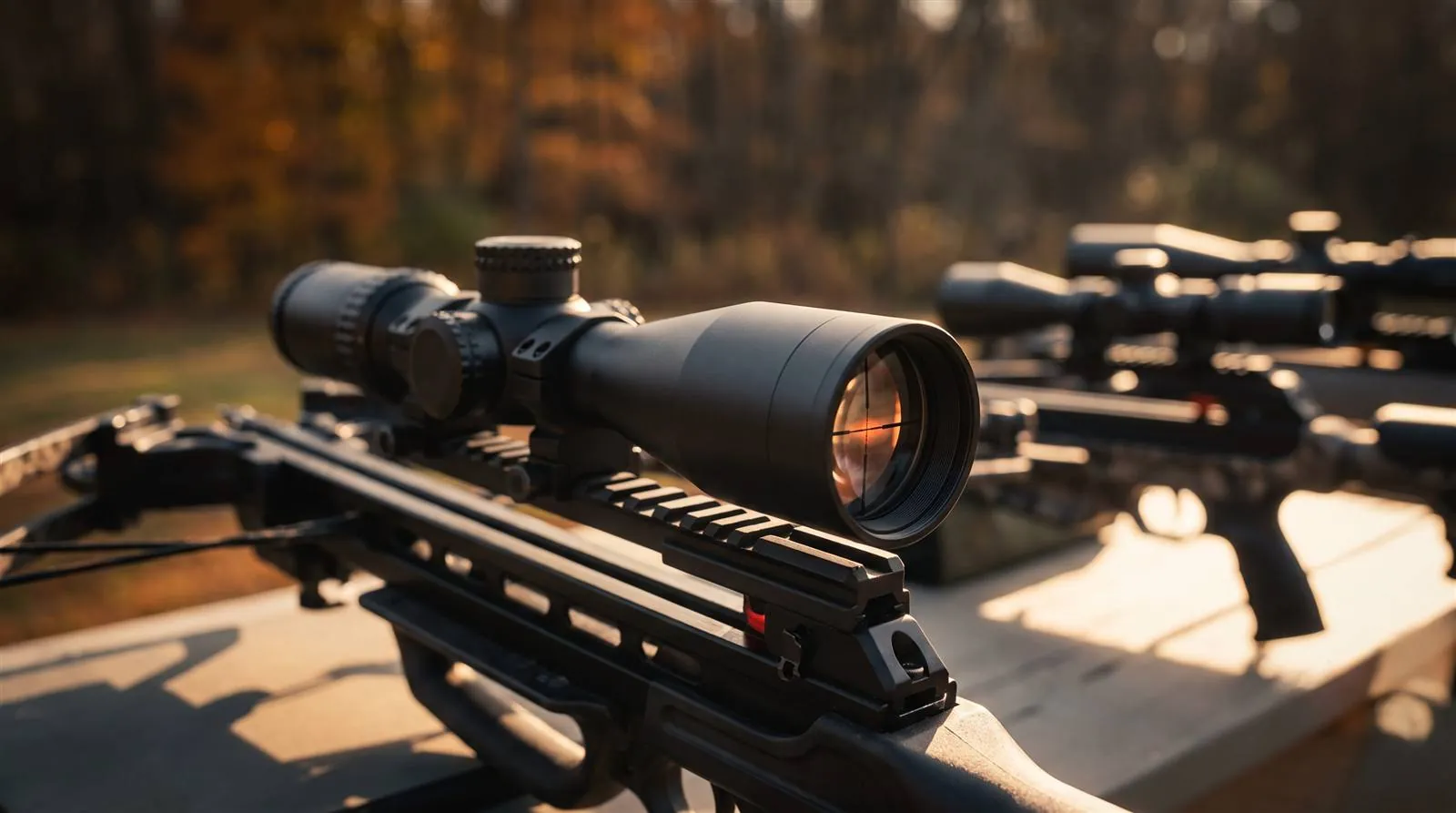
The shooter side remains. Your cheek on the cheek comb and the butt in your shoulder are the crossbow's version of an anchor: land them the same way each shot and your eye stays in the same place behind the scope.
Why it matters
It is one of the biggest differences in learning curve between bows and crossbows. An archer spends months building a repeatable draw and anchor; a crossbow shooter gets the string anchor from the latch.
Consistency still decides accuracy. Even cocking and a steady cheek position on a crossbow do the job a solid anchor does for an archer.
How to read it on a spec sheet
- Read "consistent anchor point" on a cocking device as a claim about drawing the string evenly onto the latch.
- On a bow, anchor aids such as a kisser button attach to the string to give a repeatable reference.
- For a crossbow, look at stock fit (length of pull and comb height) as the shooter-side equivalent.
- Treat anchor-related accuracy claims as practical benefits, not guaranteed group sizes.
Common mistakes
- Cocking by hand unevenly so the string sits off-centre on the latch.
- Moving your cheek on the stock between shots.
- Assuming a crossbow removes every form variable because the string is held.
- Changing anchor or cheek position between sighting in and hunting.
See it in our reviews
- TenPoint ACUdraw — rated 4.5/5
Frequently Asked Questions
What is an anchor point in archery?
It is the spot on or near the face where the drawing hand comes to rest at full draw, such as the corner of the mouth. Returning to the same spot every shot is basic to accurate archery.
Does a crossbow have an anchor point?
Not in the archery sense, because the latch holds the string at full draw. The shooter-side equivalent is a consistent cheek and shoulder position on the stock.
Why do cocking devices mention a consistent anchor point?
Makers use it to mean drawing the string evenly onto the latch every time. A rope or crank pulls both sides equally, which helps keep the string centred.
What is a kisser button?
It is a small marker on a bowstring that touches the archer's lips at full draw. Bowhunter-education courses describe it as giving a consistent anchor point each time the string is drawn.
How do I keep a consistent position with a crossbow?
Mount the stock to the same spot on your shoulder, rest your cheek in the same place on the comb and keep the same head position behind the scope. Practise it the same way you will shoot in the field.
Related guides
Guides where anchor point shapes a real choice.
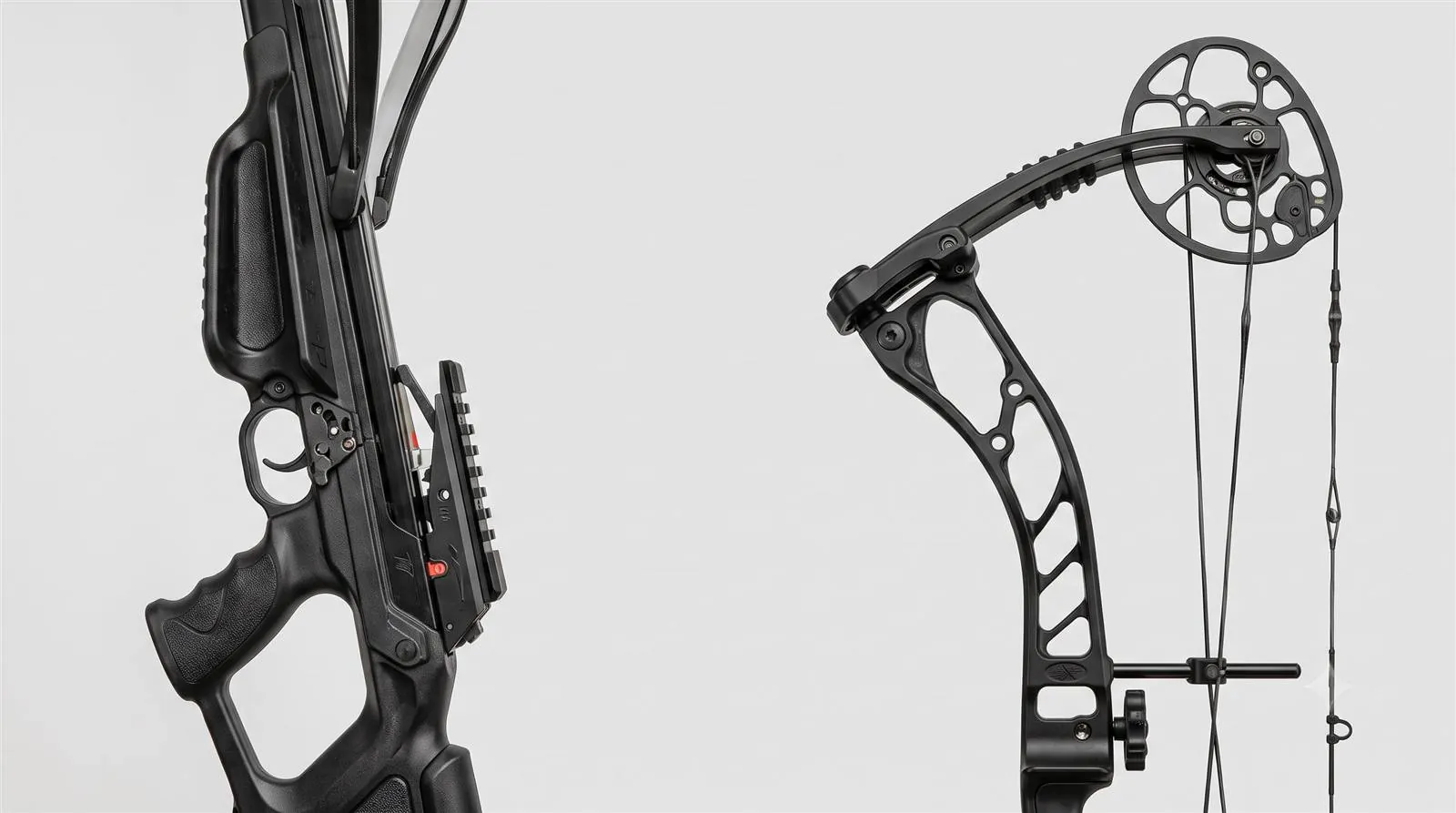 GuideCrossbow vs Compound Bow Compared (2026)Pick a crossbow for consistent shots soon with less strength needed, or a compound bow for fast follow-ups and a skill to refine. Check your season rules first.Read the guide
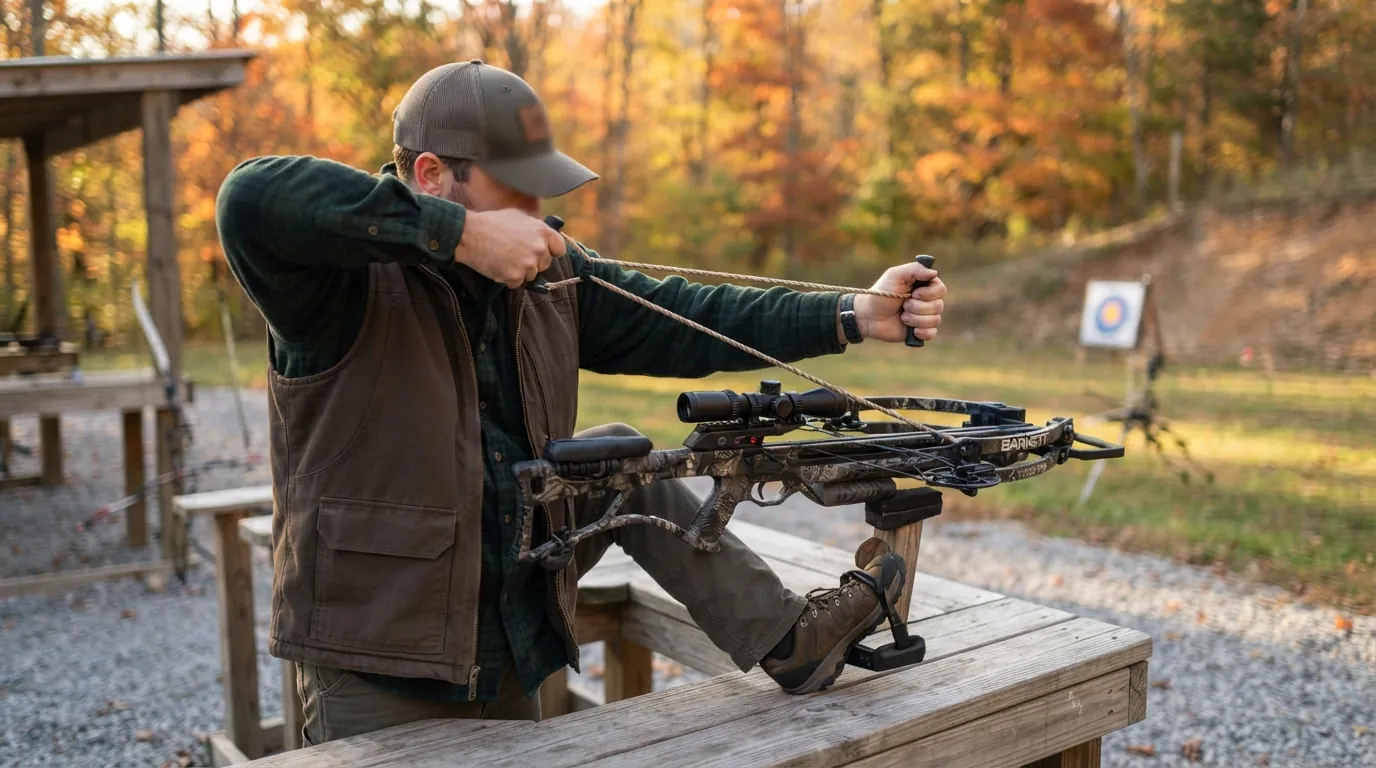 GuideHow to Cock a Crossbow: By Hand, Rope or CrankHand cocking, rope cocking, crank devices and integrated systems compared, with the steps that keep the string centered and your fingers clear.Read the guide
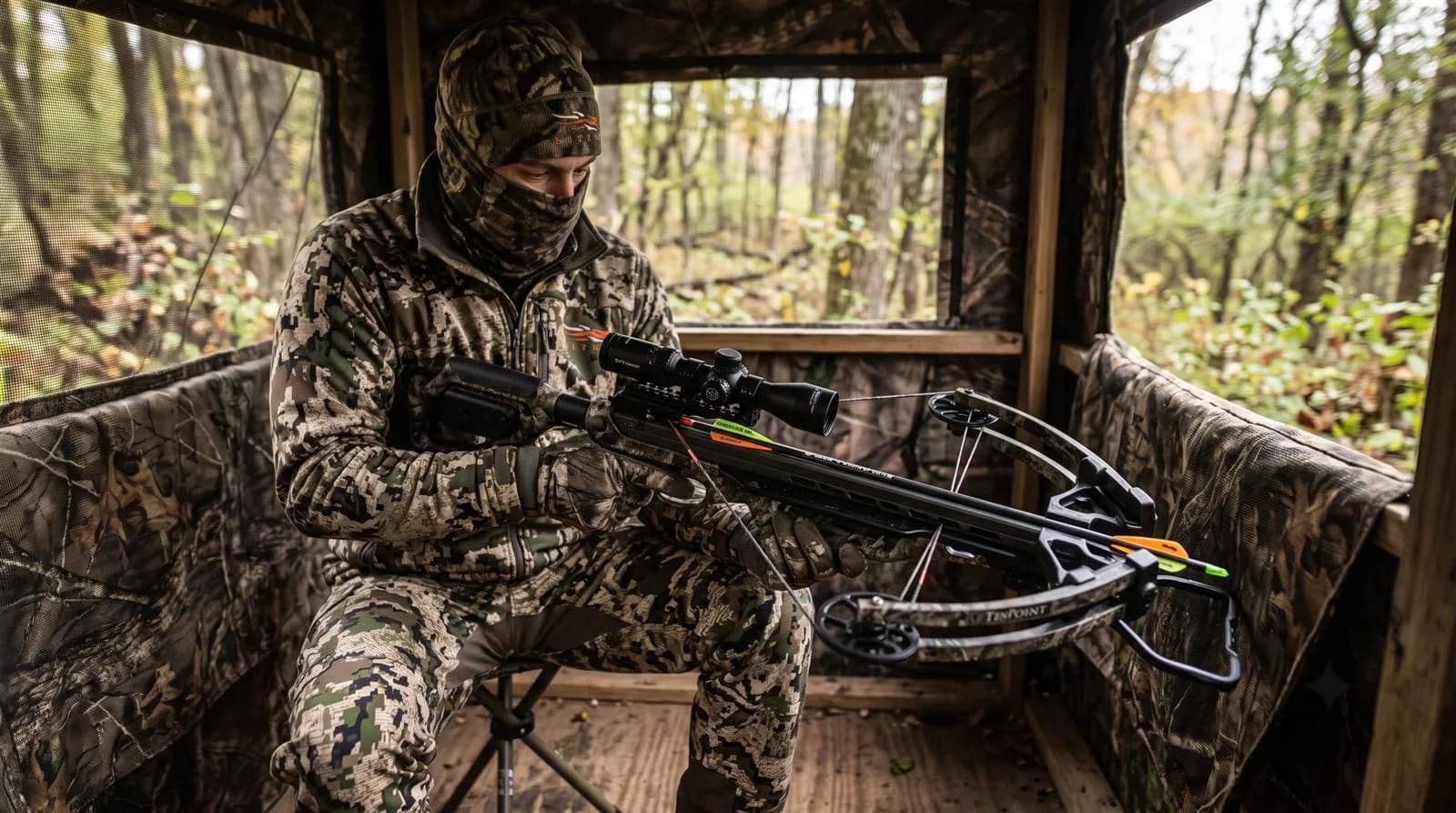 GuideIs Crossbow Hunting Easier Than Bow Hunting?Where a crossbow makes hunting easier, where it does not, and the skill, ethics, preparation and rules that apply whichever tool you carry.Read the guide
Definitions are general information. Manufacturer figures vary, so follow your crossbow's manual and verify local laws with the relevant authority.