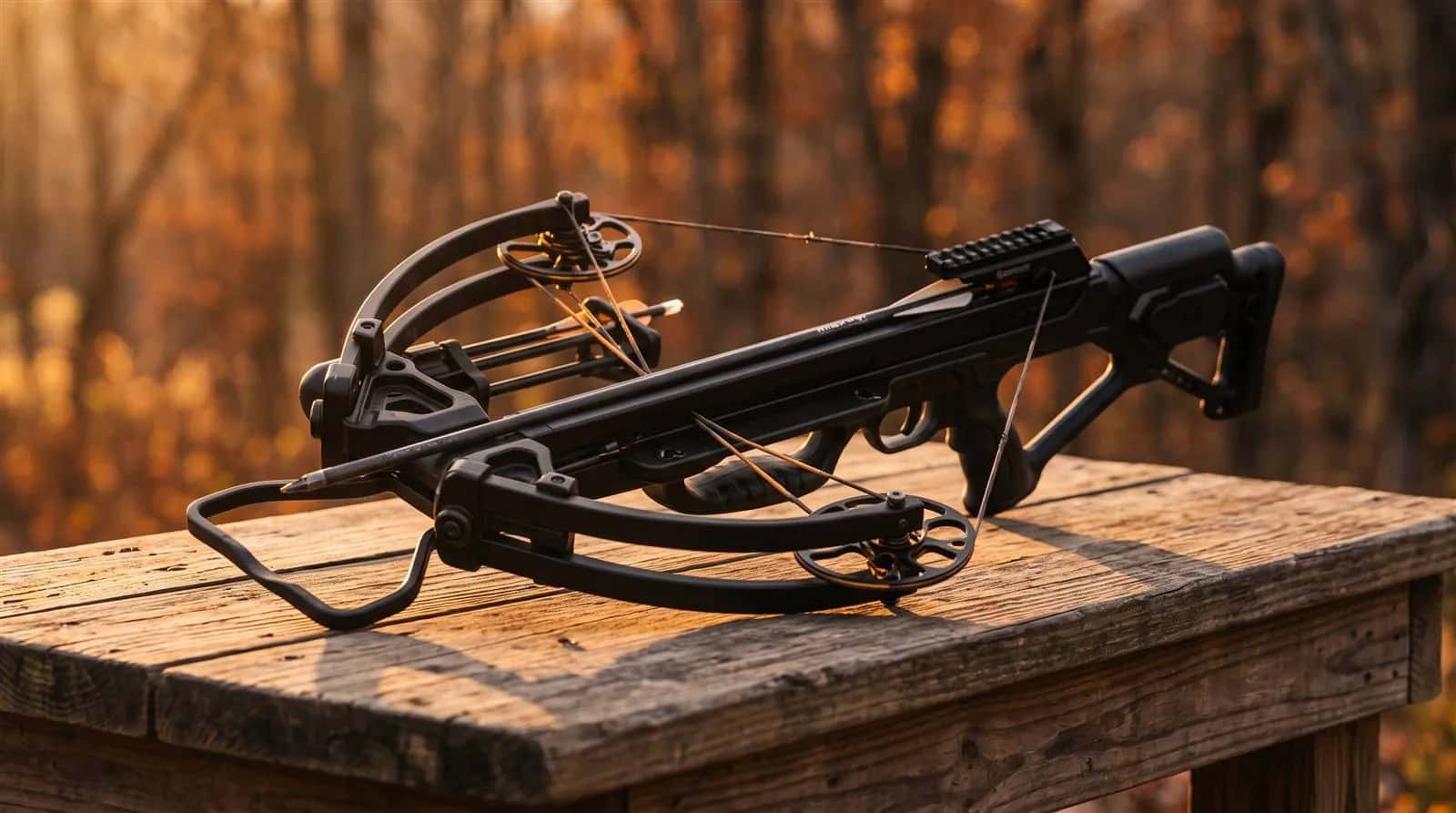
What the sear does in a crossbow trigger in plain terms
What the sear does in a crossbow trigger meaning: The sear is the catch inside a crossbow trigger group that holds the string latch closed until the trigger moves it out of the way to fire.
Also called: crossbow sear, roller sear, trigger sear, sear system
The sear is a small catch inside the trigger system. When the crossbow is cocked, the string latch holds the string, and the sear holds the latch so it cannot open. Pressing the trigger moves the sear off its engagement, the latch is free to open, and the string drives the bolt forward. The term comes from firearms, where the sear does the same job of holding a hammer or striker until the trigger releases it.
How cleanly the sear lets go shapes the trigger pull: the amount of creep before the shot and the crispness of the break. TenPoint's S1 trigger, for example, is described as a 2-stage, zero-creep design that features a roller sear system, with a 3.5-pound pull on the Flatline 460. A roller sear uses a small roller at the contact point so the parts slide apart with less friction.
Exact layouts vary by maker, and some owners use "sear" loosely for the whole latch. Excalibur's sliding-trigger models, for instance, have a sear the owner lifts with a finger through an access port to reset the trigger after de-cocking, as Excalibur's crank guide describes. Your manual shows which part is which on your crossbow.
Why it matters
The sear is what keeps a cocked crossbow from firing, so it carries real safety weight. A worn, dirty or damaged sear can cause a creepy trigger, a failure to fire or, at worst, an unintended release.
It also explains trigger marketing. Words like zero creep, crisp break and roller sear all describe how the sear disengages, which is why makers name it in spec lists.
How to read it on a spec sheet
- Look for the sear named in the trigger line of a spec sheet, often alongside a stated pull weight.
- Read "roller sear" as a low-friction design choice, not a guarantee of a specific pull weight.
- Check whether the maker publishes a pull weight; a sear description without one tells you less.
- Use the manual's parts diagram to tell the sear from the latch on your own model.
Common mistakes
- Taking the trigger group apart to clean or adjust the sear; makers do not support it.
- Spraying lubricant into the trigger housing when the manual says to keep it clean and dry.
- Ignoring a trigger that suddenly feels gritty, light or inconsistent.
- Confusing the sear with the latch when describing a fault to the manufacturer.
See it in our reviews
- TenPoint Flatline 460 — rated 4.4/5
- TenPoint Venom X — rated 4.3/5
Frequently Asked Questions
What is a sear on a crossbow?
It is the catch inside the trigger group that holds the string latch closed while the crossbow is cocked. Pressing the trigger moves the sear away, which lets the latch open and release the string.
What is a roller sear?
A roller sear uses a small roller at the point where the sear and the next part touch, so they slide apart with less friction. TenPoint names a roller sear system in its S1 trigger and says it gives greater trigger control.
Is the sear the same as the string latch?
No, though people sometimes use the words loosely. The latch holds the string; the sear holds the latch. Some designs combine the jobs differently, so check the parts diagram in your manual.
Can I adjust a crossbow sear myself?
No. The sear is a safety-critical part and makers do not support home adjustment. If the trigger creeps, sticks or feels different, stop shooting and contact the manufacturer or a qualified dealer.
Does the sear affect accuracy?
Indirectly. A clean, predictable sear release makes it easier to press the trigger without moving the crossbow off target, which is why makers advertise crisp, zero-creep triggers.
Related guides
Guides where sear shapes a real choice.
 GuideCrossbow Won't Fire? Problems & FixesA diagnosis table for a crossbow that won't fire: safety on, unseated bolt, wrong nock, bolt specs, retention spring and trigger problems, and when to stop.Read the guide
 GuideCrossbow Maintenance: Wax, Lube, StoreA crossbow maintenance schedule covering the five-minute pre-shoot check, string waxing, rail lubrication, limb and cam inspection, and storage.Read the guide
 GuideCrossbow Not Cocking? Causes and Safe FixesFix a crossbow that won't cock, symptom by symptom: no click, a safety that won't set, a string stuck on the dry-fire catch, or crank and rope trouble.Read the guide
Definitions are general information. Manufacturer figures vary, so follow your crossbow's manual and verify local laws with the relevant authority.