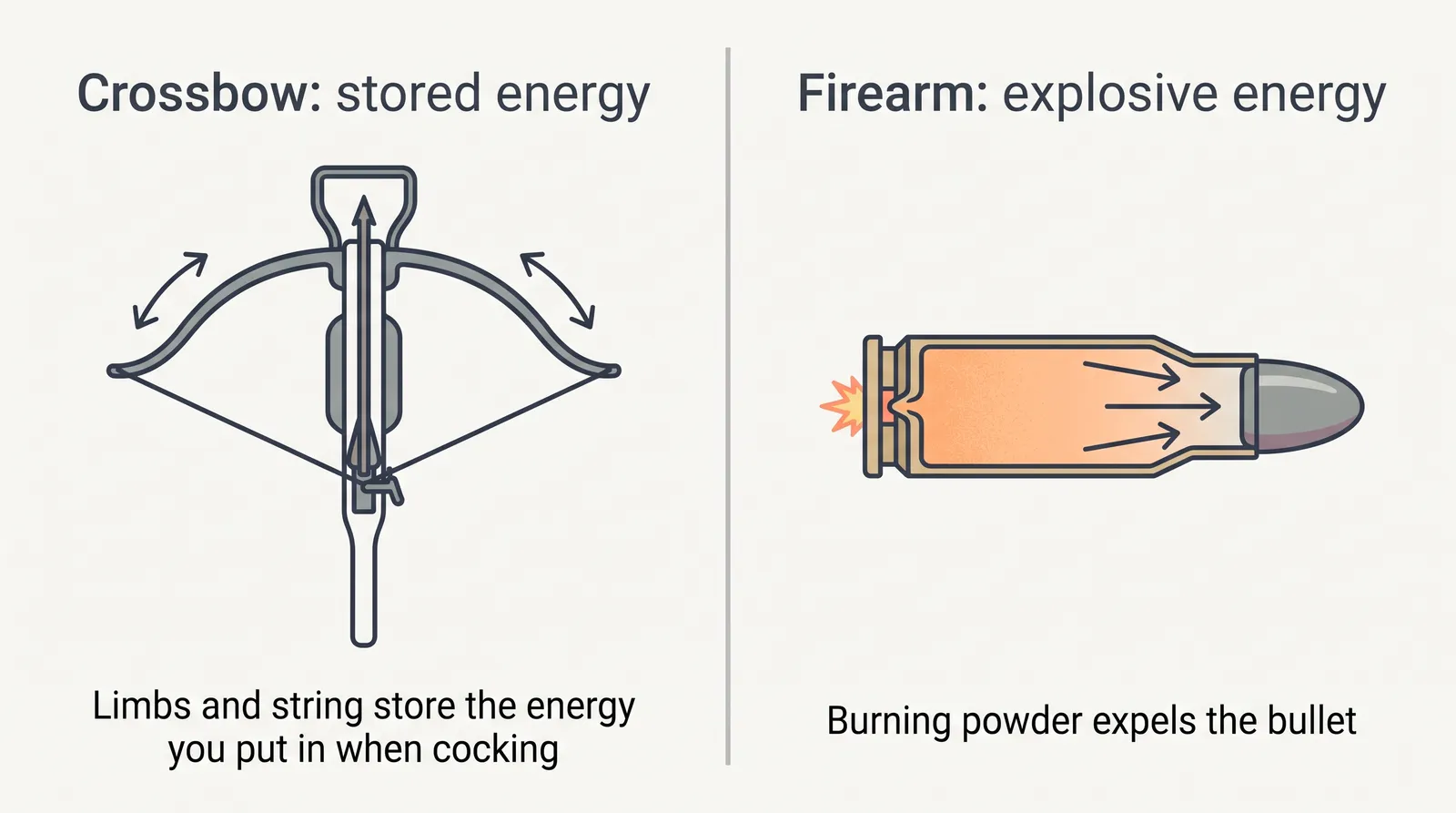
Is a crossbow considered a firearm? Under US federal law, no. The federal definition of a firearm turns on one thing, an explosive, and a crossbow has none. States are a different story: their weapons codes and hunting codes can still treat a crossbow as a weapon, or as something other than archery gear, so the full answer depends on where you live.
This page explains how the law classifies crossbows and quotes the statute text it relies on. It is general information, not legal advice. Statutes quoted here were checked on November 9, 2026.
Is a Crossbow Considered a Firearm Under Federal Law?
No. The Gun Control Act defines a firearm in 18 U.S.C. § 921(a)(3) (checked on November 9, 2026) as:
"(A) any weapon (including a starter gun) which will or is designed to or may readily be converted to expel a projectile by the action of an explosive; (B) the frame or receiver of any such weapon; (C) any firearm muffler or firearm silencer; or (D) any destructive device."
The ATF's own regulation, 27 CFR 478.11 (checked on November 9, 2026), repeats the same test: "Any weapon, including a starter gun, which will or is designed to or may readily be converted to expel a projectile by the action of an explosive". Neither text mentions crossbows, and neither needs to.
The key words are "by the action of an explosive". A gun fires when powder burns and the gas pushes a bullet down the barrel. A crossbow fires when you release energy you stored yourself: cocking it bends the limbs and pulls the string back, and the trigger lets them spring forward and push the bolt. Nothing burns, so a crossbow cannot meet the definition, however fast or powerful it is.
The National Firearms Act, which covers short-barrelled rifles and shotguns, machine guns, silencers and destructive devices, works the same way. Its catch-all "any other weapon" in 26 U.S.C. § 5845(e) (checked on November 9, 2026) means a concealable weapon "from which a shot can be discharged through the energy of an explosive". No crossbow is on that list either.
What that means when you buy one
Because a crossbow is outside the federal definition, the federal rules built on that definition do not reach it:
- No FFL. A federal firearms licence (FFL) is what a business needs to deal in firearms. A shop selling only crossbows needs none.
- No federal background check. The ATF Form 4473 and the NICS check run through it apply to firearm transfers by licensed dealers. A crossbow sale involves neither under federal law.
- No federal firearm age limit. The federal age limits for buying guns from a dealer apply to firearms. Retailers can set their own age policy, and some states set limits.
Why the Trigger and Stock Don't Make It a Firearm
A common forum claim is that a crossbow's trigger turns it from a bow into a gun. The law looks at what drives the projectile, not at what the tool looks like. A crossbow has a stock you shoulder like a rifle, a trigger and usually a safety, but the energy still comes from the limbs, on a compound model or a recurve alike.
The trigger only does the job your fingers do on a vertical bow: it lets go of the string. Inside, it releases a latch that holds the string at full draw, and the rail guides the bolt where a gun would have a barrel.
Our guide on crossbow vs compound bow walks through those mechanical differences if you are coming from a vertical bow or a rifle.
The same logic covers power. A compound crossbow with a high draw weight stores more energy, but stored energy is still not an explosive, so no speed rating changes the federal answer.
How States Classify Crossbows
States write their own definitions, and they do it in three separate places. A crossbow can be "not a firearm" in one and still be singled out in another.
| Layer | What it decides | Where to look |
|---|---|---|
| Penal code definition of "firearm" | Whether gun laws (carry permits, felon bars, purchase rules) apply | The definitions section of the state's weapons chapter |
| Weapon or dangerous-weapon lists, city ordinances | Whether a crossbow is a regulated weapon for possession, carry or discharge | The state weapons chapter; your city or county code |
| Hunting code | Whether a crossbow counts as archery equipment, and in which seasons it is legal | The state wildlife agency's regulations |
Layer 1: the firearm definition
Many state definitions use the same explosive test as federal law, which keeps crossbows out by definition. Two examples, both checked on November 9, 2026:
- Texas. Texas Penal Code § 46.01(3) defines a firearm as "any device designed, made, or adapted to expel a projectile through a barrel by using the energy generated by an explosion or burning substance or any device readily convertible to that use."
- Florida. Florida Statutes § 790.001(9) defines a firearm as "any weapon (including a starter gun) which will, is designed to, or may readily be converted to expel a projectile by the action of an explosive". The word "crossbow" does not appear in that section.
Other states word the definition differently, so read your own state's text rather than assuming it matches these.
Layer 2: weapon lists and local ordinances
A crossbow that is not a firearm can still be a "weapon" or "dangerous weapon" under a separate list in the same chapter, and cities often regulate where any projectile can be discharged. These lists vary widely, and this page names no state's list because we have not checked each one against its official text. Search your state's weapons chapter and your municipal code for the word "crossbow".
Layer 3: hunting codes
Hunting regulations answer a different question: is a crossbow archery equipment? Depending on the state, a crossbow may count as archery gear, have its own category, or be allowed in some firearm seasons. The same state can say "not a firearm" in its penal code yet list crossbows separately from bows in its hunting regulations. The season-by-season answer for every state lives in our crossbow hunting laws by state guide, which covers seasons, licences and equipment rules.
Can a Felon Own a Crossbow?
At the federal level, the felon bar is 18 U.S.C. § 922(g) (checked on November 9, 2026). It makes it unlawful for a person "who has been convicted in any court of, a crime punishable by imprisonment for a term exceeding one year" (and several other groups) "to ship or transport in interstate or foreign commerce, or possess in or affecting commerce, any firearm or ammunition; or to receive any firearm or ammunition which has been shipped or transported in interstate or foreign commerce."
That ban applies to "any firearm or ammunition". A crossbow is not a firearm under § 921(a)(3), and its bolts are not ammunition, which § 921(a)(17)(A) defines as "ammunition or cartridge cases, primers, bullets, or propellent powder designed for use in any firearm." So the federal felon ban, by its own words, does not reach a crossbow.
That is not the whole answer for anyone with a conviction:
- State weapons laws can bar people with certain convictions from possessing listed weapons, and those lists are not limited to firearms.
- Probation, parole and supervised release conditions often bar possessing any weapon, whatever the statute says. A condition of supervision binds you even where the law alone would not.
- Hunting with it needs a hunting licence, and licence eligibility is set by each state.
If you have a conviction, ask your attorney or probation officer before you buy, and get the answer in writing.
Do You Need a Licence or Background Check to Buy a Crossbow?
Federal law: no licence to own one and no background check to buy one, for the reasons above. State and local law: rules vary by state and city, so check your state weapons chapter and city code before you buy.
A hunting licence is a separate matter. Owning a crossbow and hunting with it are regulated by different codes, and the hunting side (licences, seasons, legal equipment) is set state by state.
Is a crossbow considered archery? Only in the hunting code, and only where that state's regulations say so. Once you know what your state allows, our crossbow hunting guide covers choosing game, setting up and taking the shot.
Crossbows Outside the US
Classification differs abroad. Ireland classes crossbows as firearms, and Canada prohibits small one-handed crossbows, which catches most pistol crossbow models. Our page on pistol crossbow laws covers the Canadian, UK, Irish and Australian rules in detail.
How to Check Your Own State's Rule
- Find the firearm definition. Search your state's penal or criminal code for the definitions section of its weapons chapter and read how it defines "firearm". Look for the word "explosive" or similar.
- Search the weapons chapter for "crossbow". Then read any "weapon" or "dangerous weapon" definitions nearby, since a crossbow can fall under general wording without being named.
- Read your wildlife agency's equipment rules if you plan to hunt. They decide whether a crossbow counts as archery and when you can use it (the state-by-state guide linked above lists them).
- Check your city or county code for "discharge", "projectile" and "crossbow" before you shoot at home, and keep the crossbow uncocked and stored out of reach of children. Our guide to crossbow safety rules for beginners covers storage, transport and safe shooting once ownership is settled.
- If you have a conviction or are under supervision, ask your attorney or probation officer before buying, and keep their answer.
Common Misconceptions
| Myth | What the law text says |
|---|---|
| "It has a trigger, so it's a gun." | The federal test is whether an explosive expels the projectile (18 U.S.C. § 921(a)(3)). A trigger is not part of the test. |
| "Felons can never own one anywhere." | The federal ban covers "any firearm or ammunition" (18 U.S.C. § 922(g)), which a crossbow is not. State law and supervision conditions can still bar it. |
| "No federal rule means no rules." | States regulate crossbows through weapons codes, city ordinances and hunting codes. |
| "A crossbow is archery equipment everywhere." | Each state's hunting code decides that, and some treat crossbows as a separate category. |
Frequently Asked Questions
Do crossbows count as firearms?
Not under US federal law. The federal definition requires a weapon that expels a projectile by the action of an explosive, and a crossbow uses energy stored in its limbs and string. Many state penal codes use a similar test, but state weapons laws can still regulate crossbows separately.
Do I need a licence for a crossbow?
No federal licence is needed to buy or own one. State and local rules vary, so check your state weapons chapter and city code. Hunting with a crossbow needs a state hunting licence.
Do crossbows require a background check?
Not under federal law. The Form 4473 and NICS check apply to firearm transfers by licensed dealers, and a crossbow is not a firearm. A retailer may still ask for ID and apply its own age policy.
Can a felon own a crossbow?
The federal felon ban in 18 U.S.C. § 922(g) covers firearms and ammunition, which does not include a crossbow. State weapons laws and probation or parole conditions can still prohibit it, so anyone with a conviction should ask an attorney or probation officer first.
Is a crossbow considered archery?
Only where a state's hunting regulations say so. Some states count crossbows as archery equipment, others give them their own category or allow them in firearm seasons. It is a hunting-code question, not a penal-code one.
Is it illegal to use a crossbow for self-defence?
A weapon's classification does not make any use of it lawful or unlawful. Whether using any weapon against a person is justified depends on local law and the facts, which this page cannot answer.
Can you shoot a crossbow in your backyard?
That depends on your city or county. Many municipalities restrict discharging any projectile within city limits or near homes, while many rural areas do not. Read your local code or ask the city clerk before the first shot.
Ready to compare models? Read our crossbow reviews to see how each one compares.
More in Hunting Laws & Field
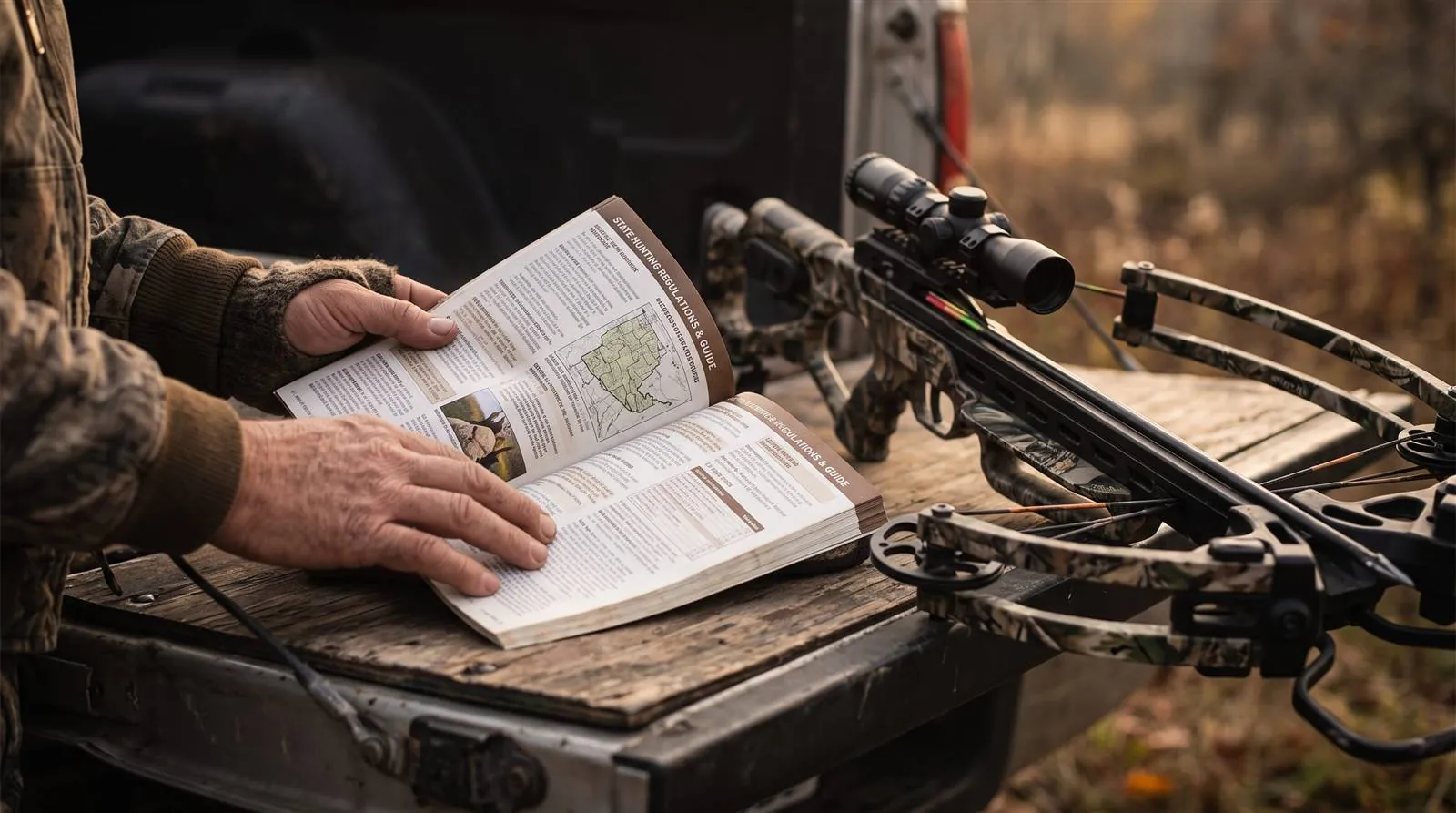
Crossbow Hunting Laws by State (2026)
Crossbow hunting rules by state for the current season: who may use a crossbow and when, licensing, equipment limits, and the official sources to verify.
Read guide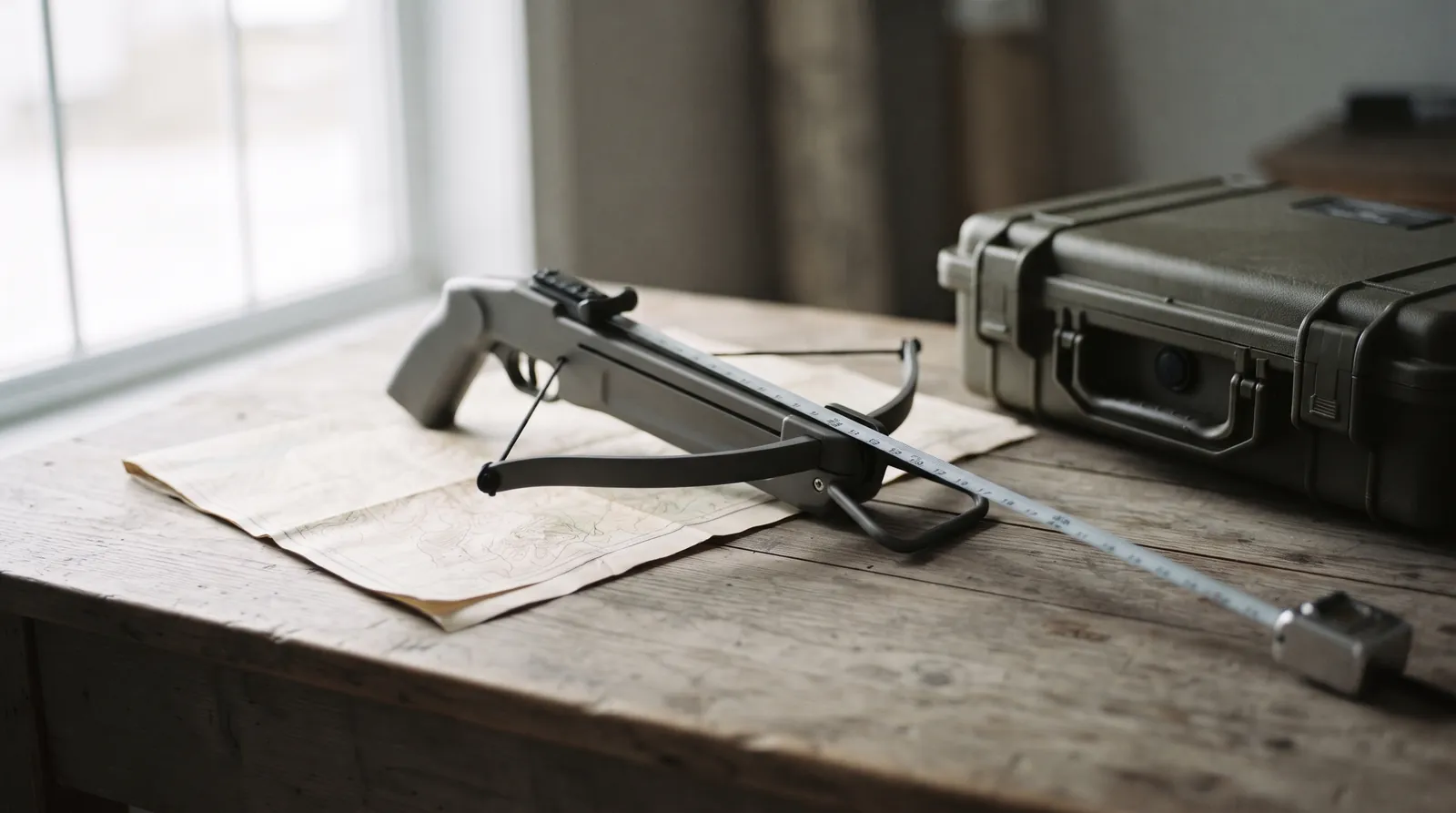
Are Pistol Crossbows Legal? 2026 Rules by Country
Pistol crossbow laws differ by country for ownership, age, carry, backyard shooting and hunting. This guide explains each and links the official sources.
Read guide
Crossbow Hunting Guide: Game, Setup, Shot and Recovery
The crossbow hunting hub: game and energy guidance, legality, pre-season setup, stand or blind, shot placement, tracking, gear and safety.
Read guide