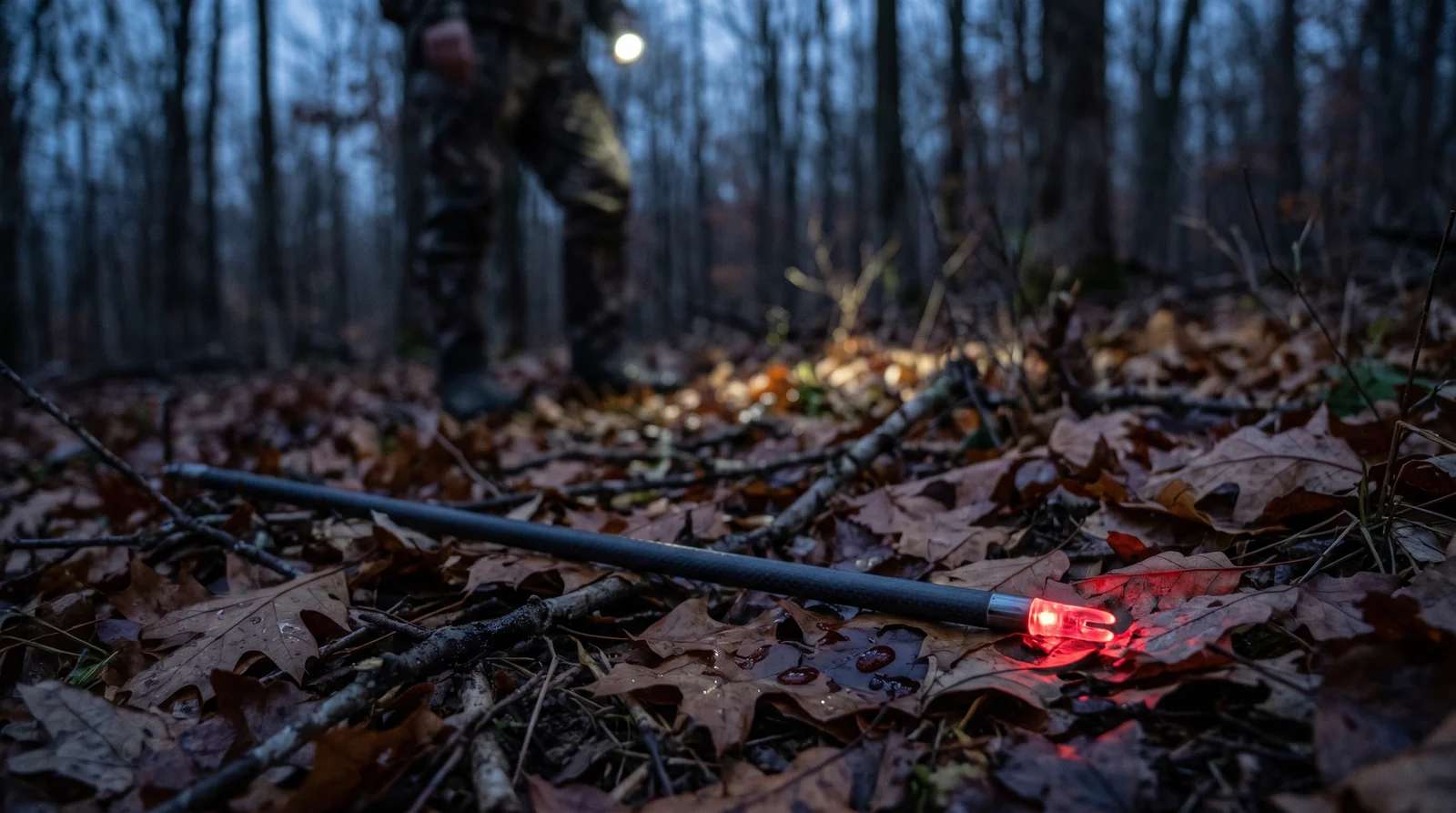
Knowing how to track a deer after a crossbow shot matters as much as the shot itself. A bolt is quiet and fast, but it kills by bleeding, not shock, so most deer still run after a good hit. What you do in the next few minutes, and how long you sit still, decides whether you walk up on the deer or bump it out of reach.
This page is the recovery chapter of our crossbow hunting guide. It is written to be read on a phone in the stand: the wait comes first, then the steps.
Key takeaways
- Stay put and watch. The last place you saw the deer is the most useful fact you will have.
- The bolt and the first blood tell you the hit, and the hit sets the wait.
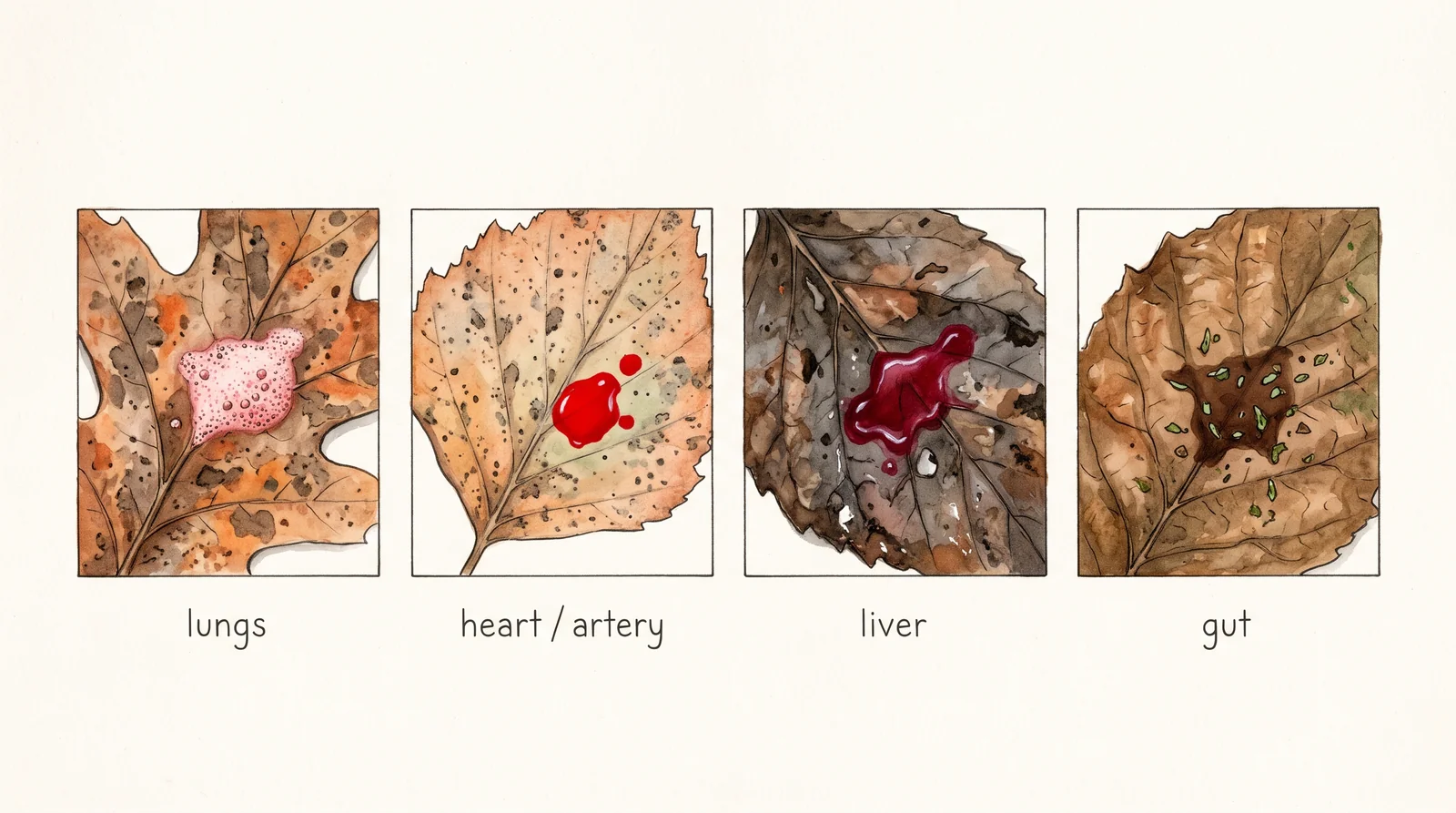
- Pink, frothy blood means lungs; dark red means liver; stomach matter means a gut hit; very little blood often means muscle.
- Walk beside the trail, mark it as you go and keep the party small.
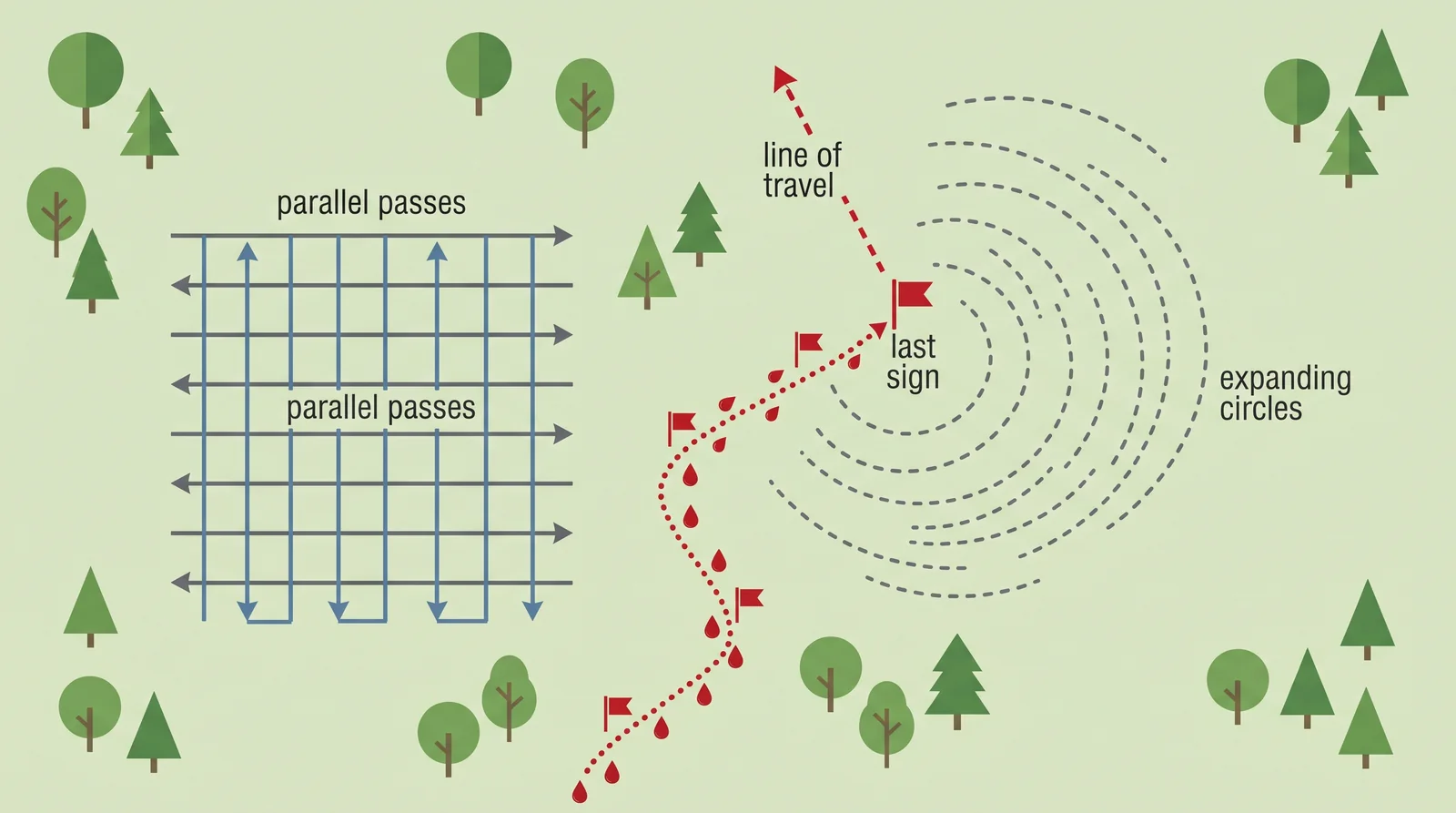
- When the blood stops, go back to the last sign and search in a pattern instead of wandering.
The First Minutes: Watch, Listen and Mark
The work starts while the bolt is still in the air. Stay in the stand or blind, stay quiet and take in four things before the woods go still.
- Where the deer stood. Pick a landmark at the hit site: a stump, a forked tree, a rock. From a stand, things look different on the ground, so choose something you will recognise at eye level.
- Where you last saw it. Watch the deer as far as you can and fix a second landmark at that point. This is often where the search starts if the trail is thin.
- What you heard. A crash, breaking brush or a deer running hard then stopping all give you a direction. Keep listening for a minute or two after the woods go quiet.
- How it reacted. Hunter-education guidance from the North Carolina Wildlife Resources Commission notes that a deer hit in the vitals may jump and kick, while a gut-shot deer may hunch and run off slowly. A reaction is a clue, not proof.
Then note the time. Every wait figure on this page counts from the shot, not from when you climb down.
A lighted nock helps here more than with any other step. The glowing nock lets you follow the bolt's flight, see roughly where it struck and spot it in the grass or in the deer as it runs. If you are still planning the season around these moments, our guide on how to hunt deer with a crossbow covers the stand setup and shot choice that come before them.
Read the Bolt and the Blood
Once the wait is over (or, for an obvious lung hit, once you have climbed down quietly), walk to the hit site from the side, not along the path the deer took. Look first for the bolt.
A crossbow bolt often passes right through a deer. A pass-through bolt lying on the ground carries the best evidence you will get: the colour of the blood on the shaft and fletching, any hair or fat stuck to it, and its smell. If you cannot find the bolt, the deer may still be carrying it, or it may have gone into the ground beyond the hit site; check a few yards past where the deer stood, along the line of the shot.
Then read the ground. Blood on leaves, hair cut from the hide and tracks dug in hard all point to where the deer went and what was hit.
| Sign on the bolt or ground | Likely hit | What it usually means |
|---|---|---|
| Pink, frothy blood with small bubbles | Lungs | A short run and a clear trail |
| Bright red blood | Heart or a major artery | Usually a quick recovery; the deer often goes down within sight |
| Dark red, slimy or watery blood, often sparse | Liver | Fatal but slower; the deer needs time |
| Brown or green stomach matter, foul smell | Gut (paunch) | A slow death; pushing the deer loses it |
| Little blood, hit high or in a leg | Muscle or bone, non-vital | The deer may survive; the trail may thin out fast |
Those signs come from the same hunter-education material our crossbow shot placement on deer guide uses, and the wait for each one is in the next section. One point that catches people out: dark red blood is not a muscle-hit sign. A hit in muscle alone usually leaves little blood at all.
How Long to Wait Before Tracking
The wait is the one step you cannot undo. A deer that is followed too soon often gets up from its first bed and runs farther than it would have, and a liver-hit or gut-hit deer that is pushed is the one most often lost. The table brings together the waits from three hunter-education sources: the New Jersey hunter-education manual, American Hunter magazine and the National Bowhunter Education Foundation (NBEF).
| Hit | Sign | How long to wait | Then |
|---|---|---|---|
| Lungs | Pink, frothy blood | About 30 minutes (American Hunter); 20–30 minutes for chest hits (NBEF) | Follow quietly |
| Heart or artery | Bright red blood, deer down in sight | At least 20 minutes before leaving the stand (NJ manual) | Walk to the deer from behind |
| Liver | Dark red, sparse blood | At least 1 hour (NJ manual); 3–6 hours (American Hunter) | Back out quietly, then follow slowly |
| Gut | Stomach matter, foul smell | At least 6–8 hours (NJ manual); 6–12 hours or overnight (American Hunter); at least 6 hours (NBEF) | Leave the area and come back later |
| Not sure where you hit | Mixed or little sign | 30–60 minutes (NBEF) | Look at the hit site, then decide |
If in doubt, wait longer. An extra hour almost never loses a well-hit deer; an hour too few often loses a poorly hit one.
Exceptions to the wait
- A non-vital muscle hit. NBEF's guidance is that a deer hit only in muscle can be followed promptly in good conditions, because time lets the wound close and the trail dry up rather than the deer die. Do this only when the sign clearly says muscle (little blood, hit high or in a leg) and not liver or gut.
- Rain or snow on the way. It is tempting to go early before weather washes the trail out. NBEF's advice, and the more conservative one, is that a gut-hit deer still gets its full wait; pushing it is worse than a faint trail. Mark the hit site and last-seen point well so you can work from them later.
- Warm weather. Heat makes long waits harder on the meat, but a deer you bump and lose spoils completely. Keep the wait and plan to cool the deer quickly once you find it.
How Far a Deer Runs After a Crossbow Shot
NBEF notes that a deer hit well may die within 10 to 30 seconds and that a well-hit animal is usually found within 200 yards. That is a short run on paper, but in thick cover it is out of sight within a few bounds, which is why the last-seen landmark matters.
A poorly hit deer can go much farther. Texas Parks and Wildlife's hunter-education guidance warns that a wounded deer which is pushed can run several hundred yards. A one-lung hit is the usual long track for crossbow hunters in tree stands: from a high stand at a close deer, the backbone covers much of the lungs and the bolt may reach only one. The shot placement guide linked above shows the angles that cause it and how far out to let the deer walk first.
Following the Blood Trail
A blood trail is the line of blood, hair and tracks a hit deer leaves. Following it well is slow, careful work.
- Start at the hit site. Find the first blood and mark it, even if the deer went down in sight.
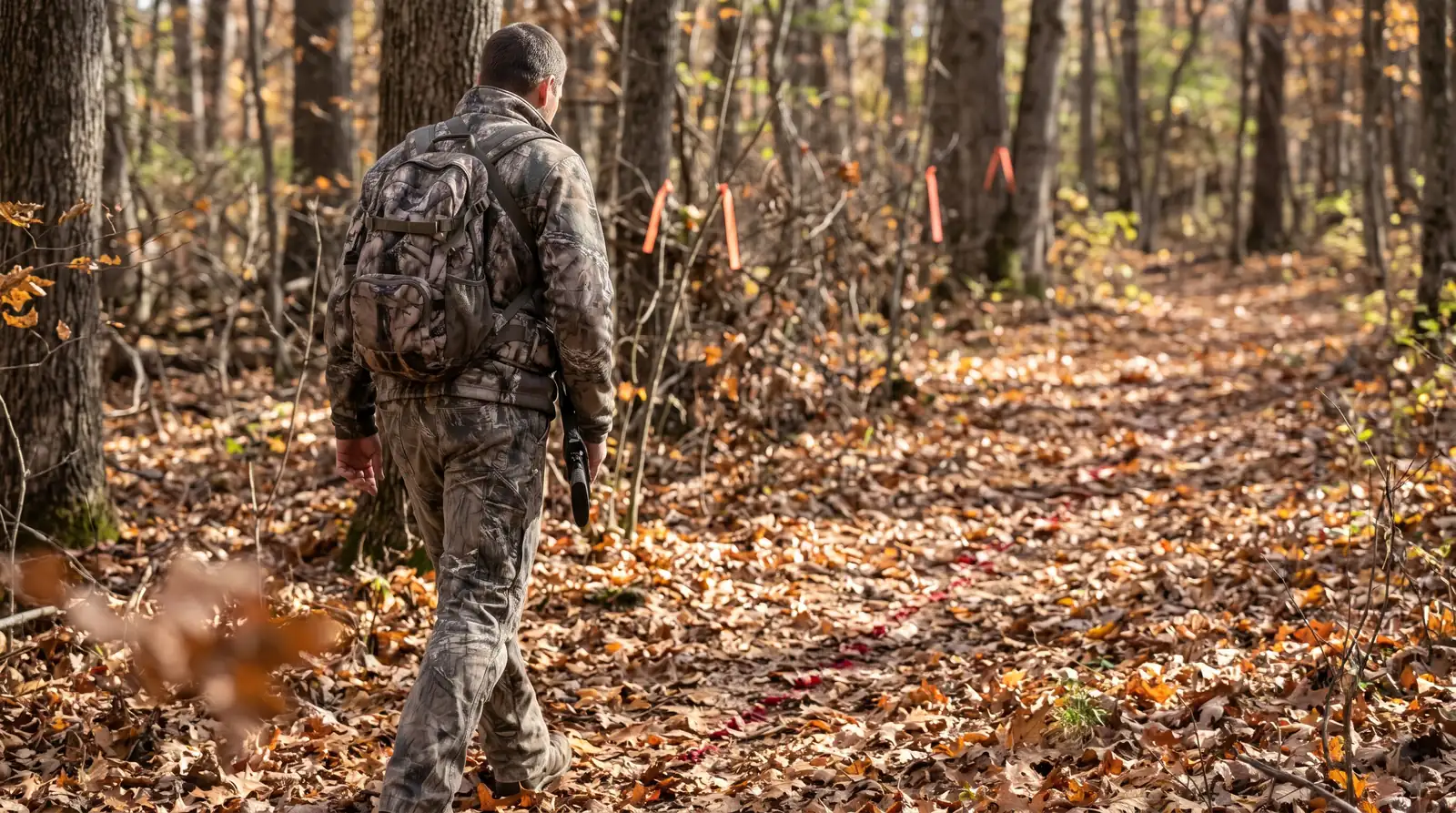
- Walk beside the trail, never on it. Stay a step or two to the side so you do not smear or bury sign you might need to come back to.
- Mark as you go. Tie biodegradable tissue or flagging every time you find sign. Looking back down a line of markers shows the deer's direction when the next drop is hard to find. Pull plastic flagging on the way out.
- Look up as well as down. Blood is often wiped onto brush, grass stems and tree trunks at the height of the wound, not just dropped on the ground.
- Keep the party small. The shooter leads, because they saw the deer last. The New Jersey manual puts the group at three people at most; more people means more trampled sign. NBEF also suggests bringing an experienced tracker along if this is your first deer.
- Go slowly and stop often. Look ahead for the deer before you look down for the next drop. If you jump a bedded deer, stop, back out and give it more time.
What your bolt and broadhead change
Crossbow hunters get a few things that help the track before they ever climb down.
- Lighted nocks. Besides marking the hit, a glowing nock is easy to find on the ground or bobbing on a running deer at dusk. Lighted bolts such as the TenPoint Lighted Pro Elite 400 light up on the shot. It is one more electronic part, so check that each nock works before the hunt.
- Pass-throughs. A bolt that exits leaves two holes, and blood can leave both. It also leaves the bolt behind for you to read.
- Cutting diameter and blade count. A wider cutting diameter makes a larger wound channel and can make the blood trail easier to follow, and a three- or four-blade head trades some penetration for a wider cut. Neither makes up for a poor hit. Our roundup of the best crossbow broadheads compares cuts across the heads we review.
- Mechanical vs fixed. A mechanical broadhead opens on impact and gives a larger cut at the same weight; a fixed-blade broadhead has no moving parts to fail.
Our page on fixed-blade broadheads explains when that trade is worth it. Placement still decides the track. A double-lung hit with any sharp head leaves a better trail than a liver hit with the widest one.
When the Blood Runs Out: Tracking a Deer With No Blood
Blood trails thin out and stop for many reasons, and few of them mean the deer is unhurt. Work out which one you are facing before you decide what to do.
| Situation | Likely cause | What to do |
|---|---|---|
| No blood at the hit site | High hit with no exit hole, fat plugging the wound, or a miss | Find the bolt and read it; search well along the line the deer ran before deciding it was a miss |
| Trail stops suddenly | The wound clotted, or blood is now inside the body cavity | Go back to the last sign and start a grid search from it |
| Trail splits or doubles back | The deer turned, circled or met another deer's tracks | Mark the split, follow the line with blood, keep the other marked |
| Trail heads toward a creek, swamp or thick cover | Hunters often report hit deer heading for water or bedding cover | Check edges and crossing points first, then the thickest cover |
| You jumped the deer and the trail went dry | The wound reopened then clotted as the deer ran | Back out, mark the spot, give it hours, then restart from there |
The North Carolina Wildlife Resources Commission's rule is the one to keep: do not stop until every reasonable effort to recover the animal is used up.
Worked example: a grid search from the last sign
Say a lung-hit deer left good blood for 80 yards and then nothing. Here is how a two-person search might run.
- Go back to the last blood and flag it clearly. Everything is measured from here.
- Read the flagged line. Look back along your markers. Deer tend to keep moving in roughly the same direction, so the search starts ahead along that line.
- Search ahead in a narrow fan. Walk slowly 50 yards ahead along the line, each person a few yards either side of it, checking brush at wound height and the ground for single drops.
- Switch to parallel passes. If the fan finds nothing, walk side-by-side lines about 10 yards apart through the area ahead, then shift over and come back the other way, like mowing a lawn.
- Or circle out. In open woods, walk loops of growing size around the last sign instead: a tight circle, then one 20 yards out, then 40.
- Flag every new drop. One new spot of blood restarts the trail; go back to step 2 from it.
Tracking After Dark and Using Dogs
Light is the deciding factor in a lot of recoveries. If the hit was a clear double-lung or heart shot and the deer most likely went down close by, many hunters follow it with a good headlamp or flashlight; blood often shows up well under a bright white beam. On any doubtful hit (liver, gut or "not sure") it is usually better to back out quietly and come back at first light. A deer jumped in the dark is very hard to follow.
Trained blood-tracking dogs can find deer that people cannot, especially when the trail has dried up, and some hunters use them where their state allows. Rules on tracking dogs, lights and recovering game after legal hours differ from state to state, so check them before you need them. Our crossbow hunting laws by state page links each state's wildlife agency.
Approaching and Recovering the Deer
When you see the deer, stop. Texas Parks and Wildlife's guidance is to approach from behind, out of the deer's line of sight, and to watch it before you go closer.
- Watch for breathing. Look at the chest for a minute from a distance.
- Check the eyes. A dead deer's eyes are usually open and glazed; closed eyes can mean it is still alive.
- Be ready. Have a bolt loaded and the crossbow ready for a follow-up shot if the deer tries to rise, and keep your fingers off the trigger until you need it.
- Confirm before you touch. Touch the eye with a stick from behind the head; no blink means the deer is dead.
Then tag and report the deer as your state requires before you move it.
Tracking Gear Checklist
Most of this fits in a pack pocket and costs nothing extra. Keep it with you on every hunt, not in the truck.
| Item | Why |
|---|---|
| Headlamp and a bright handheld flashlight | Blood shows better under bright white light, and you need both hands free |
| Biodegradable tissue or flagging tape | Marks the hit site, last-seen point and every drop |
| Phone with a GPS pin or mapping app | Saves the stand, hit site and last sign if you leave and come back |
| Charged lighted nocks | Help you see the hit and find the bolt |
| Knife and gloves | For the deer once you find it |
| Spare bolt and the crossbow | For a follow-up shot if needed |
| Water and a snack | Long tracks take longer than you expect |
If you are packing for the whole season, the gear checklist in our crossbow hunting guide covers everything else.
Mistakes That Lose Deer
- Tracking too soon. The most common one. Use the wait table and add time when unsure.
- Walking on the sign. One careless step can wipe out the drop that showed the turn.
- Too many people. A big party tramples the trail and makes noise ahead of a wounded deer.
- Not marking the start. Without a landmark at the hit site and the last-seen point, you start the search guessing.
- Looking only at the ground. Sign on brush and stems is easy to miss.
- Giving up early. A trail that stops is a cue to search in a pattern, not to go home.
FAQ
How long should I wait to track a deer shot with a crossbow?
About 30 minutes after a lung or heart hit, at least an hour and often several for a liver hit, and six hours or more, often overnight, for a gut hit. If you are not sure where you hit, wait 30 to 60 minutes, then check the hit site before deciding.
How far does a deer run after a crossbow shot?
A well-hit deer is usually found within about 200 yards. A poorly hit deer, or one that is pushed too soon, can go several hundred yards or more.
What color is lung blood?
Lung blood is usually pink and frothy, with small bubbles in it. Dark red, slimy blood more often means a liver hit.
What if there is no blood?
Find the bolt first and read it, then search along the line the deer ran. If the trail stops, go back to the last sign and search in a pattern from it. No blood does not always mean a miss.
Should I track a deer at night?
Only after a clear lung or heart hit. On a liver, gut or uncertain hit, back out quietly and come back at first light, and check your state's rules on lights and after-hours recovery.
Does a lighted nock help with tracking?
Yes. It helps you see where the bolt struck and find the bolt afterward, which tells you what was hit. It does not replace a well-placed shot or a proper wait.
Ready to compare models? Read our crossbow reviews to see how each one compares.
More in Hunting Laws & Field
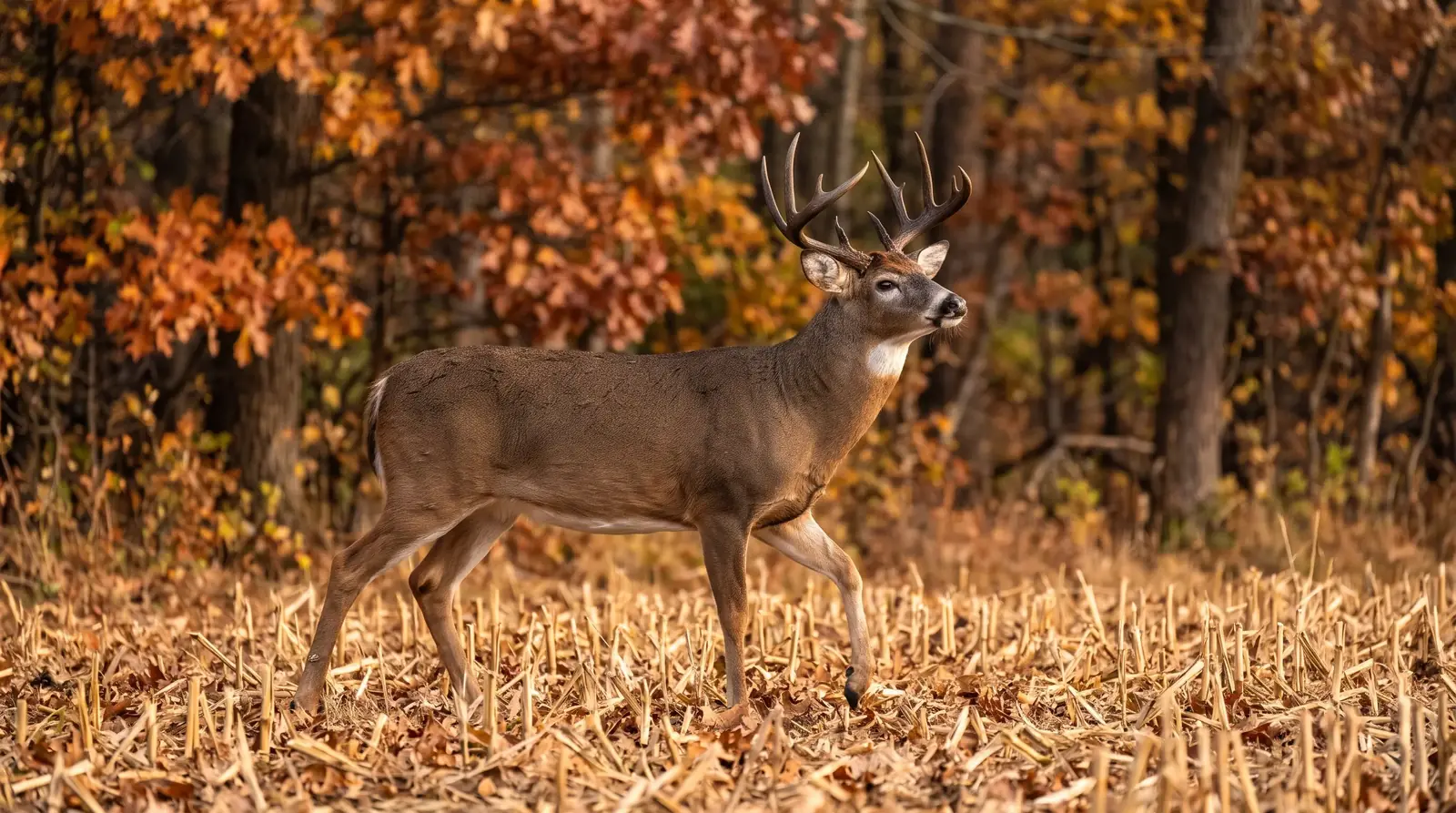
Crossbow Shot Placement on Deer: Every Angle Explained
The vital zone, the take-or-pass call for every angle, tree stand aim points, string jumping, and how long to wait after the shot.
Read guide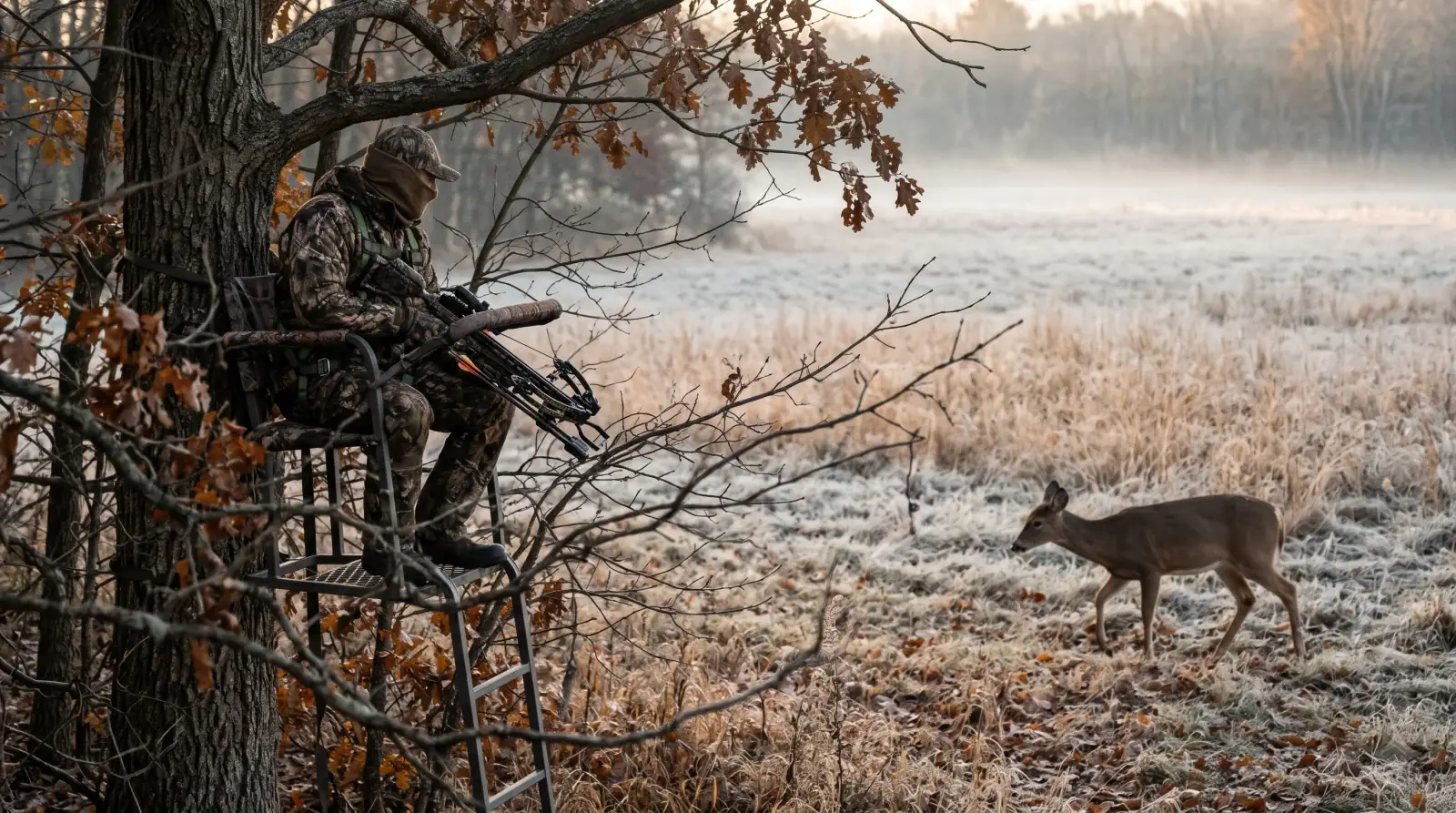
How to Hunt Deer With a Crossbow: A Season Plan
A step-by-step whitetail plan for crossbow hunters, from sight-in and stand or blind setup to season timing, the shot and the first minutes after it.
Read guide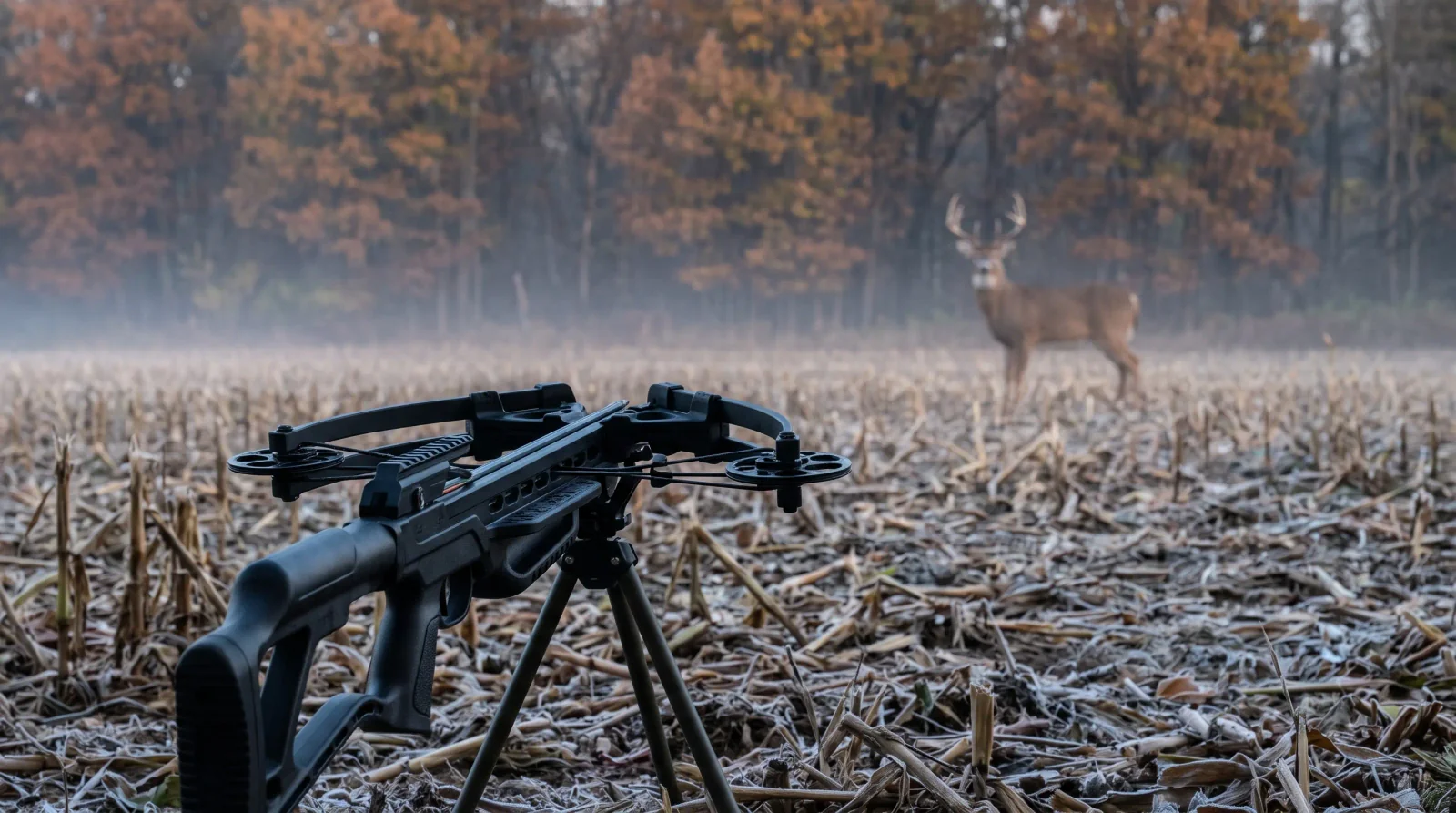
Crossbow FPS Needed for Deer: Kinetic Energy Chart
Why no FPS minimum exists for deer, the published energy guidelines for deer and elk, and a kinetic energy chart by bolt weight and speed.
Read guide